Chemical and materials giant cutting jobs at Georgia mining facilities
The chemical and materials giant Chemours recently announced it will lay off more than a third of its Georgia-based workforce, with job cuts planned at three mining facilities in the state.
The layoffs will affect 54 of Chemours’ 142 workers in Georgia, according to a Worker Adjustment and Retraining Notification it submitted to the state in early January. Companies are required to submit a WARN notice when they plan mass layoffs.
Chemours is a multinational company with about 6,000 employees spread across its global offices and manufacturing plants. The company produces chemicals and materials for products ranging from home heating and cooling units to paint and aerospace equipment.
The job reductions will affect three Chemours facilities in Southeast Georgia:
- A mineral sands mine in Nahunta, about 40 miles west of Brunswick.
- A mineral sands mine in Jesup, 45 miles northwest of Brunswick.
- A mineral sands processing plant near Offerman, roughly midway between the two mines.
Chemours spokesperson Jess Loizeaux said the mines produce titanium mineral sands, the metal zirconium and monazite, a mineral containing certain rare earth elements.
The titanium is primarily used to produce titanium dioxide, a whitening agent for paints and toothpaste, as well as some coatings and other products. Zirconium is a component used in metals for aircraft.
The deepest job cuts are planned at the Nahunta mine, where 42 of the 76 roles will be eliminated. The Jesup mine is set to lose 10 positions and the Patterson processing facility will lose two. The roles will be eliminated on March 6, the company’s WARN notice said.
Loizeaux said the cuts are the result of the company’s decision to shift its actual earth-moving operations to mining contractors. Chemours, meanwhile, will focus on mineral and metal separation and refinement.
The company did not directly address whether shifts in demand or other economic forces played a role — only that the changes are being made to ensure “greater efficiency and cost predictability.”
“This approach allows Chemours to focus on our core strength — advanced mineral separation, which is critical to delivering high-value products and supporting U.S. efforts to strengthen domestic supply of critical minerals,” she said.
On top of the Georgia cuts, Chemours is also temporarily idling a mine in northeast Florida that’s just across the border from the Peach State.
That mine is on a portion of Trail Ridge, a line of ancient, inland sand dunes that runs from North Florida up along the east side of the Okefenokee Swamp and into several Southeast Georgia counties.
Over the decades, parts of Trail Ridge have drawn interest from mining companies because they contain high concentrations of titanium mineral sands. But environmental groups concerned about protecting the Okefenokee Swamp, one of the most intact wetlands left on Earth, have been equally fixated on the formation.
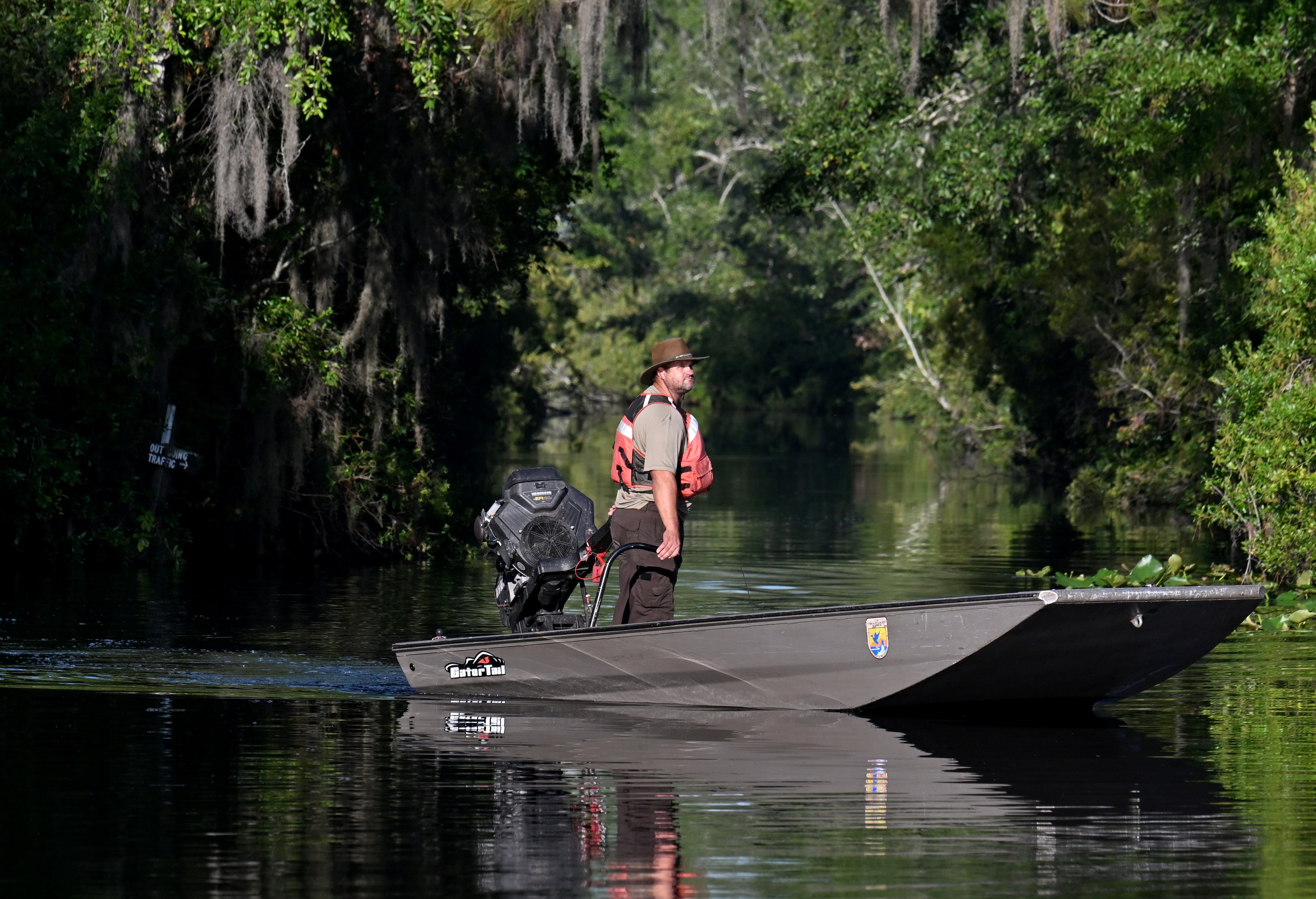
Many scientists fear mining on Trail Ridge could irreparably harm the swamp, a conclusion bolstered by a recent University of Georgia study, which found the regional hydrology is far more complex than previously thought.
Chemours has said it has no plans to mine near the swamp, but has stopped short of a permanent commitment. That’s led to speculation that the company could someday seek to sift the sands next to the Okefenokee.
Its links to another industrial giant, DuPont, with Okefenokee connections of its own, have further fueled concerns.
Chemours spun out of DuPont in 2015. But in the 1990s, DuPont sought to mine near the Okefenokee, before abandoning the plans in the face of environmental backlash.
Though Chemours has never proposed a mine alongside the Okefenokee, it has funded research into the “hydrologic effects from mining in Southeast Georgia,” including near the Okefenokee.
Josh Marks, the president of Georgians for the Okefenokee, argued the layoffs show prospects for mining near the swamp are “dim” and said Chemours should be able to “comfortably pledge to never have anything to do with mining at the Okefenokee.”
Loizeaux pointed back to Chemours’ 2022 statement on the topic, which said it has no plans to mine near the swamp, adding it believes existing mining locations in Georgia and Florida can “sustain operations well into the 2030s.”
About the Author

Drew Kann is a reporter at The Atlanta Journal-Constitution covering climate change and environmental issues. His passion is for stories that capture how humans are responding to a changing environment. He is a proud graduate of the University of Georgia and Northwestern University, and prior to joining the AJC, he held various roles at CNN.


