
Georgia Tech’s disappointing season costs Brent Key contract extension
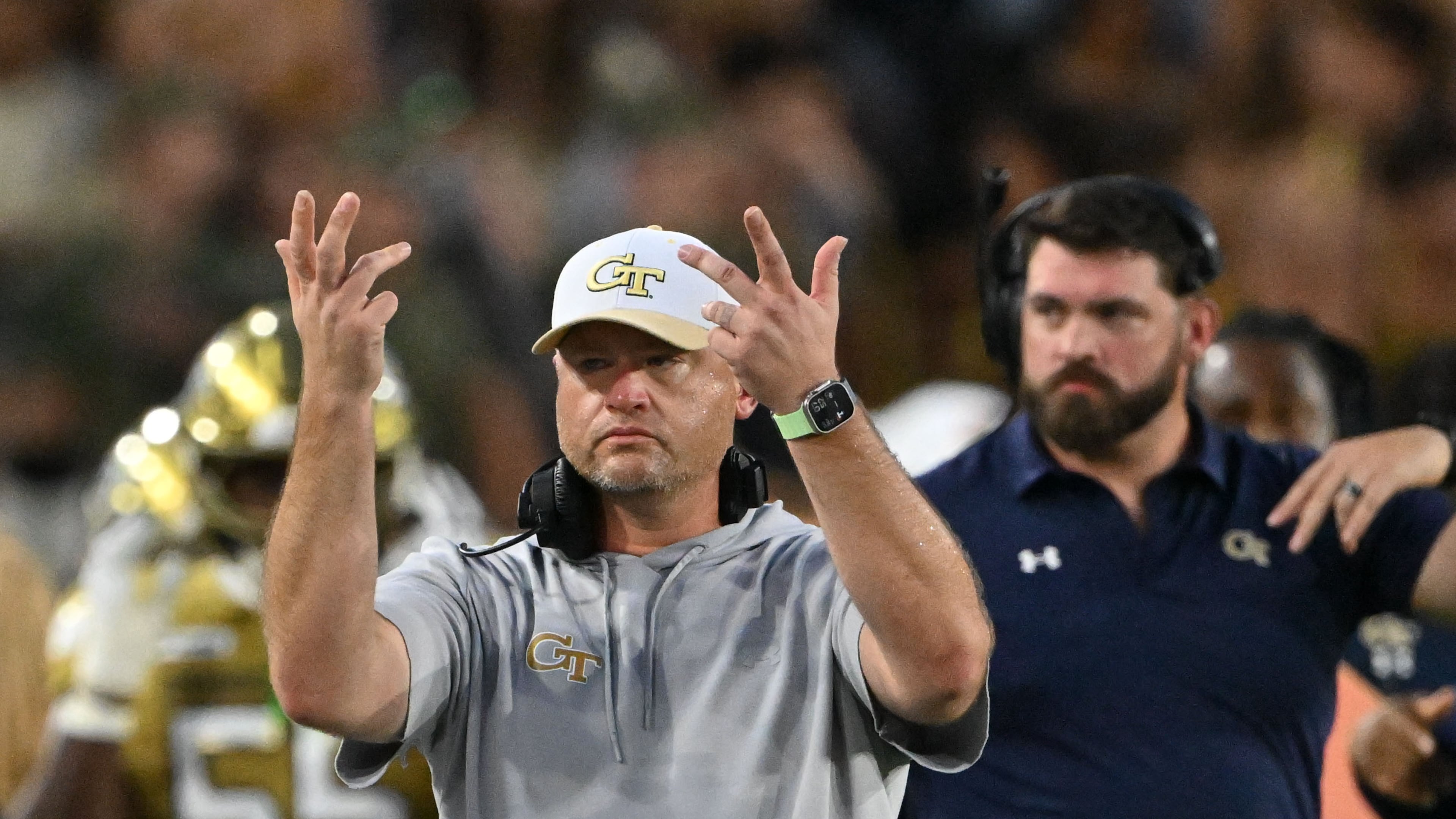

Georgia Tech’s disappointing football season has cost coach Brent Key an opportunity to extend his contract and earn a significant increase in compensation.
The Yellow Jackets are 2-6 with four regular-season games remaining, meaning they can no longer reach the eight-win threshold that would have triggered the first of three performance-based extensions in Key’s contract.
An eight-win season would have added a year to Key’s contract, extending it through December 2031, and increased his supplemental compensation by $250,000 for each remaining contract year.

“It’s bad. Bad ball,” Key said after Saturday’s 34-11 loss at Pitt. “A correction has to be made based on something and it gets made and it leads to something else. That’s not good. Not good. I don’t want to say right now how it will be fixed. I’ve got a lot of things running through my head right now.
“We’ve got to do something to get out of this thing.”
The slide has been particularly pronounced given where Tech stood at the end of last season.
The Jackets finished 2025 with a 9-4 record and entered this season with expectations of building on that success.
Instead, they have struggled on both sides of the ball, losing six of their first eight games, including four by double digits.
Tech is 29-26 under Key, who won four games as the interim coach in 2022 and seven games in each of the next two seasons.
Based on the terms of Key’s agreement, an eight-win season would have meant an additional $1.25 million in supplemental compensation over the five remaining years, from 2027 through 2031.
Instead, Key’s contract remains in place through Dec. 31, 2030, with annual compensation listed at $6.15 million for each year from 2026 through 2030.
The agreement, a second amendment to Key’s original contract, took effect Dec. 3, 2025. Its automatic extension provisions began with the 2026 football season.
Under those provisions, a nine-win season would add one year and increase supplemental compensation by $400,000 annually. A season with at least 10 wins would add two years and increase supplemental compensation by $750,000 annually.
The eight-win provision can be earned no more than twice during the term of the agreement. The nine- and 10-win provisions are subject to a maximum six-year rolling contract term.
The contract also outlines separate performance bonuses. Key would have been eligible for a $50,000 bonus for eight regular season wins, a $75,000 bonus for nine and a $100,000 bonus for 10 or more. Those incentives are separate from the automatic extensions and supplemental compensation increases.
The agreement also provides a substantial financial commitment from Tech if the athletic association terminates Key’s contract without cause.
If the association fired Key after the 2026 season, the contract calls for liquidated damages equal to 75% of the remaining unpaid base salary and supplemental compensation through the end of the agreement, including any earned extensions and compensation increases.
Based on the contract’s $6.15 million annual compensation figure and assuming a termination effective Dec. 31, 2026, with no earned extensions or escalators, the remaining four years would total $24.6 million. Seventy-five percent of that amount would be $18.45 million.
The agreement calls for those payments to be made in equal monthly installments over the otherwise unexpired contract term. The obligation is also subject to conditions, including Key executing and not revoking a general release of claims within 60 days of termination.
The buyout would be different if Key chose to leave Tech. Under the agreement, the amount would be $8 million for a departure effective on or before Dec. 31, 2026. It declines to $6 million in 2027, $5 million in 2028, $3 million in 2029 and $2 million in 2030.