30 years later, Atlanta Olympics experience inspires Janet Evans still
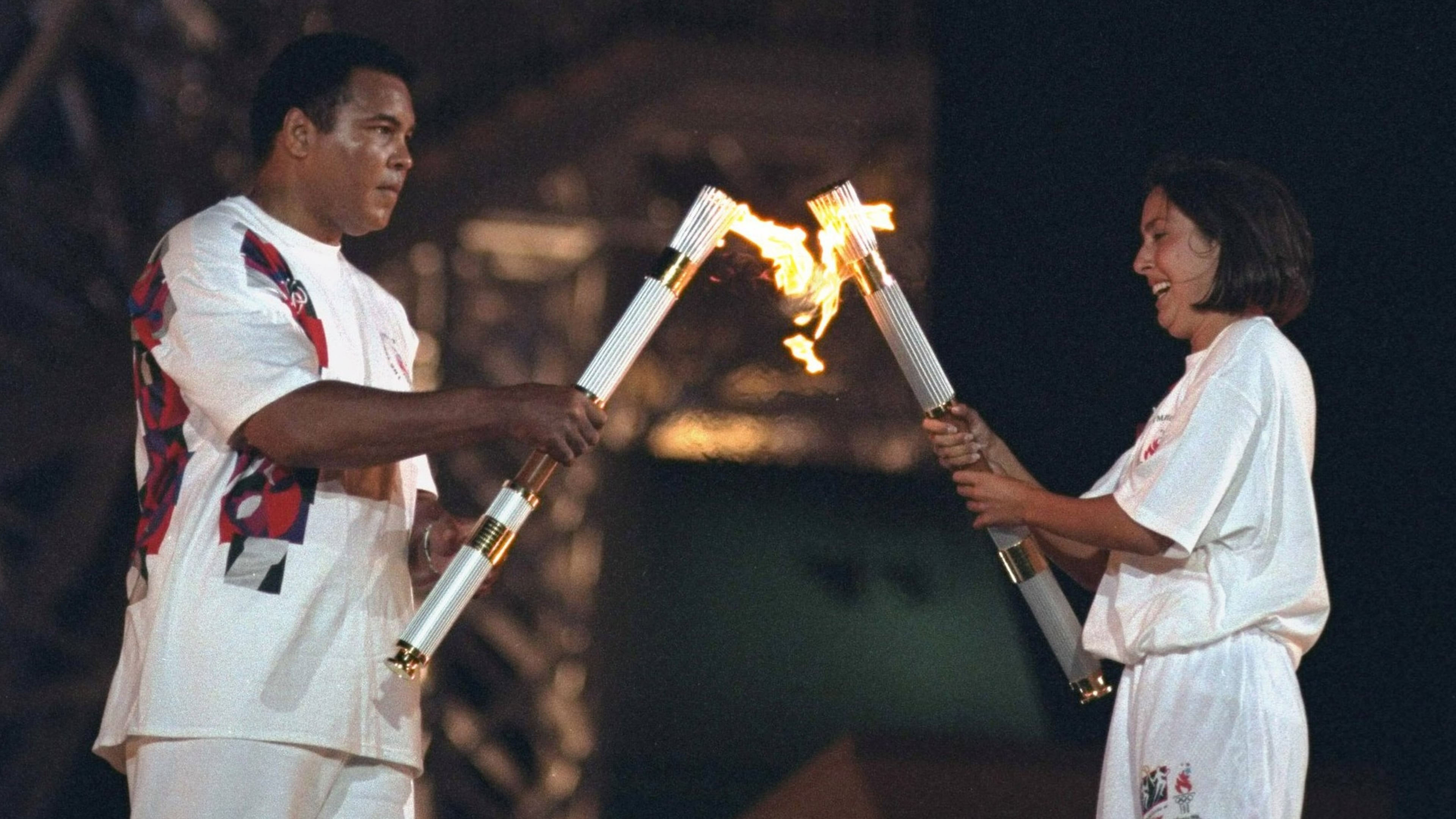
Thirty years ago, with the eyes of the world upon her, Janet Evans carried an Olympic torch and bounded up a ramp inside Atlanta’s Olympic Stadium to pass the flame to the greatest of all time.
In a way, the swimming legend remains on that platform, still inspired by that shared moment with Muhammad Ali inside a quaking stadium that chanted his name.
“I think as the years have gone by and the Olympic movement’s changed and life has changed and the world has changed, I think that moment really holds steadfast in our collective memories and what I think the Olympics really should be about,” Evans told The Atlanta Journal-Constitution Monday, in town for a speaking engagement at the Brandweek convention.
Ali’s lighting of the Olympic cauldron to open the 1996 Summer Olympics remains, quite arguably, the most captivating opening ceremony moment in the history of the Games.
Then 54 years old, Ali had led a transcendent life, enduring racism and suffering for adhering to his Muslim faith, yet becoming a boxing champion and a beloved global figure.
But, fighting Parkinson’s disease, his body was visibly unsteady on that July night.
“And then to stand here in Atlanta and say to the world, like, ‘Here I am, I’m not well,’” Evans said. “But I think, to me, what it meant to me personally was, we’ve just got to show up. Like, you kind of got to show up, and you’ve got to be present, and you’ve got to do your best.”
Though she won four golds and a silver in her career, Evans’ experience at the opening ceremony helped her to recognize that the Olympics aren’t only about winning medals. The vast majority of Olympians don’t come close to the medal stand.
“I think that having a platform as someone like him, or any of us athletes, is really an important thing,” Evans said. “And the medals fade, and they sit in a safe, right? But what are you doing to give back to be a part of something? And I think his moment kind of illustrated that.”
Evans’ memories of the lighting are not all grandiose. In a quiet nook of the downtown Hyatt Regency Atlanta hotel, she remembered having to wear a size XXL T-shirt when she ran the torch because it was the only size left.
“If you look at the T-shirt, it’s like I’m swimming (in it),” said Evans, employing an amusing choice of words.
As a result, Evans said two consultants who advise Olympic hosts on the torch relay told her that they now educate those groups about “the Janet rule” — make sure they have a T-shirt of each size available for runners on the day of the opening ceremony.
Though she didn’t medal in Atlanta, she calls it her favorite Olympics of the three she competed in, ahead of Seoul in 1988 and Barcelona in 1992. Aside from the momentous opening ceremony honor, it was the only one held in the U.S.
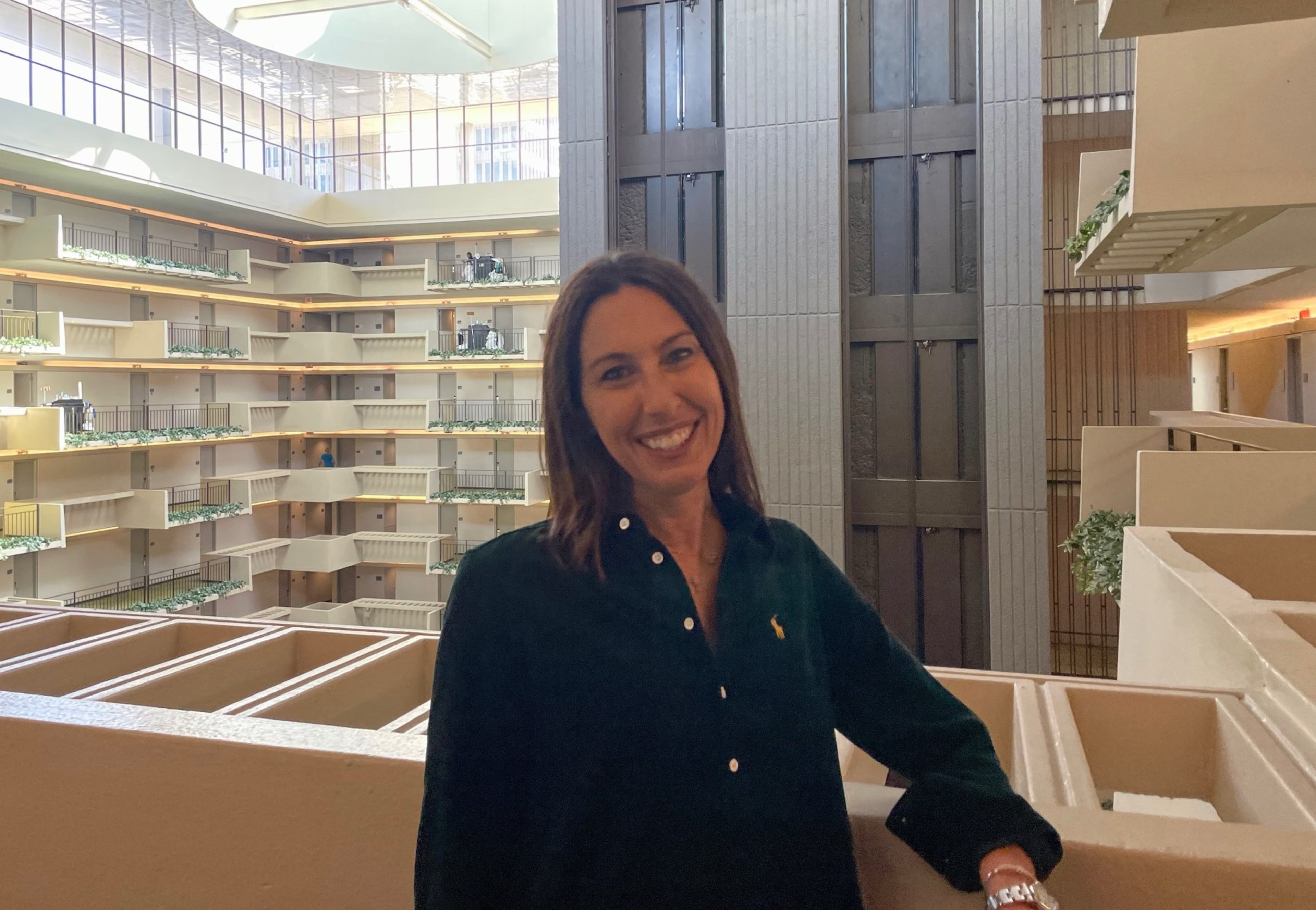
Further, Evans was actually a member of the Atlanta Organizing Committee and was in Tokyo in September 1990 for the International Olympic Committee vote that awarded the Games to Atlanta. She remains friends with members of the committee.
“It makes me happy to come here,” said Evans, who lives in the Los Angeles area. “I feel a little bit like I’m coming home.”
Monday, she recalled the determination of bid leaders Billy Payne and Andrew Young that Atlanta could upset Athens to win the Games.
“Billy kept saying, ‘Yes, we can,’” Evans said. “’We can beat Athens. Here’s what we’ve got and here’s what our city’s going to become.’ And so there was this hope and this belief that it could happen and that, to me, is what resonates in this city.”
Three decades later, Evans is helping lead the first Summer Games in the U.S. since Atlanta. A 55-year-old married mother of two (her daughter swims at Princeton), Evans is the chief athlete officer for the 2028 Los Angeles Olympics and Paralympics, the first person to hold that title for an Olympics.
She leads a team whose mission is to ensure that the Olympic and Paralympic competitors are considered in every decision made, whether it’s the Olympic Village, transportation, signage, tickets or any other aspect of the Games.
For instance, she has insisted on the bus drivers being local hires, remembering her experience of a bus driver at the Barcelona Olympics getting lost between the preliminaries and finals of one of her races.
She wants to give the roughly 15,000 Olympic and Paralympic athletes “an experience that makes them want to continue with this incredible thing called the Olympics and changes lives and be inspirations and be a part of something.”
It is her response to the question she considered 30 years ago from the example of the great Ali: What are you doing to give back to be a part of something?
Not all of Atlanta’s Olympic legacies are made from brick and mortar.
You can now get my column sent straight to your inbox. Sign up for my newsletter here.