
Why Falcons think they can get ‘best version’ of Tua Tagovailoa
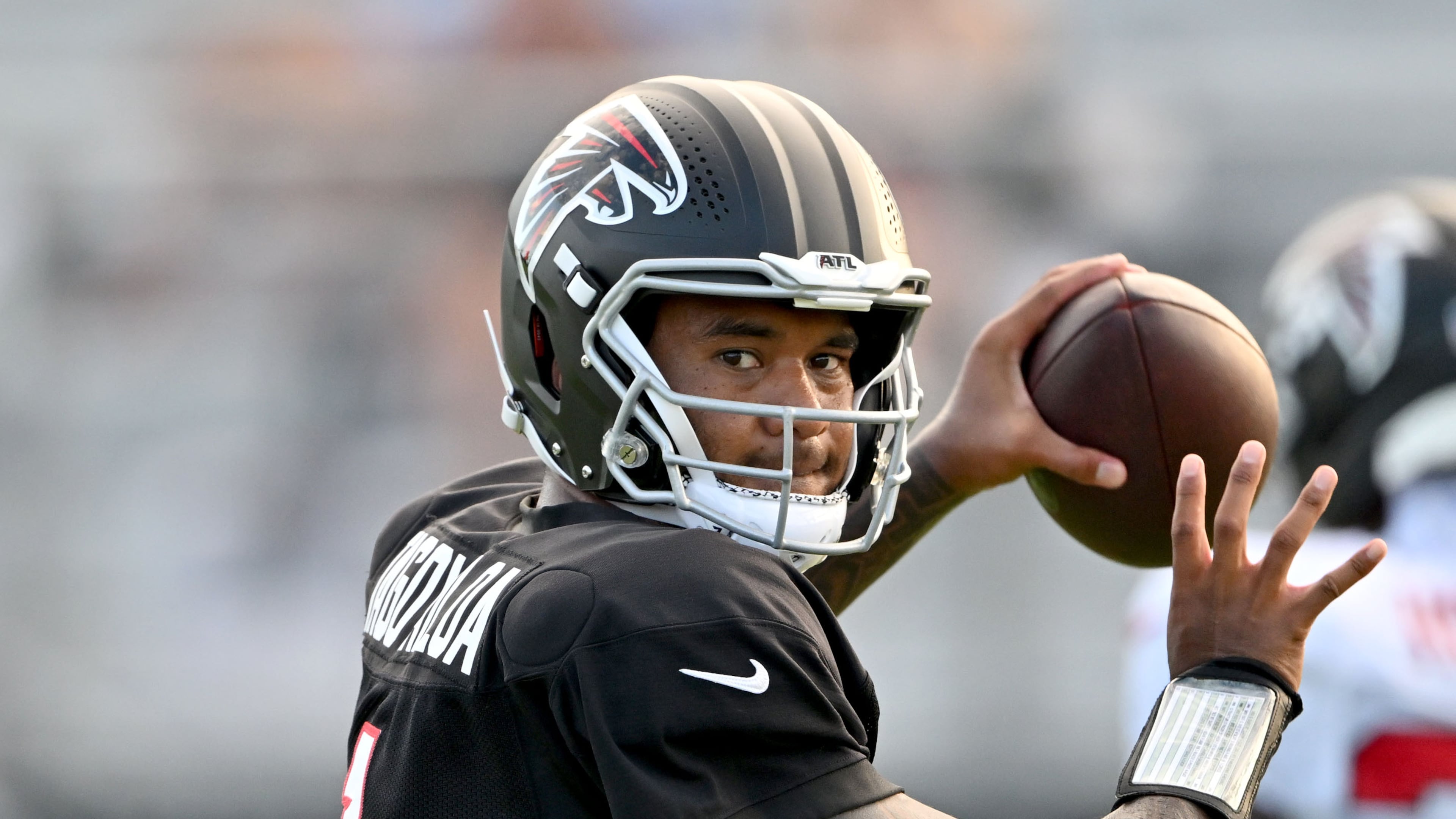

FLOWERY BRANCH — When the Falcons’ quarterbacks went through warmups before Monday’s practice in Flowery Branch, Tua Tagovailoa paced the group. He navigated bags in footwork drills, he threw into nets, he gave handoffs and threw routes on air before the rest of the signal-callers did the same.
None of it was inherently different from the cadence of the entire offseason program preceding Monday. The status with which he carried during it — as the Falcons’ starting quarterback — certainly was.
On Monday morning, the Falcons tabbed Tagovailoa as their starter for Sunday’s season opener against the Steelers, ending a summerlong question of time, health, performance and competition with Michael Penix Jr., who said he still isn’t ready to play and will be inactive to open the year.
Penix believes he’s “really close” to being fully healthy and mentally prepared to play, but the NFL calendar ultimately forced the Falcons into a decision.
Tagovailoa was the beneficiary.
“I think every decision you make (with) the football team, you’re taking in all the information available to you,” head coach Kevin Stefanski said. “Sometimes information changes, and certainly with a decision like this, you want to make sure that you’re taking all the information from the spring to the summer to how people are performing.
“So, felt really strongly about this group and then feel good about where we’re heading.”
Penix had only six 11-on-11 practices before the Falcons made their decision, a choice that came within the past week but wasn’t formally announced until the start of game week.
The Falcons wanted to give Penix an opportunity to compete in earnest with Tagovailoa, and Stefanski believes they did that. Penix performed “very well,” Stefanski said, but the organization remains convicted in its selection of Tagovailoa.
The speed at which Tagovailoa adapted to the Falcons’ system impressed the team’s coaches, and Stefanski believes his 28-year-old quarterback enters Week 1 in an advantageous spot to perform at a high level.
“I’ve gotten to see Tua work from the spring until now,” Stefanski said. “A new system for all these guys. There’s a lot of newness with our players or coaches and everybody getting up to speed, and he’s done a really nice job of working at it. So, confidence for us as coaches and players comes from just doing it on the field and watching guys continue to work.
“And I think he’s really put himself in position to go be the best version of himself.”
The Falcons’ quarterback battle was all-encompassing. They valued OTAs and mandatory minicamp but not to the same extent as padded training camp practices or preseason games.
Tagovailoa’s up-and-down exhibition slate didn’t necessarily help his image.
In five drives across two preseason games, Tagovailoa completed 10 of 13 passes for 117 yards. The Falcons scored only one touchdown, though a fumbled snap ended a drive after one play against the Dolphins and another botched exchange ravaged an early series versus the Broncos.
The Tagovailoa-led offense gained 139 net yards of offense across 22 plays, an average of 6.3 yards per play.
Training camp offered a bigger, more representative sample size. Tagovailoa went 85-for-131 — a 65% completion rate — in camp, according to The Atlanta Journal-Constitution’s pass-tracking tool.
Jawaan Taylor, the starting right tackle, said Tagovailoa had a “great camp.”
“We have the utmost confidence in him,” Taylor said Monday. “We know he’s going to get the job done at a high level. He’s been doing a great job since he’s been here. So, we’re excited to get him out here in Week 1.”
Chemistry often dominated training camp conversations with Tagovailoa, a rhythm and timing-based passer whose game is predicated on ball placement and anticipation. He feels he made steady progress, as do his receivers.
And Stefanski, through a coach’s lens, saw the same.
“I’ve gotten to see him work really, really hard throughout this entire process of learning the system, learning his teammates,” Stefanski said. “So much of quarterback play comes (from having) to know your teammates and you’ve got to know how this receiver comes out of this break versus that receiver. ‘Where does this guy want the ball?’
“So, there’s a lot of nuance that goes into playing that position. I think he’s done a really nice job getting on the same page with all those guys.”
During the final week of training camp, Falcons offensive coordinator Tommy Rees said Tagovailoa had begun taking ownership of the offense. He was putting his flavor on plays and growing in his understanding of the shifts, motion, timing and the rest of the minute details that make Rees and Stefanski’s system hum.
Taylor, with the offseason program in the rearview mirror, said Tagovailoa has put his imprint on the Falcons’ offense.
“He’s definitely taken ownership,” Taylor said. “You can see his confidence levels rising each and every day. He keeps us going as an offense. He stays on top of us. He makes sure we’re sharp in the huddle, sharp getting out of the huddle. He’s confident making his calls. So, we love that.”
Despite the aspects Tagovailoa has in his favor — ownership, command, confidence and an internally perceived quality training camp — he’s not necessarily safe as the Falcons’ starting quarterback.
Stefanski declined to speculate about Penix’s status once he’s fully cleared. The Falcons’ first-year coach said he’s wearing “blinders” and is solely focused on preparing to face the Steelers. Any questions about a Week 2 starter and beyond won’t be answered until the Falcons finish Week 1.
No matter, Tagovailoa has the opportunity he sought when he signed a one-year, veteran-minimum contract with the Falcons this spring.
Released by the Dolphins in March after a tumultuous end to a roller coaster six-year tenure, Tagovailoa merely wanted the chance to compete and potentially start elsewhere. The Falcons offered the former, and Tagovailoa, at least for Week 1, seized the latter.
The canvas sits in front of Tagovailoa. What he paints — be it a masterpiece or a disaster class — rests on his left arm and his ability to translate an offseason’s worth of work into a validating season opener.