
Harold Perkins Jr. once quit football. Now, he’s Falcons’ rapid-rising rookie.
FLOWERY BRANCH — Flanked by one of his former teammates bound for stardom in a talent-laden Houston suburb, he strode through the halls of Cypress Park High School, his future settled as a 15-year-old freshman.
“Coach, this is Harold Perkins,” Greg Rogers, the head football coach at CyPark, told veteran Texas Tech assistant Mark Tommerdahl. “He’s decided to go basketball from now on.”
Months before, Perkins was the star quarterback on CyPark’s freshman team, an incredible athlete who’d turn fumbled snaps into touchdowns and carried a right arm strong enough to throw footballs through barns — if he could hit the barn.
But football wasn’t his sport. Perhaps it was the Houston heat and insufferable outdoor practices. Or maybe it was the allure of the NBA, which Perkins felt was his future. On the day Perkins chose to quit football, Rogers asked if he was sure. He confirmed.
There were college coaches already interested in him from his freshman tape. If they visited, they’d find his locker empty, his helmet gone, his number reassigned.
Tommerdahl, who was there to visit another of CyPark’s players, eyed Perkins, who grew to be 6-foot-1 and 223 pounds. Unsolicited, he gave his best wishes — and then offered his advice.
“If you do decide to come back and play football, you’ll probably see a lot of guys like me,” Tommerdahl said. “If you just play basketball, you probably won’t see so many guys like me.”
Perkins had three options: hope he grew six inches and become a next-level wing, dramatically improve his jump shot and handle and turn into a guard, or turn back to football. At the end of his freshman year, Perkins approached Rogers. He changed his mind and wanted to play football.
Rogers welcomed Perkins back, but not without earning his stripes again. Perkins started the season on junior varsity, where he played all of one scrimmage before it became glaringly obvious he’d be a difference maker on varsity.
“We knew what was going to happen,” Rogers told The Atlanta Journal-Constitution, “but just for those life lessons, you try to teach kids when you make decisions, there’s consequences that come with them — some good, some bad, and how you react to those is kind of how you’re going to live your life from then on out.
“So, he came out, and the rest is history from there.”
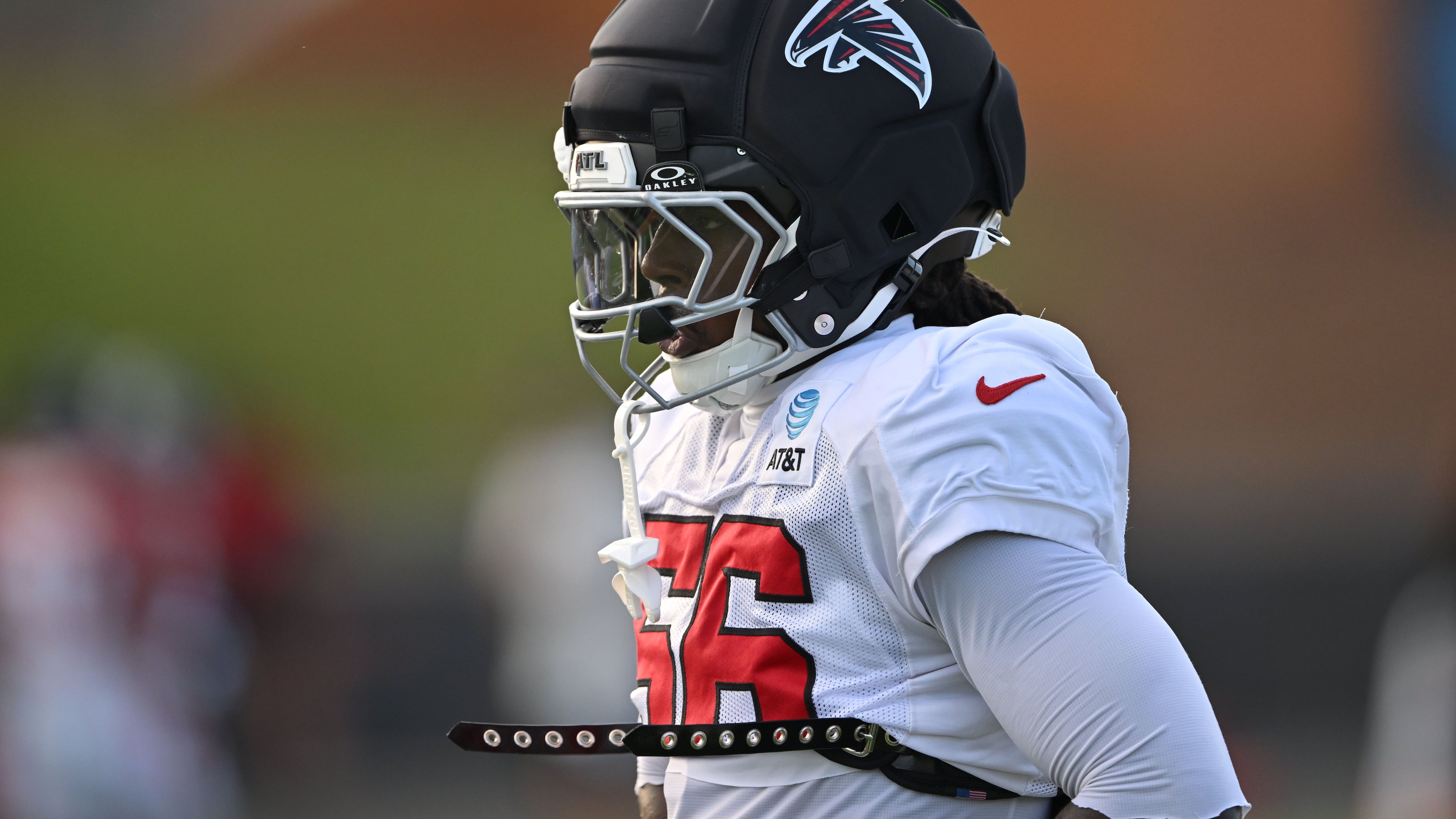
Perkins became the best player Rogers has ever coached, a five-star recruit, a two-way sensation, a freshman All-American at LSU, an NFL draft pick and an early eye-opener in Falcons training camp.
Easy, right? Hardly.
“Everybody wants the perfect Cinderella story,” Perkins said in April, “but it ain’t always like that. It ain’t always peaches and cream.”
***
During Perkins’ recruitment, Rogers joined a conference call with two Alabama assistants — one coached linebackers, the other handled running backs.
“Coach,” they asked, “which one does he need to play?”
“Y’all get paid that kind of money to make that decision,” Rogers said. “Not me.”
In a different world, Perkins ends up as a next-level running back. He dominated in the backfield at CyPark, earning first-team All-Greater Houston Area his senior year after rushing for 1,194 yards and scoring 21 total touchdowns.
Falcons linebackers coach Barrett Ruud, then a defensive assistant at Nebraska, offered Perkins a scholarship. He still remembers Perkins’ highlight tape as a running back, too — it was that good.
But ultimately, Perkins chose LSU, which wanted him to play linebacker and gave him the chance to return to the area where he was displaced before his first birthday because of Hurricane Katrina. He was a Texas resident, but Louisiana was home and LSU was his final visit. His uncle still lived in the area, and he had extended family near New Orleans, too.
The decision paid dividends. Perkins burst onto the scene as a true freshman in 2022, earning first team All-SEC honors after leading LSU with 13 tackles for loss and 7 ½ sacks.
John Jancek, a senior defensive assistant and an outside linebackers coach on LSU’s 2022 staff, said Perkins single-handedly beat Arkansas in a 13-10 mid-November SEC bloodbath, notching four sacks and two forced fumbles en route to being named National Player of the Week.
“The thing that always stood out to me with Harold,” Jancek told the AJC, “was that he never made any excuses. He held himself to a high standard. He never came and said to me, ‘Oh, I thought this,’ or, ‘I thought that.’ He was like, ‘Nah, I screwed that up, coach.’ I’d be like, ‘Yeah, you did.’ And that was refreshing.”
Perkins held a high standard off the field, too. He had a 4.9 GPA in high school after an early mindset change.
Throughout middle school and his first year at CyPark, Perkins leaned on personality and natural intelligence to do just enough to get by. Teachers loved his wide smile and infectious energy. But Rogers recognized Perkins had more to give, so he set up a conversation. “Do you want to be an all-state player? An All-American player?” He asked. “Yeah,” Perkins responded.
“You can’t do it on the field if you can’t do it in the classroom,” Rogers told him. “They both work together. If you don’t keep up with this, all these doors that you can open athletically start to close if you don’t take care of the academic piece.”
Perkins listened and matured. He carried his academic success to LSU, where he graduated in three years with a degree in interdisciplinary studies. And he became one of college football’s best defenders.
After his stellar freshman year vaulted him to stardom, Perkins followed with a team-high 13 tackles for loss to go along with 5 ½ sacks, earning second-team All-SEC honors as a sophomore. He entered his junior year as a projected first-round draft pick — as high as the top 10 — and was well on his way to executing his initial plan of being in and out of school in three years.
His career changed Sept. 21, 2024.
Making a tackle in the fourth quarter of a 34-17 win over UCLA, Perkins tore his right ACL. His junior season ended. Some thought his LSU career ended there, too, with the NFL draft on the horizon. But his knee injury hurt those aspirations, too.
Once the center of attention, Perkins no longer had the spotlight. All he had was himself, his own thoughts and the strenuous recovery process.
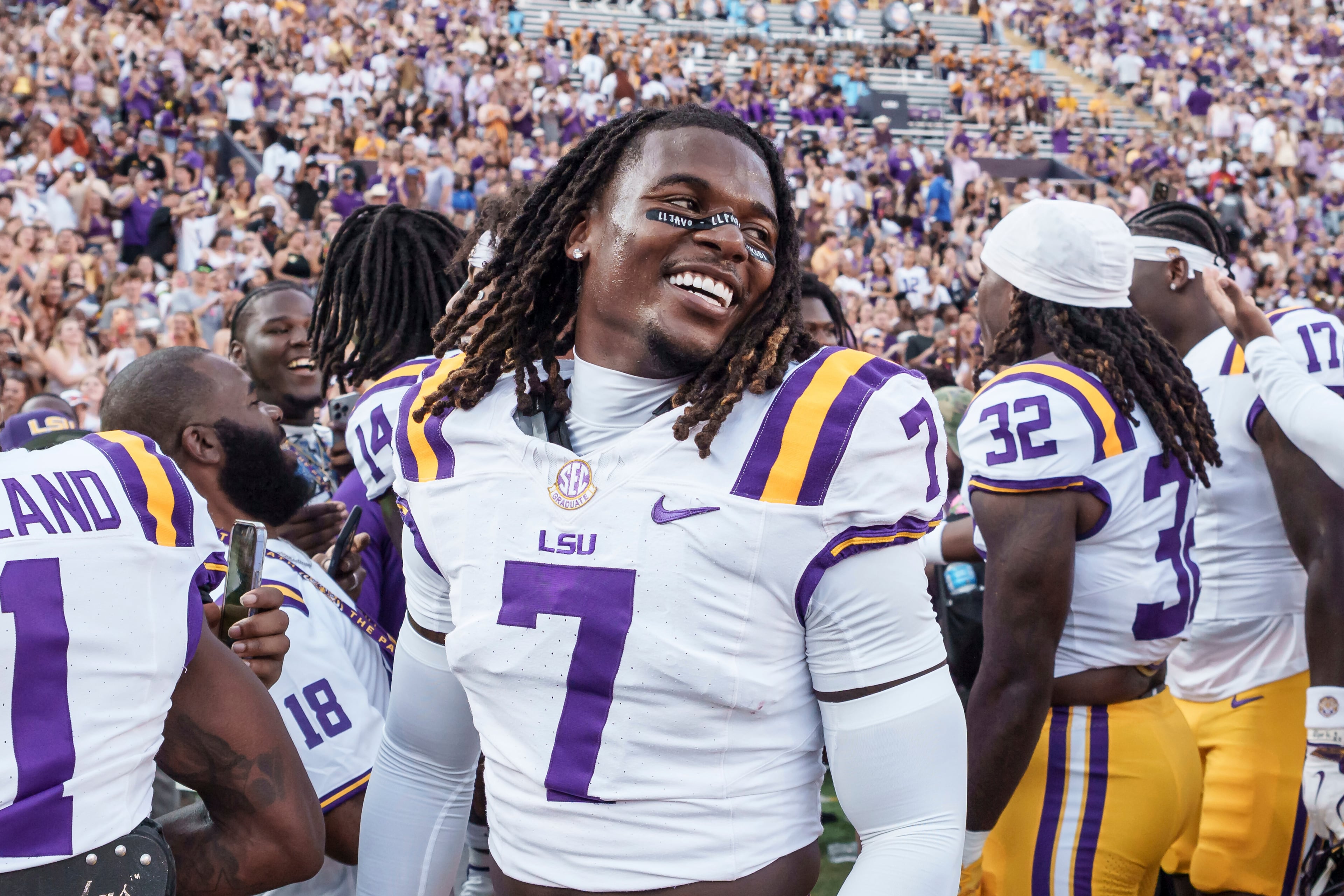
But Perkins never wavered in his commitment to LSU. He turned down multimillion-dollar offers to enter the transfer portal and take his talents elsewhere, a source familiar with Perkins’ situation told the AJC, because he wanted to represent LSU’s famed No. 7.
His opportunity came, but he struggled seizing it. Fully cleared by the end of spring practice, Perkins returned to Houston in the summer to train with Jacory Nichols, who works with a handful of NFL players and other local talent. It was their fourth year working together, and Nichols saw the injury take its toll on Perkins.
“It was definitely hard,” Nichols told the AJC. “Even when he came back, it still was some struggles just because he was stiff.”
Progressively, Perkins’ knee improved. He started 11 of 12 games and performed adequately, tallying 56 tackles, including eight for loss, along with 4½ sacks and three interceptions. He garnered second-team All-SEC recognition, but his profile, and draft stock, slumped amid a turmoil-filled season at LSU.
Questions about Perkins’ health lingered throughout the draft process. Would he ever be the same? Could he get back to the player he once was? The Falcons think so — while the rest of the NFL waited 5 ½ rounds without taking the swing.
***
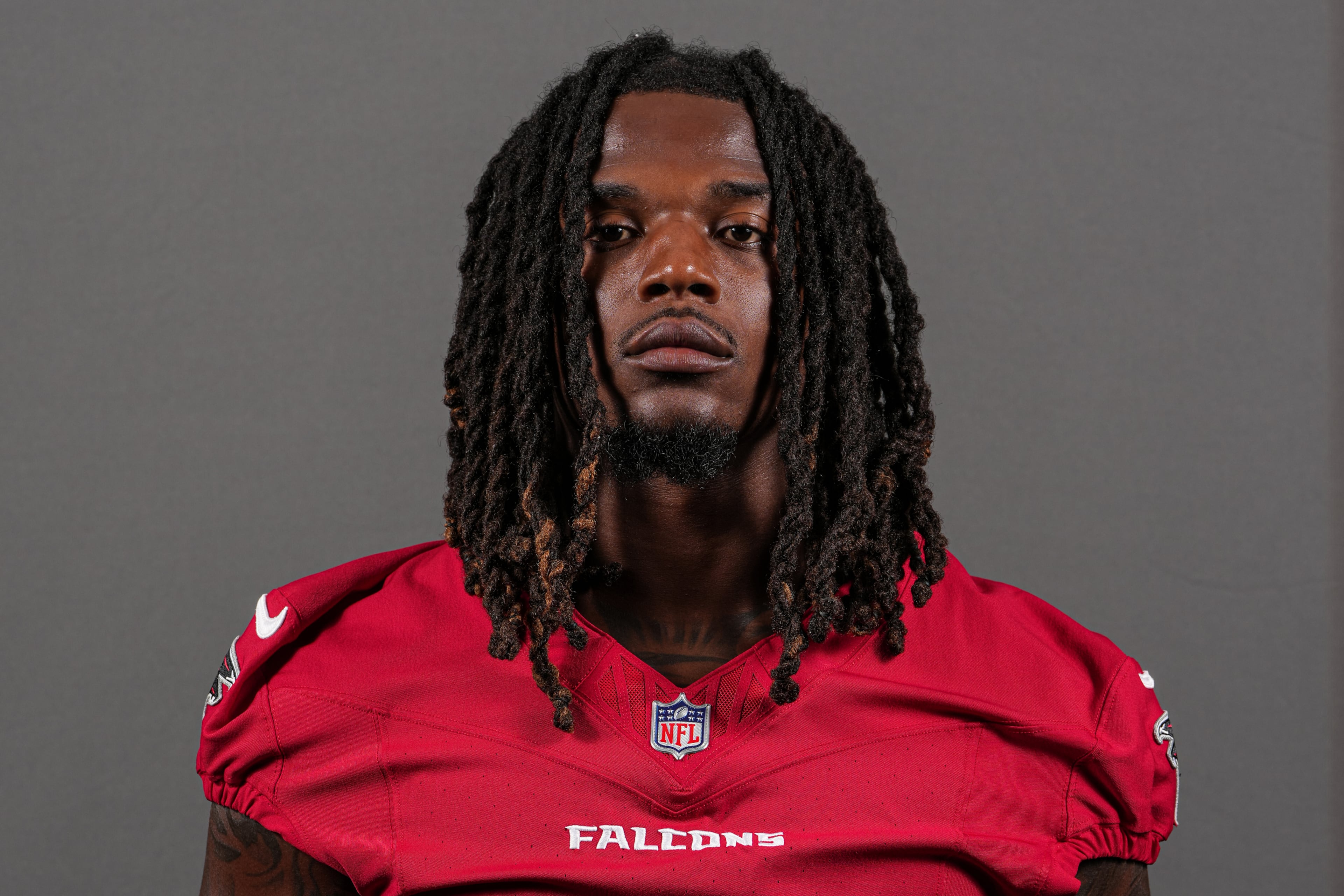
Shortly after the Falcons selected Perkins at No. 215 overall, he joined a conference call with local reporters and spoke with the confidence of someone drafted much earlier.
He mentioned the chip on his shoulder, the belief there aren’t 200 players better than him, the fact that getting drafted wasn’t his goal — being a Hall of Famer is.
Then, he lived it. In his first session back with Nichols after the draft, Perkins’ energy was so high, “you would think he went first round,” Nichols said.
“It was to the point like, ‘I’m in a great spot, in a great city. I’m going to be around great people. Let’s do it. I’m going to go get me a spot,’” Nichols said. “I think I asked him, ‘What other linebackers are there?’ [He said] ‘Man, it don’t matter to me.’ So, it wasn’t a situation where he was ever worried about that.”
Don’t let the maturity of Perkins’ response confuse the general surprise of his fall.
Teams were concerned about his size — he checked in at 6’ 0 ⅞” and 223 pounds with 31 ⅜-inch arms at the combine, and his 8 ⅛-inch hands were the smallest among players in attendance — and next-level fit. Is he an off-ball linebacker? Is he a woefully undersized edge rusher? Is he both?
Between questions about size, position and his lingering knee issue, Perkins went from projected top-10 pick to sixth-rounder in two years.
“I think from being around him so long and understanding the type of kid he is and who you would want on your team,” Nichols said, “that kind of shocked me the most.”
Falcons defensive tackle Maason Smith, who played with Perkins from 2022-23 at LSU, left Baton Rouge with the impression Perkins wouldn’t have to wait long on draft day.
“Being picked in the sixth round, knowing what type of caliber player he is, I don’t think nobody ever expected that,” Smith said.
The Falcons’ coaching staff, however, wasn’t necessarily surprised Perkins fell — though the extent of his slide certainly caught their attention.
“I wouldn’t say I knew exactly where he was going to fall,” Ruud told the AJC. “I do know when we were able to get him in the sixth round, I was pretty excited about it. I think he’s a guy that hopefully, in his mind, has a chip on his shoulder that he should have went higher, and he’s going to prove to people there he should have been higher.”
Perkins remains unfazed about his draft slide. During his recovery process, he leaned on his faith and accepted that “God had other plans for me.” His initial plan was dashed, his hopes of a peaches-and-cream college career turned rotten.
But his mindset strengthened.
“Of course, everybody wants to be a first-round draft pick. Everybody wants to go to No. 1 overall, but that’s just not how it goes for everybody,” Perkins said. “You’ve just got to know that at the end of the day, it [isn’t] about where you start, it’s about how you finish.”
And about his knee?
“We’re structured, we’re good,” Perkins said. “I’m confident in my knee and myself as well. I feel like I have all the confidence in the world to go out there and ball, for real.”
***
Perkins has a secret: though he’s played various linebacker positions for the better part of seven years, he’s never trained with a linebacker-specific coach.
He’s done linebacker drills, sure, but the player who once trained with former NFL defensive back Antonio Cromartie now leans on Nichols, a former safety, and Marcus Howard, a former defensive lineman.
Nichols puts Perkins through drills focused on coverage drops, fitting the run and playing man and zone coverage. A lot of the drills pertained more to safeties, which makes it harder from a linebacker’s perspective.
In most of Nichols’ groups, Perkins is the only non-defensive back. He never looks out of place.
“If you come out there and watch, it’s very impressive how he’s able to keep up and hit the same type of drills that I put my DBs through,” Nichols said. “Definitely a one of one. His athletic ability, he’s always been a kid that plays multiple spots, always been fluid in the hips. Great ball skills, like even the way he catches the ball is very elite.”
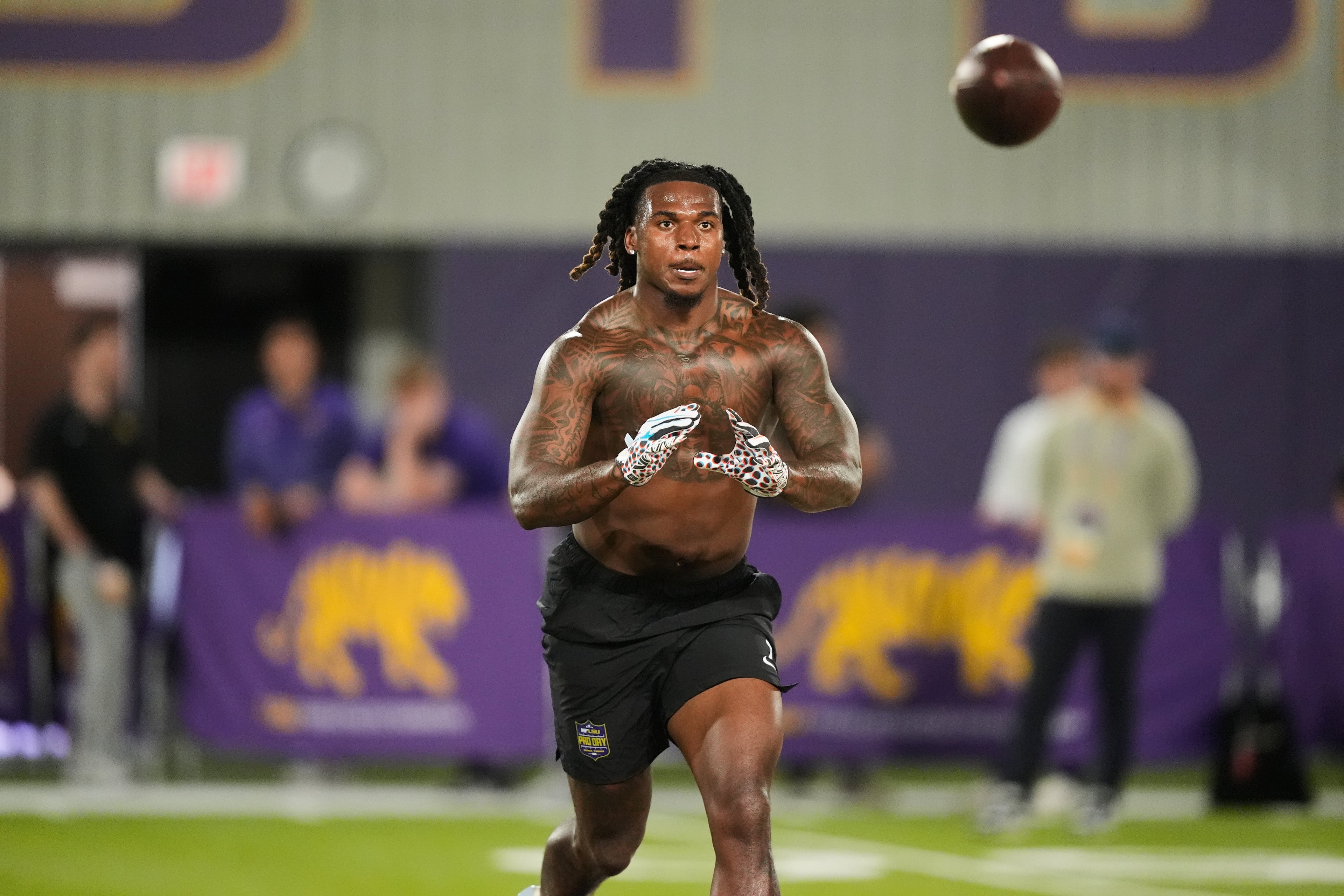
During one session with Nichols last summer, Perkins had to dissect a curl route behind him and a flat route in front of him. He mistakenly jumped the flat route, then turned his head, ran back to the curl and made a one-handed interception.
“Some crazy s---,” Nichols said. “I was like, ‘OK, yeah, this dude is definitely one of those ones.’”
Howard had a similar realization. He met Perkins this summer, when Smith took his former college teammate to one of Georgia’s premier independent defensive line coaches.
For 2 ½ weeks, Howard crafted workouts designed to maximize Perkins’ frame. Because he’s undersized compared with most pass rushers, Perkins worked on dropping his shoulder and getting low and turning his toes at the top of the rush.
Immediately, Perkins’ explosiveness, speed, bend, change of direction and foot quickness jumped out to Howard, who called him “very entertaining” to watch work through drills.
“When I saw him, the first thing I said was, ‘This guy is very explosive, but he can bend with the best of them,’” Howard told the AJC. “In my mind, I was like, ‘Well, the Falcons, they have a steal here.’”
***
When Jancek left LSU after the 2023 season, he didn’t know where Perkins’ career would take him or how high he’d end up in the draft. But the veteran assistant knew where Perkins’ best on-field fit rested.
“Once he got bigger and stronger, I thought he would be a really good weak side linebacker,” Jancek said, “where you could put him up on the edge on third downs and move him around and just let him rush.”
The Falcons saw the same. They’ve started Perkins as a weak side linebacker and put him in several alignments near the line of scrimmage, hoping to tap into his pass-rushing talent — he finished his LSU career with 17 sacks and 35 ½ tackles for loss, the latter of which ranks just outside the top 10 in school history.
“He’s got some natural feel for it,” Ruud said. “You could tell he’s trained himself to do that as well. A lot of linebackers aren’t very comfortable in the pass rush game as far as truly rushing the passer and having a couple go-to moves, and he’s put the time in where he’s already developed some of those.”
Ruud added he took it for granted because former Falcons linebacker Kaden Elliss had a similar skill set, but it’s “rare” for players to wear as many hats as Perkins can, be it as a pass rusher, playing coverage or ranging in space.
Perkins can’t mechanically explain why he’s so effective as a pass rusher. When asked to try, he looks toward the heavens and points.
“I thank God for that,” Perkins said. “This is something God gave me. I’m just natural with it.”
Howard, who trains Falcons defensive linemen LaCale London, Chris Williams and Maason Smith, along with Jaguars defensive lineman Travon Walker and several other NFL and high-level college players, said Perkins has elite twitchiness.
But there’s something else, too. Something intangible.
When Perkins went through a drill in a sand pit with Howard, he struggled at the beginning. Then, he started attacking more. He started competing. There was a look in his eyes. A look so strong, so intent on fixing his shortcomings, Howard said he could feel Perkins’ presence. He could feel his competitiveness.
“Some people don’t understand just how much competing and just trying to actually win matters,” Howard said. “He knows he’s an undersized type of guy, so I feel like it’s just that will and that drive to prove that even though I’m undersized, I’m still getting there.”
Perkins brings additional value, too. Jancek, who briefly spent time as LSU’s special teams coordinator in 2023, encouraged Perkins to get involved in the game’s third phase.
“Teams won’t draft you,” Jancek told Perkins, “if you’re only going to play linebacker. You have to play special teams, especially as a rookie.”
Perkins listened. Despite being one of LSU’s defensive leaders, he played over 200 career snaps on special teams.
“He’ll do whatever you ask him to do,” Jancek said. “He’s a great guy, man. I love that guy.”
***
When the Falcons’ defense has team periods in training camp, Perkins often finds his way into the mix with the first team.
Sometimes, he’s lined up over four-time All-Pro guard Chris Lindstrom. Sometimes, he’s over center Ryan Neuzil. Sometimes, he’s in the slot or at a traditional off-ball linebacker position. Perkins told teams during pre-draft interviews he’s the most versatile player in the class, and the Falcons are using him as such.
When he was a senior in high school, CyPark played three safeties, and Perkins served as the low-middle of the trio. He asked Rogers what his rules and responsibilities were.
“This is going to be your favorite thing,” Rogers told him, “because it is ‘see ball, get ball.’ You have zero rules. Everybody else has assignments. You go get the football.”
Perkins flourished. That’s the way his brain works, after all, and the way his support staff hopes the Falcons deploy him.
“At the end of the day, when Harold has been able to play fast, he’s been efficient,” Nichols said. “When he has to slow down a little bit and think, that’s just not his natural state. When he’s able to play and go get the ball, you’re doing something right schematically with him.”
Falcons coach Kevin Stefanski said it “remains to be seen” how much Perkins plays right away. For rookies, and for this new regime, training camp is about earning roles. The Falcons won’t be handing out jobs.
But so far, after an impressive start through OTAs and minicamp and a strong first two weeks of training camp, Stefanski said Perkins is “earning more reps” on both defense and special teams.
“If you can have multiple jobs and you’re not just in one position, or you’re not pigeonholed into one position, that gives us as a football team versatility along the roster,” Stefanski said. “I think ‘Perk’ is earning those types of roles, but certainly, he’s not there yet.”
Stefanski scoffed at the notion Perkins is undersized.
“I’ve been around plenty of guys that don’t have the quote-unquote exact measurements that you think you want at height or length and those types of things,” Stefanski said. “He’s plenty big, he’s plenty fast, plenty strong and he’s got the right attitude. We’ll keep bringing him along based on what he earns over the course of these weeks.”
Perkins has spent the summer trying to be where his feet are. He’s focused on earning trust from his teammates as much as he is earning playing time. He’s accomplished both.
Starting linebacker Divine Deablo said Perkins is “way ahead” of expectations from a mental standpoint. He’s learned the system, the calls, the checks and everything else that goes into playing linebacker at a faster rate than anticipated for a rookie, let alone a sixth-round pick.
Perkins is unconcerned about proving anything to anybody. He stopped caring about outside perceptions long ago. Now, he cares only about proving to himself that he’s the guy he’s always been.
When he was healthy, when he was younger, he was supposed to be the NFL’s next great defensive weapon. His knee injury slowed him, but he’s steadfast on proving it won’t define him.
Through his first three months as a pro, he’s left little doubt — not that anybody in his circle expected anything different.
“He’s been the same exact guy since I met him,” Smith said. “I have all the hopes in the world and all the praise in the world, and I’m excited to see what he does this year.”