
In an era of change, Brent Key’s flexibility gives Georgia Tech an advantage
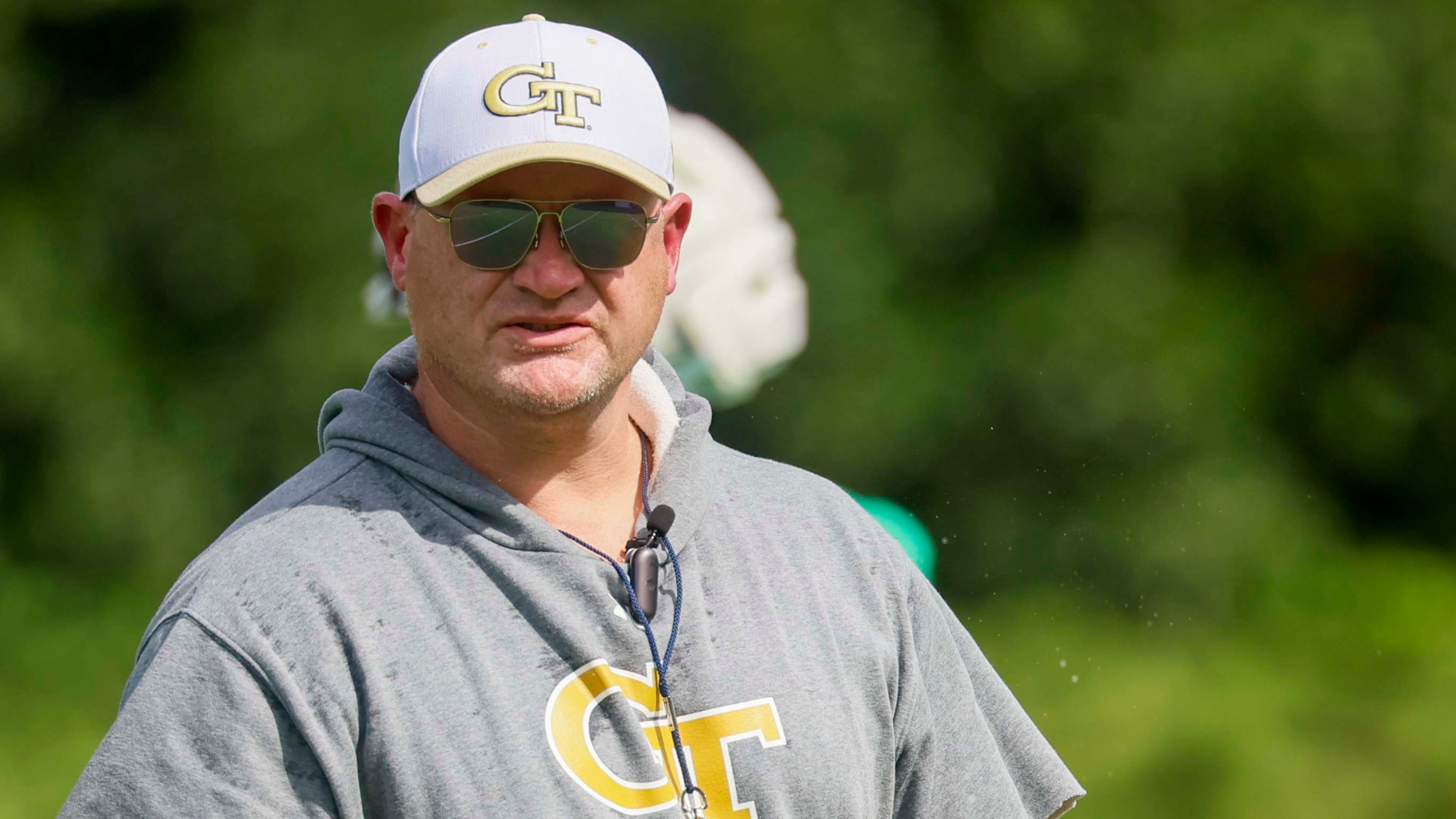
Brent Key’s fourth season as Georgia Tech football’s head coach differs from the first three in a multitude of ways.
Both his coordinators are new, as are a number of assistant coaches and staffers. The Yellow Jackets are trying to follow a season that was both the program’s best since at least 2016 and a disappointment for how the team fizzled over the final five games.
The best quarterback he might ever have (Haynes King) is no longer behind center, replaced by a transfer who has never started a college game (Alberto Mendoza).
More experienced in his job and willing to adapt, Key embraces all of it.
“I’ve been really excited just with some of the organizational changes that we’ve made in the entire program,” he said.
In ways big and small, his flexibility was evident Monday in Tech’s first practice before the Sept. 3 season opener against Colorado at Bobby Dodd Stadium.
The flex period, during which players warm up, was run differently than it had been previously to better prepare players for the practice ahead. The flow of the practice had also been changed to use the time better and keep players more involved.
The top three offensive line units did not take snaps in separate five-player groups, but instead with different players mixed into multiple units. The intention was to develop an eight-player first unit of three tackles, three guards and two centers he can trust for game action.
Key is also emphasizing the use of walk-through sessions to teach players their assignments on plays in order to save wear on their bodies.
Certain elements were inspired by new offensive coordinator, close friend and former Tech teammate George Godsey, who brought ideas from his four years on the Baltimore Ravens coaching staff.
“To the naked eye, just watching a practice, you can’t tell a lot of things,” Key said, “but there’s so many things that we’ve tweaked and changed and altered in the program really to create a little more sustainability throughout the months of September, October, November, December and, hopefully, January.”
In the bigger picture, changes in the composition of his coaching and support staff also reflect a shift. Godsey replaces former offensive coordinator Buster Faulkner, the celebrated play caller who moved on to Florida after the regular season to accept the same role with the Gators.
Former defensive coordinator Blake Gideon returned to Texas after one season in something of a mutual parting. His successor is Jason Semore, another returnee whom Key knows from their time together on Geoff Collins’ staff and Key’s tenure as interim head coach.
Having not known Gideon before the hiring process and having experienced a somewhat bumpy departure with Faulkner, the move to coaches Key knows well seems by design.
In the offseason, he rearranged the structure of the program to enable him to be more involved in coaching and recruiting as opposed to overseeing the organization. After the spring game in April, he particularly credited director of football operations Josh Thompson, chief of staff Donald Hill-Eley and associate head coach Brian Bohannon (the former Kennesaw State coach).
“That’s been a game changer,” he said then. “An absolute game changer.”
It’s telling that The adjustments followed a breakthrough season in which the Jackets finished 9-4 and reached No. 7 in the country, their highest ranking since 2015.
For Key, though, it wasn’t enough, particularly after the Jackets lost four of their past five games. He has pointed to shortcomings in depth, size and preparation, as well as the team not handling success well, as reasons for the falloff, which cost Tech its first spot in the College Football Playoff.
“If you don’t think that’s driven myself in how we’ve built the roster, how we’ve trained, prepared, worked, built a staff to put the right men in place to be around these guys, then obviously you don’t know me, and you don’t know our program,” Key said at ACC Kickoff in July in Charlotte, North Carolina.
Such adaptability isn’t necessarily the default setting for a college coach or anyone, for that matter. But it gives Key and Tech an advantage in an era of college football defined by change.
This newest incarnation of Key seems revitalized and more confident in his capacity to lead the program through whatever the season brings.
“I think we’ve got something special,” he said in Charlotte. “I really do.”
Some things have remained, though. Key is a former offensive lineman at heart.
“There’s no frills,” he said. “Blue collar. We don’t need the fancy (stuff). Let’s play ball.”
Sounds like a pretty good message for the team.
You can now get my column sent straight to your inbox. Sign up for my newsletter here.