
ACC in fight for conference supremacy despite Big Ten, SEC financial edge
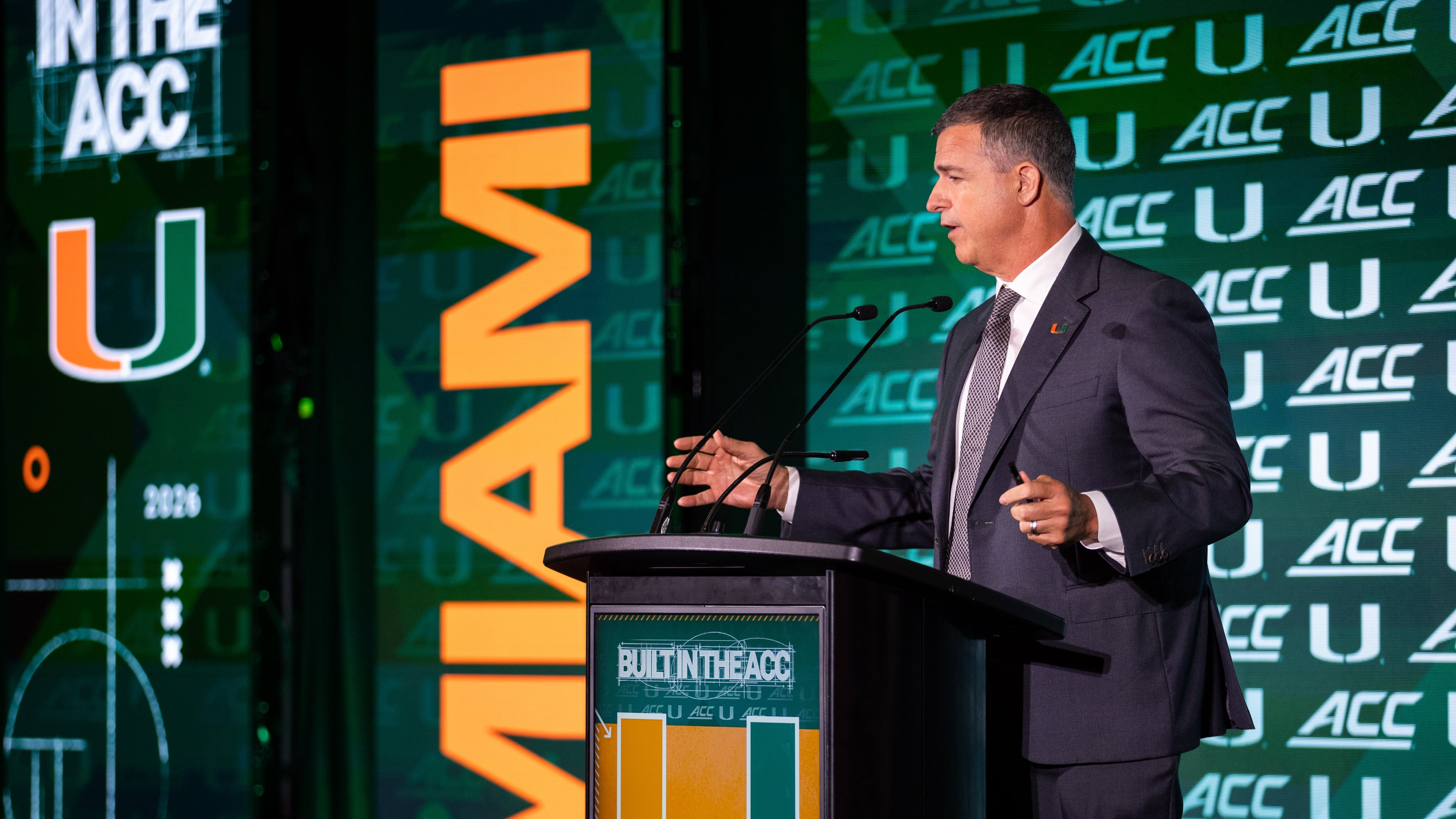

CHARLOTTE, N.C. — The ACC is tackling the 2026 football season with “remarkable momentum,” according to commissioner Jim Phillips, and it has the numbers to prove it.
Phillips, in his sixth year leading the league, believes the ACC to be on par with the Power Four powerbrokers in the SEC and Big Ten.
This, even while operating at an annual revenue disadvantage.
“Are we in a revenue race, or are we in a championship race?” Phillips said to The Atlanta Journal-Constitution at the 2026 ACC Football Kickoff at the Hilton Charlotte Uptown on Wednesday, responding to a question about the league’s inherent financial plight.
“Just because your conference has the most money doesn’t mean that entitles them to having the very best team in any sport.”
Perhaps not, but as former Florida State national championship coach Jimbo Fisher told the AJC on Wednesday, it’s a major factor.
“That’s the biggest contention right now, because of the differentiation in conferences’ revenue,” Fisher, working the event with the ACC Network, told the AJC.
“Miami has proved they can compete financially, and now at other schools, individuals will have to help make up the difference,” Fisher said. “You have to find a booster or two to help provide a revenue source — somehow, some way — to generate the monies needed.”
ACC revenue has grown by more than 56% over the past five years, the number of corporate sponsors doubling in that time, while the revenue has more than doubled since 2019, Phillips said.
The ACC is projected to make more than $900 million in gross revenue this year after clearing $826.5 million in the 2024-25 fiscal year.
It’s the seventh straight year the ACC has produced record revenue, but it still falls short of the Big Ten — which, per USA Today, reported $1.47 billion in revenue for the 2024-25 fiscal year — and the SEC ($1.11 billion).
The Miami Machine
To Fisher’s point, Miami has found enough revenue to sign elite talent out of the transfer portal, landing veteran Georgia QB Carson Beck last year en route to making a run to the CFP Championship game (a 27-21 loss to Big Ten champ Indiana).
The Hurricanes, who own a five-game win streak over SEC teams the past two seasons, were the first ACC team to play in the CFP Championship since Clemson’s 42-25 loss to LSU in 2020.
“When other schools from other conferences try to declare their prominence, it’s important to put the numbers on the table. It has a lot of value to it,” Hurricanes coach Mario Cristobal told the AJC on Wednesday. “At the end of the day, it’s not a beauty contest. It is competitive sports, and you settle it on the field.”
Phillips described Miami’s CFP run as “pivotal” to improving the league’s football resume.
Darian Mensah, a potential No. 1 pick in next year’s NFL draft, took note once deciding to leave Duke and enter the transfer portal.
“There were plenty of schools (interested) in the portal, SEC teams for sure,” Mensah said during his podium interview on Wednesday. “But the thing about Miami was the success the last two quarterbacks had that made the decision attractive for me.”
The season before Beck transferred in for a championship run, Miami landed Washington State transfer quarterback Cam Ward, who after one season playing for the Hurricanes was the NFL’s No. 1 overall pick.
Overcoming Perception
Phillips understands the perception of the SEC and Big Ten’s dominance. In addition to the revenue advantages, those leagues hold decision-making power regarding the direction of the College Football Playoff by virtue of a 2024 memorandum of understanding signed off on by leaders from 10 FBS conferences and Notre Dame.
The CFP field remains at 12 teams for the upcoming season because of the Big Ten and SEC’s inability to reach an agreement on expansion size, with the Big Ten pitching 24 teams and the SEC favoring 16.
The Big 12 and ACC merely provide input on the matter, but Phillips — who reiterated his desire for a 24-team field on Wednesday — is undeterred in his quest to maximize his conference’s success.
“You have to find new ways to create revenue and do more with less, and our schools have done an exceptional job,” Phillips said, “especially when you think of winning 36 (NCAA) championships in the last five years, having three of the top five in the last Learfield Cup (an annual all-sports-combined standings), and then the success last year in football.”
The ACC scored nine postseason football victories last season and set a league record with seven teams winning nine or more games.
Phillips pointed to a 68% gain in regular-season television audience growth — most among Power Four schools — and he anticipates viewership will continue to grow with aggressive scheduling.
“Our teams will once again play the nation’s strongest nonconference schedule, including 25 games against Power Four opponents and Notre Dame, which leads all conferences,” Phillips said during his opening news conference at the ACC Football Kickoff. “Our belief is championship teams should play championship schedules.”
Phillips noted the ACC’s strategy of scheduling a conference-record 15 Friday games this season, “providing more opportunities … to stand alone” with the majority of college football games being played on Saturdays.
The ACC has also moved its league championship game from 7 p.m. to noon, giving the league the only Power Four championship game in that time slot, with hopes of drawing more attention.
Tiebreaker Change
Phillips also noted Wednesday that the league has adopted a new tiebreaker for its conference standings after last year’s race featured a five-way tie for second place that put Duke in the ACC title game over higher-ranked Miami.
The No. 1 tiebreaker remains head-to-head meetings, but the No. 2 tiebreaker will now be determined by a team’s ranking provided by SportsSource Analytics — a metric utilized by the CFP Selection Committee in its weekly rankings — to get the two best teams in the game.