A dream. A homecoming. A sense of pride. 10 coaches return to their alma maters.
Nearly 100 head football coaches took new jobs across Georgia this offseason, but only 10 of them joined a special group.

Those 10 coaches are returning to their alma maters to lead the program where they fell in love with high school football. For some coaches, it’s a daunting thought — going home would mean taking on the reputation they left in high school.
For others, though, it’s a dream job. A chance to elevate players who wear the same jersey they did years ago.
“I think everybody has a certain pride about coaching … on a field that you played on yourself,” new Montgomery County coach Gabe Gay said. “I think when the kids know — and they all know that I played there, too — I think it’s cool for them.”
The Atlanta Journal-Constitution spoke with all 10 new GHSA coaches taking over at their alma maters. Here’s what it means to each of them.
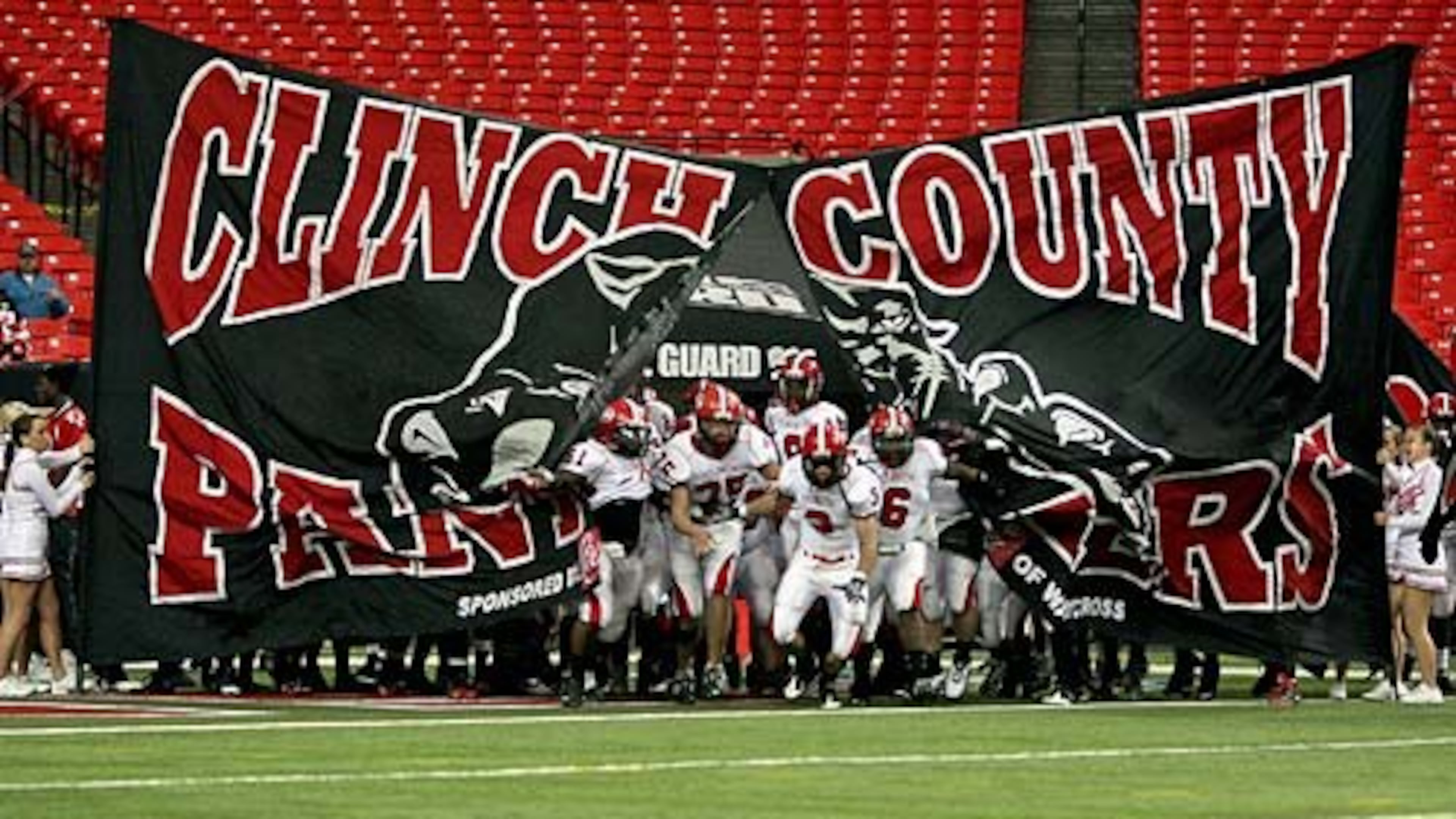
Rance Morgan, Clinch County
Morgan continues one of the unique coaching legacies in Georgia, as Clinch County’s past six head coaches have all been alumni (former coach Jim Dickerson had two separate stints).
The legacy goes back to 1974, when Donald Tison was hired. Clinch County alumni have since led the program to eight state championships and 19 region titles.
Morgan was a key part of the team’s third state championship run, in 2002. He was a starting defensive back whose 41-yard pick-six helped the Panthers punch their ticket to the state title game that season.
Clinch County has had less stability than normal over the past decade. Morgan’s hiring marked the third coaching change since 2019, but the Panthers have continued to compete for championships with alumni at the helm.
“Even though we’ve had a few coaches lately, they’re still the guys that know the ins and outs of the community and the program, and they just understand it to a level that someone from the outside can’t,” Morgan said. “The standard doesn’t have to change a whole lot. We’ll have some small tweaks, of course, but everybody understands that, and it keeps the transition smooth, no matter what.”
Logan Winkles, Upson-Lee
Winkles is harnessing the full power of Upson-Lee alumni as he starts his head coaching tenure. Every single member of his staff, he says, is either a fellow Upson-Lee alumnus or has lived in the community for at least a decade.
Winkles said he’s the only coach on his staff with more than 10 years of coaching experience, but he plans to harness that, too.
“You can have a young staff because they’re ready to get this place right,” Winkles said. “They’re energetic about getting it right. They’re listening to direction. Everybody needs to move in the same direction.
“I don’t have anybody that isn’t invested in the future of Upson-Lee so that when I tell them, ‘Hey, we’re going to go to a clinic with these rec league coaches,’ or ‘Hey, I need you at every middle school game,’ or ‘Hey, I need you at every Saturday rec league game,’ they’re not going to argue with me.”
Winkles believes his young, homegrown staff will also help him protect his team. Coaches with local ties can easily keep up with players and keep them out of trouble.
“They can’t run,” Winkles said. “There has to be constant discipline, especially in a place like Thomaston-Upson. When we’re here, they have to know that we love them, and they also have to know that they can’t get away from us.”
JD Sellers, Appling County
Sellers starts his tenure promising stability, which Appling County has missed recently. Sellers became Appling County’s fifth new coach since 2016 this offseason.
Sellers recalled a conversation with Appling County’s touchdown club before he took the job. One member said they were hoping to find a coach who planned to be a Pirate for a while.
“I told him when I came into it, I don’t have a next plan,” Sellers said. “I plan to be at Appling County as long as we have enough success for them to allow me to stay. I told one of the coaches that I hired, he’s probably got a little less than a decade left in his coaching career, and he said, ‘It’d be great not to change schools again.’
“And I said, ‘Man, you don’t come home just to pack up your stuff and leave.’”
Sellers was an AJC all-state honorable mention quarterback in 2004. Before he ever played a snap for the Pirates, he served as the team’s water boy.
Sellers said he had his eye on the Appling County job before it even opened.
“A lot of coaches say that it’s difficult to come back to your hometown and then step into that leadership role, but it’s something that, given my experience and given the places that I’ve been, it’s something that I felt prepared to do,” Sellers said. “Coming back home was not something that scared me.
“It was something that, hey, I’m going to be a leader of the program that I’ve always been a part of, so it’s something that felt very natural.”
Dwight Smith, Swainsboro
Smith was promoted from defensive coordinator to what had been his dream job since he was a child serving the Tigers as a water boy: head coach at Swainsboro.
For all his memories playing for Swainsboro, one of Smith’s favorite times around the program came from his water boy career. That was in 2000, when the Tigers won the only state championship in program history.
Smith remembers the way his hometown traveled to Fitzgerald for the title game, which ended in a 6-0 win.
“We pulled in maybe three hours prior to kickoff, and there’s a line for, like, two blocks of fans just waiting to get in to be able to experience it,” Smith said. “Whenever the bus pulled into town and they saw those Emanuel County school buses driving by, just the cheers and just the excitement in Fitzgerald that day.
“There couldn’t have been anybody left in Swainsboro.”
The Tigers have come close to another title, losing consecutive championship games in 2022 and 2023.
Smith doesn’t use the pain of past losses to motivate his team, though. He talks about the excitement he felt that night in 2000 and his desire to revive it 26 years later.
“That’s the goal,” Smith said. “We want to get back to that, and we don’t really shy away from it.”
Cornelius Brown, Cook
Brown doesn’t just credit his alma mater for making him a successful coach. He also credits Cook for his success as a player.
Brown played at college football’s highest level as a safety at Missouri. The two-time Big 12 Defensive Player of the Week was a staple of the Tiger defense in 2007 before a brief stint in the NFL. Brown played seven seasons in the Indoor Football League before starting his coaching career.
He graduated from Cook in 2003, so many of his players’ parents remember the dominant player that he was for the Hornets. He lets his players discover who he was, but he doesn’t mind reminding his team when he needs to, either.
“Sometimes when I’m explaining something or I’m talking about something, I’ll remind them, ‘Hey, I’ve been to the highest level, so I know a little bit about what I’m talking about. I understand you know some stuff, too, but I’ve been to the highest level. I think you should listen to me a little bit before we move forward,’” Brown said. “But I don’t try to bring up my past and stuff too much and talk about my playing days.”
Brown, who was promoted from his position as Cook’s safeties coach in January, has already seen his story presence affect his team.
“They can hear all the stories that they want, but when they see it actually in front of them with their own eyes that your head coach is someone who has actually been in your same shoes and is going through the same things that you’re going through and made it to that level, I think it gives them a sense of hope that they can do it, too,” Brown said. “That’s something to be proud of, when those kids can look at you and have some kind of hope that there is a way out.”
Gabe Gay, Montgomery County
Perhaps no coach in the entire state has deeper family ties with his alma mater than Gay does with Montgomery County.
Gay’s grandfather, Mayes Dobbins, founded Montgomery County’s athletic program. Dobbins was also the program’s first football coach and won several state championships coaching the Eagles girls basketball team.
The high school also sits on Dobbins Street, named after his grandfather, who built the first house on the road.
Dobbins was a key part of Gay’s favorite memory playing for Montgomery County. Gay was a junior when the Eagles beat cross-town rival Treutlen for the first time in 10 years.
And 24 years later, Gay still remembers Dobbins celebrating on the same hill he always watched the Eagles games from.
“I just remember going up to the locker room, he was one of the first people that I saw, and I just remember thinking, like, ‘Man, this is really cool,’” Gay said. “Even that young being a junior in high school, I knew then this was something I’d remember for the rest of my life.”
Julian Washington, Chapel Hill
Washington’s life has changed plenty since he graduated from Chapel Hill in 2010, but coming home felt fairly familiar to him. High school football has certainly changed over the past 16 years, but Washington still sees plenty of similarities to his high school experience.
“It’s crazy, because the kids just seem like a mini version of my classmates,” he said.
Washington was also reminded of the last place he worked as head coach, Arabia Mountain. In three years, he took the Rams from 3-7 to 9-2 with a region championship.
Washington likened Chapel Hill to a “bigger Arabia Mountain,” which gives him confidence he can turn the Panthers’ program around, too.
“The kids want discipline and structure, so that’s really what we’ve been harping on this offseason and just doing everything the right way the first time,” Washington said. “There is no second chance, so we’ve got to do everything right the first time.”
Bokowski Daniels, Monroe
Daniels didn’t travel far to come back home — he left his defensive coordinator position at cross-town rival Westover to lead his alma mater. The former three-year starter on Monroe’s defensive line said the move still felt impactful, as he was “surrounded by the green and gold” again.
Daniels’ homecoming sunk in during a morning workout early in his tenure. The new head coach was talking with one of his players, who told him he had to walk to campus for practice.
When Daniels asked where he lived so he could pick him up, the player surprised him.
“He told me where he stayed, and he stayed at my old apartment that I grew up in,” Daniels said. “So I was like, yeah, I’m back at home.”
Daniels’ favorite memory from playing at Monroe was made in his final game. The Tornadoes beat rival Dougherty for the first time in 12 years, a night he said he won’t soon forget.
“My foundation as a man and as a coach, it started right here at Monroe, understanding how to work hard and understanding how to persevere,” he said. “It was good to be back home.”
Lee Bohannon, LaFayette
Bohannon is retired in the eyes of the Georgia Department of Education, but when LaFayette asked him to stabilize the program, Bohannon didn’t take much time to come home.
The longtime coach figures he’s worked at 12 hschools — including another stint at LaFayette in the early 2000s — but nothing has felt quite like coaching his alma mater. Bohannon said he feels a certain sense of “giving back.”
“You’ve got a sense of pride,” he said. “You’ve got a sense of community involvement with people that helped nurture me when I was in high school.”
Bohannon’s true “welcome back” moment came on May 30, when LaFayette hosted its annual Honeybee Festival. The football team set up a tent in downtown LaFayette, held a raffle and sold old jerseys.
Bohannon never felt like he left his hometown — he’s owned a house about 10 miles north of LaFayette since the 1990s — but that didn’t stop locals from offering warm wishes.
“I never viewed it as leaving, but it was good to hear people saying, ‘We’re glad you’re back, welcome home, and we hope everything goes great,’” Bohannon said.
Laversay Taylor, Early County
Taylor called his promotion to head coach at Early County a “dream come true.” The 2013 graduate played defensive back for the Bobcats and has spent all five years of his coaching career at his alma mater.
Taylor said he has most enjoyed coaching alongside his brother, assistant head coach and defensive coordinator Clarence Taylor. The brothers played together at Early County and have 13 combined years coaching the Bobcats.
Laversay Taylor said his brother takes a lot off his plate, namely running the team’s strength and conditioning program. But that doesn’t mean they don’t clash like any other pair of brothers.
“When we’re coaching, we’re kind of in a mode, and me and him, we may kind of bump heads or get into it, but that’s just the competitive nature of the game, and it’s all from love,” Taylor said. “We all want to win, and at the end of the day, we sit down and talk about it.
“But in that time, we might go at each other. Not at loud, but we might get beside each other and go at each other.”