
Will UGA continue its HR smashing in Omaha? Field size isn’t the only factor.
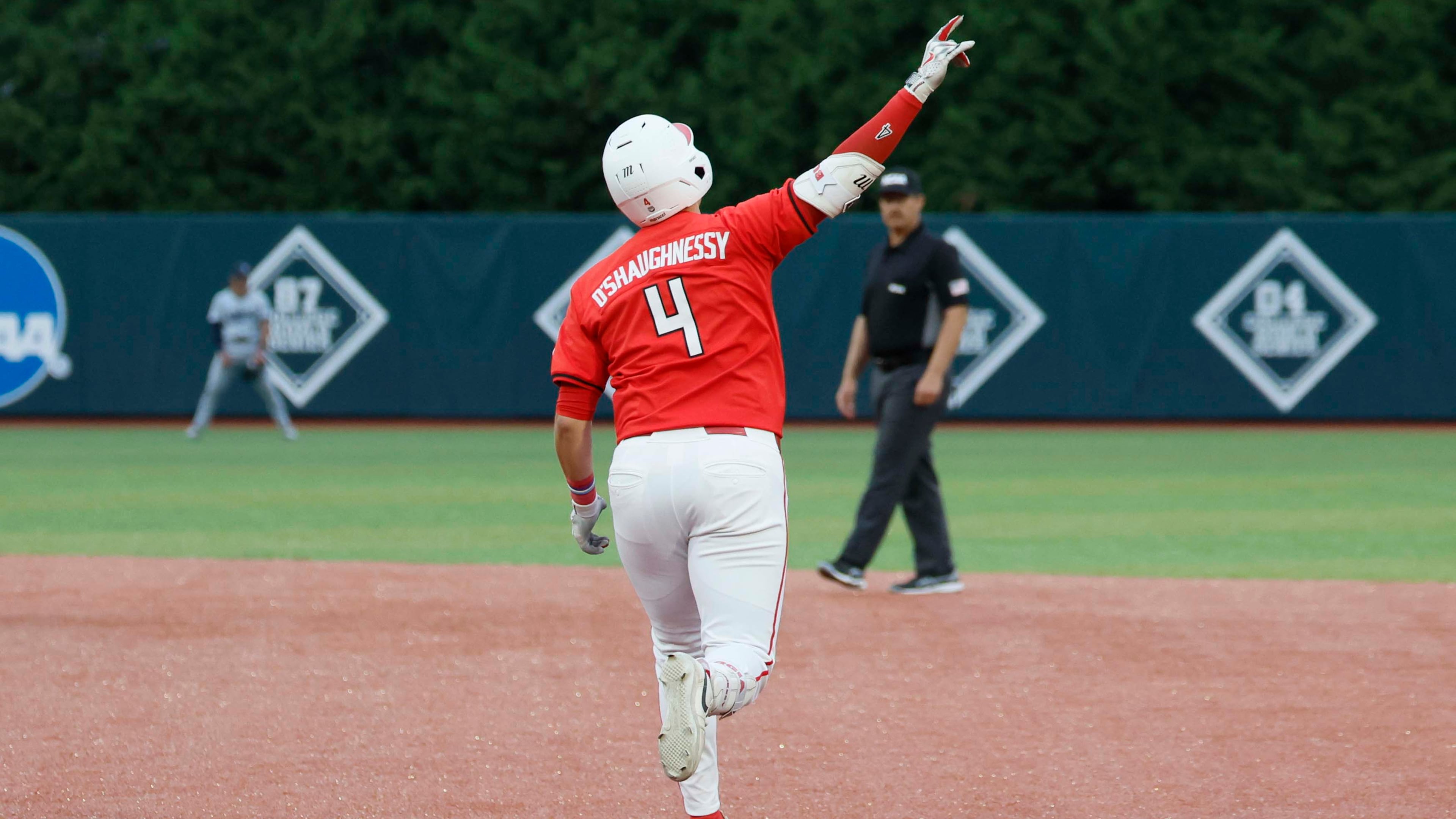
Georgia has hit 67 more home runs than any other team playing in the College World Series.
The next is Ole Miss with 107.
At media day Thursday, Wes Johnson was asked what role Foley Field played in the Bulldogs hitting so many.
They get a lot of questions about the ballpark, Johnson said, adding that yes, right field at Foley is short (more on that later). But hitting for power is more about Georgia’s style of play rather than a ballpark advantage, he thought.
“We’re not the smallest ballpark in the Southeastern Conference, by the way,” Johnson said. “We’re actually the fourth, if you want to get into that. We don’t bunt. We got two sacrifices on the year, which that’s just our style.
“That’s not knocking anybody else. We just teach our guys, we want you to try to hit the ball hard and elevate the baseball. You look at our ground ball rates and those kind of things, that’s just the way we teach the game. It doesn’t mean it’s right, wrong or indifferent. It’s just what we do.”
It helps that Georgia is armed with catcher Daniel Jackson, who has come on phenomenally strong this season, first in the SEC with 31 home runs. As a team, the No. 3 national seed Bulldogs have hit a program-record and Division I-best 174 home runs, and will hope to hit more at Charles Schwab Field in Omaha.
Georgia faces No. 6 national seed Texas 8 p.m. ET Saturday, and whether the Bulldogs get the ball out of the park Saturday will depend on a number of factors. That includes stellar Texas lefty Dylan Volantis (10-1, 2.03 ERA). But let’s look at the size differences between these two fields:
- Charles Schwab dimensions
- Left field: 335 feet
- Left center: 375 feet
- Center field: 408 feet
- Right center: 375 feet
- Right field: 335 feet
- Foley Field dimensions
- Left field: 350 feet
- Left center: 370 feet
- Center field: 404 feet
- Right center: 365 feet
- Right field: 314 feet
So, the power alleys are deeper at Charles Schwab, and right field is 21 feet deeper — Foley’s right field is particularly shallow to accommodate Kudzu Hill, Georgia’s raucous student section that overlooks the field — but left field at Charles Schwab is actually 15 feet shallower.
“We’re used to playing in other fields too,” left fielder Kenny Ishikawa said on getting acclimated, after practicing on Charles Schwab Thursday. “So, I mean, just take it as, it’s not just another field, obviously, it’s Omaha, but just don’t think about it too much, and just play.”
Johnson has made trips to Omaha before, most recently as pitching coach for LSU when the Tigers won the College World Series in 2023.
He does think the park is large, but it also might not be the toughest factor while playing there, with how windy it gets.
“It’s a massive ballpark,” Johnson said Tuesday, before the Bulldogs flew to Omaha Wednesday. “The wind plays a really, really big factor in there. There’s days it doesn’t matter how much power you have …. There’s days I’ve joked you can hit the ball twice and not hit it out of there. And then there’s been days, you know, it’s played very hitter-friendly. Most of the time, and you know when, if it’s playing neutral, it’s going to play a lot like (SEC Tournament host site) Hoover. It’ll really go down the lines. It’s really hard to get it out, you know, alley to alley to center field, but down the lines you can get it out.”
That would bode well for Georgia, which won its first SEC Tournament title May 24 at the Hoover Met.
At the end of the day, regardless of the size of a field and exactly how it will play Saturday (and the rest of the CWS for that matter, if the Bulldogs keep advancing), it’s a special environment.
“It definitely feels like a bigger field, but I don’t know,” infielder and designated hitter Michael O’Shaughnessy said Thursday. “Don’t know how a field feels plays until you play, and obviously wind and all that stuff depends on field. But I mean, it’s just, it’s just an awesome feeling to come play out here. We do our thing wherever we’re at.”