Keisha Lance Bottoms’ priorities may be limited by new budget realities


Victories in the governor’s race and the General Assembly will give new life to longtime Democratic priorities come January.
But Gov.-elect Keisha Lance Bottoms and Democratic lawmakers will face a substantially different fiscal environment than the one enjoyed by their Republican predecessors, a new state report shows.
Georgia’s budget reserves shrank from about $16.5 billion two years ago to $8.7 billion as of the end of the 2026 fiscal year in June. That’s a decrease of nearly 50%.
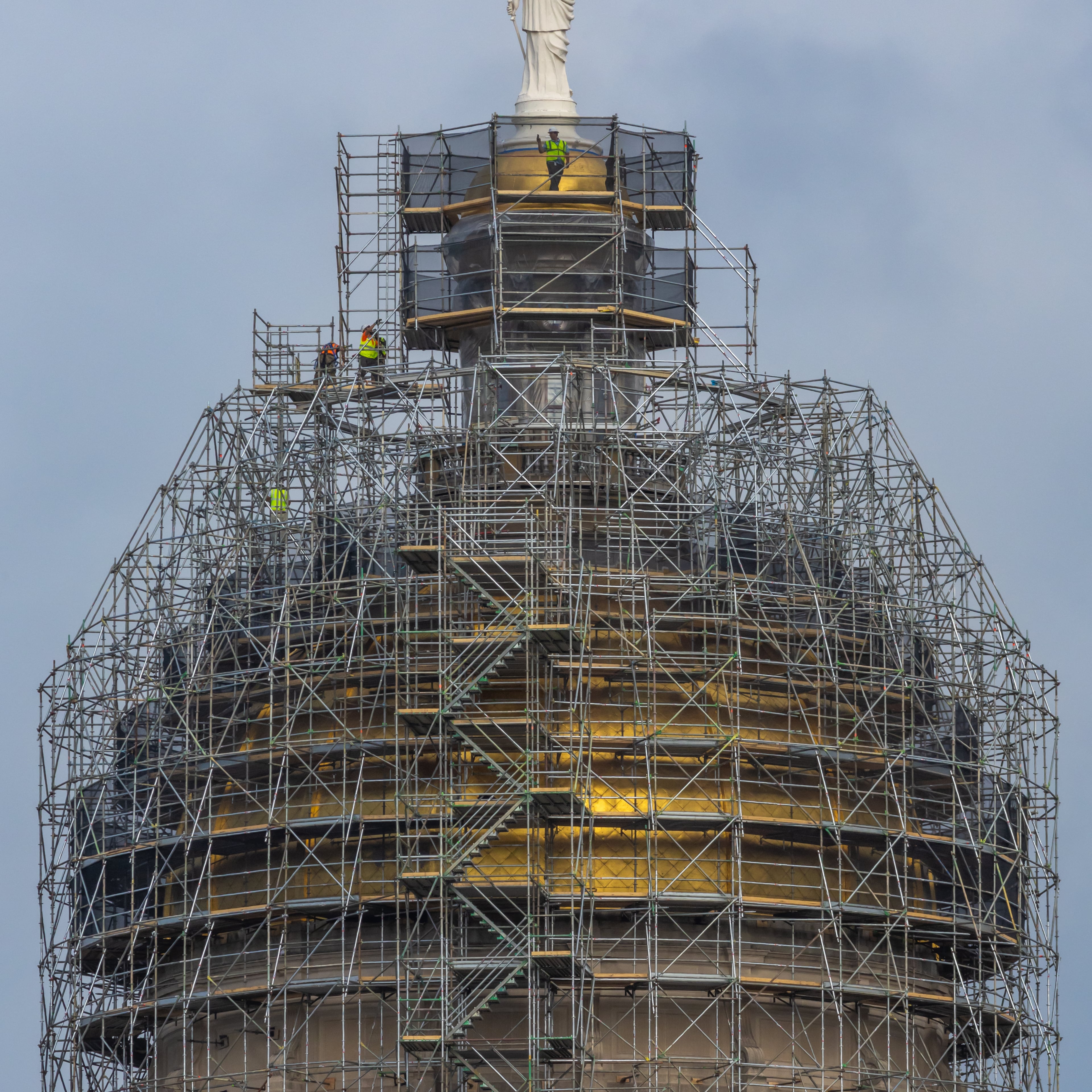
The report shows lawmakers spent a whopping $5.9 billion of surplus funds over the last year alone on income tax rebates and other expenditures.
Georgia’s reserves are still large by historical standards — enough to fund government operations for nearly three months. But the state faces pressing fiscal challenges, including rising costs for healthcare and education, federal spending cuts and election-year income tax cuts that blew a $1.3 billion hole in the state budget.

On Wednesday, Republican Gov. Brian Kemp suggested he might call a special legislative session to consider “budgetary issues that may need to be addressed before the convening of the regular session in January.”
The state’s shrinking reserves and fiscal challenges could leave Bottoms and a new Democratic majority in the state House of Representatives less money for priorities like property tax relief and making more people eligible for Medicaid, the government-funded health insurance program.
“Georgia’s budget is not one that has so much in it that you can move money around and reprioritize,” said Kyle Wingfield, president of the conservative Georgia Public Policy Foundation. “If you’re going to add a big new program, you’re going to have to come up with new money for it. And that’s going to mean raising taxes, most likely.”
On the other hand, the Democrats’ newfound power at the Gold Dome and in Washington could change that fiscal outlook by halting the Republican push for tax cuts and reversing federal spending cuts, said Danny Kanso, vice president of public policy at the liberal-leaning Georgia Budget and Policy Institute.
“We’re going into a much different political environment with leaders who might have significantly different priorities than we’ve seen in the past,” Kanso said. “That makes it difficult to determine the (budget) outlook.”
Georgia’s budget reserves surged in the years following the COVID-19 pandemic because of a combination of massive federal spending, an economic boom, inflation and other factors. The state’s surplus and “rainy day” funds grew from a combined $2.5 billion in 2020 to $16.5 billion four years later.
That allowed Kemp and the Republican-controlled General Assembly to spend more, cut income tax rates and shower Georgians with tax rebates and still have plenty of money in the bank.
That approach culminated in the spring in an election-year tax-cutting bonanza. The amended fiscal year 2026 budget included $850 million for homeowner property tax relief and $1.2 billion in income tax rebates — both of which drew bipartisan support.
Republicans also supercharged their yearslong effort to lower income tax rates. They lowered the income tax rate to 4.99% this year and shielded more of people’s income from state taxes by raising the standard deduction by 25%. They also exempted up to $1,750 in cash tips and $1,750 in overtime income from taxation through 2028.
Kemp signed the legislation, then announced it had blown a $1.3 billion hole in this year’s budget. He partially filled that hole by vetoing and disregarding about $300 million in spending. He planned to cover the rest with growth in tax revenue or by dipping into budget reserves.
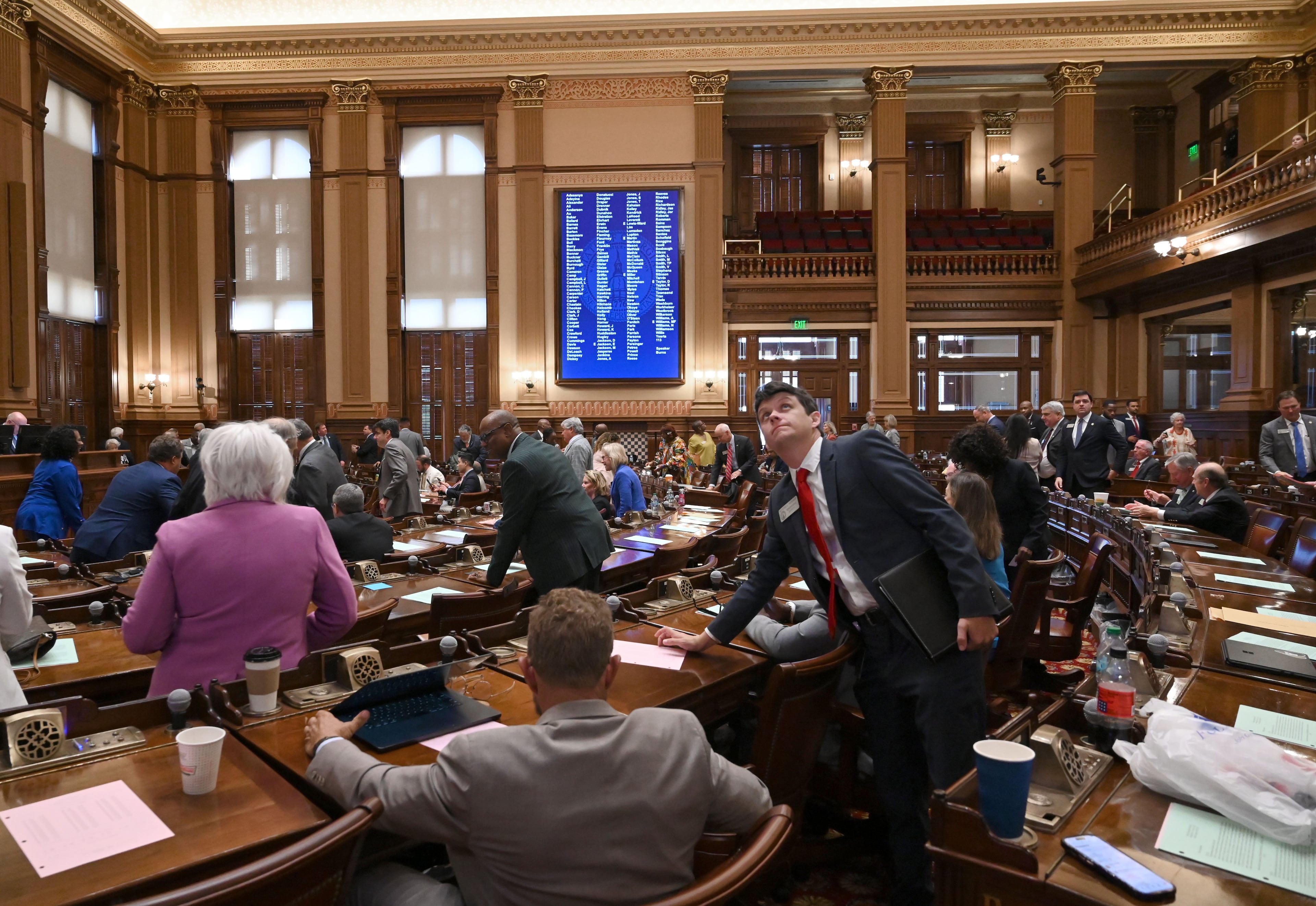
As the new report shows, those reserves are much diminished. The $8.7 billion total includes $1.3 billion in undesignated surplus and $7.4 billion in the state’s “rainy day” reserve — money set aside as a financial cushion.
It’s unclear what Kemp might propose to close the budget gap in a special session. His office declined to comment beyond statements he released Wednesday and when he signed the budget in May.
“My office will continue to monitor and evaluate this situation and keep our partners in the General Assembly apprised of the state’s fiscal outlook in the days to come,” the governor said Wednesday.
Democrats reacted cautiously to Kemp’s possible special session.
“We look forward to what he is proposing,” said House Minority Leader Carolyn Hugley, who stands to become the next House speaker. “But I’m sure Gov. Bottoms will look at that and reformat that budget to match her suggestions.”

Bottoms made her priorities clear during her campaign for governor. She and fellow Democrats want to expand Medicaid coverage for the poor. The full cost of Bottoms’ proposal is not clear, but earlier this year the state estimated that one Democratic Medicaid expansion plan would cost up to $326 million in its first year.
Bottoms also wants to expand this year’s $850 million property tax relief and make it an ongoing program. She wants to establish a $250 million relief fund for local governments that eliminate the sales tax on groceries. And she would ask voters to authorize casino gambling to generate up to $500 million a year to expand pre-K education programs.
She’s also proposed eliminating income taxes for public school teachers.
A spokesperson for Bottoms’ campaign did not respond to a request for comment on the state’s fiscal situation and how it might affect her priorities.
Wingfield said the state’s fiscal realities will challenge Bottoms and lawmakers.
“Whoever won the governor’s race was going to show up in January and have some tough choices to make in year one just to keep the status quo,” he said.
Kanso said Georgia’s fiscal reality is challenging. But he said Democrats’ sweeping victory in Georgia and across the country has changed what might be possible politically.
A Democratic Congress could seek to reverse some of the federal spending cuts approved by a Republican Congress last year. And Georgia Democrats seem likely to halt the Republican push for ever-lower income tax rates.
“That’s maybe something that creates more room in the budget for the priorities of the next General Assembly and governor,” Kanso said.