Georgia’s incoming secretary of state takes over a lightning rod role

Republican Secretary of State Brad Raffensperger has been cast as a defender of democracy for his willingness to resist pressure by Donald Trump to overturn his 2020 loss and as a scoundrel by election skeptics for the same reason.
Some hoped to see him prosecuted for standing in the president’s way.
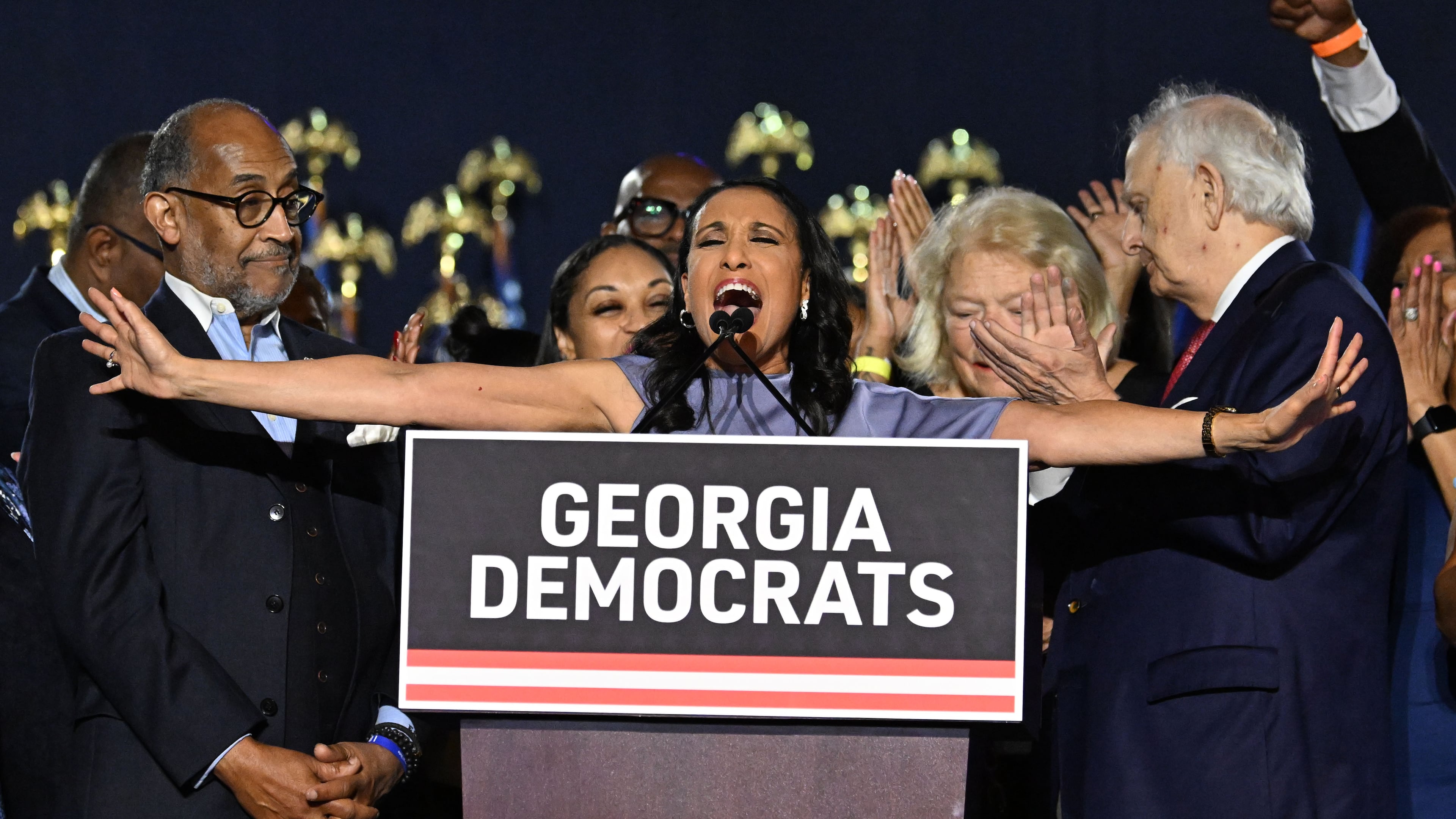
Following her victory in Tuesday’s Democratic wave, former Fulton County State Court Judge Penny Brown Reynolds will succeed Raffensperger. The onetime host of the reality TV show “Family Court with Judge Penny,” will take office with no previous experience overseeing elections and will soon be launched into a role that’s become a political lightning rod for the better part of a decade.

Reynolds campaigned on expanding voting access, has expressed a willingness to stand up against federal pressure in elections and pledged to push back against Trump’s false election rigging claims — all popular positions among Democratic voters. But, once in office, she will have to reassure conservative voters already skeptical of the state’s elections that she can be trusted.
Ahead of the election, a sizable minority of Georgia’s electorate was already concerned the midterms wouldn’t be conducted fairly and accurately, according to an Atlanta Journal-Constitution poll.
“I said over a year ago that a vote should be a right and not a fight,” Reynolds said during her victory speech. “And in Georgia, it’s no longer going to be a fight.”
One of her biggest jobs as an administrator will be to oversee the daunting task of implementing a new statewide voting system in time for the 2028 presidential election. State lawmakers have signaled the timeline to roll out a new system will be tight in the best of circumstances. The fraught politics surrounding election equipment and spurious claims that manipulated machines tainted the 2020 vote won’t make it easier.
Reynolds has signaled an openness to moving the state toward hand-marked paper ballots or sticking with voting machines.
“As long as we have accountability, verifiable evidence of the paper record and we have documentary evidence of a chain of custody, that’s what I’m for,” she said during an Atlanta Press Club Debate last month.

Reynolds inherits the dysfunctional relationship between the secretary’s office and the Republican-controlled State Election Board, the members of which appeared to have little use for Raffensperger. Reynolds is unlikely to see eye-to-eye on most issues with the board’s current majority.
In 2021, the Republican-controlled state Legislature, under pressure to address concerns with the Georgia election amplified by Trump, passed a sweeping law that removed Raffensperger as the board’s chair. State lawmakers removed Raffensperger from the board altogether in 2024.

The relationship between the secretary’s office and the board is so broken, Raffensperger stopped sending investigators to present cases of potential election violations and has refused board members’ requests to observe the secretary’s election-night reporting activities.
“I would just hope that Judge Reynolds would see it as a positive transparency thing to work with us and not have a contentious relationship,” said Salleigh Grubbs, an appointee of outgoing Republican Lt. Gov. Burt Jones.
Reynolds has said she believes the secretary of state should be on the state board.
But even the board, which has often been used as a platform to cast doubt on Georgia elections, could see change. The shift in power toward the Democratic Party could result in new appointees more in line with Reynolds’ priorities.
There are other, more positive signs for Reynolds.
She won by beating Republican state Rep. Tim Fleming by about 11 points, marking the first time a Democrat has won the office in 20 years. The Democratic wave that forced out decades of Republican rule in the state gives Reynolds a mandate for change.
Still, Republican state lawmakers have passed new laws that they say will bolster confidence in elections nearly every year since 2020. Some “election integrity” changes have placed more restrictions on voting.
If she aims to expand access to the ballot, Reynolds will have to strike a difficult balance to maintain support from the state’s Democratic base without alienating persuadable Republican lawmakers whose votes she will need.