How Georgia Democrats’ losses in the 2000s came full circle in 2026


There was a time, a long period of time, when being a Georgia Democrat meant getting comfortable with losing — like the Braves in the 1980s or the Falcons in almost any year.
Up to 2026, the party had not occupied a statewide constitutional executive office since 2011. They had not held the governor’s office, the state House, or the state Senate in more than two decades. Republicans dominated the political landscape so thoroughly that even some of the Democrats’ biggest stars were beaten like a drum once the votes were counted.
That’s why Bobby Kahn, who had been chief of staff for then-Gov. Roy Barnes in 2002 as well as the chair of the state Democratic Party then, said he could almost not believe his eyes on election night two weeks ago as the results came in.
“I thought, ‘Am I getting the right results?’ I had to reboot my phone a couple of times to make sure,” he said.
Charlie Bailey, the current chair of the Democratic Party of Georgia, was at the party’s coordinated campaign watch party this year and said he saw tears welling up in the eyes of fellow Democrats as races were called, one after another, against Republicans.
“I cried Wednesday morning when my adrenaline finally stopped running, and I was able to say, holy (expletive), what just happened?” Bailey said. “All of the losing and losing and losing and losing, over and over, and then for the dam to burst and we get to this.
“This” is the complete flip of political power in the state from Republican to Democrat for the first time in Georgia history. That Georgia, the cradle of the Civil Rights Movement, elected Keisha Lance Bottoms to be the country’s first Black woman governor, made it all the sweeter, he said.
“It’s a repudiation,” he said. “There has never been a single election transformation like this in Georgia history. There is no comparison.”
“This” is also the policy shift Bailey said he expects to see when Gov.-elect Keisha Lance Bottoms is sworn-in to office in January and Democrats take control of the state House.
“Republican policies have left so many people behind,” he said. “When I say the American dream is less attainable now than it was in 2002, that’s not a line. That is a fact for most Georgians.”
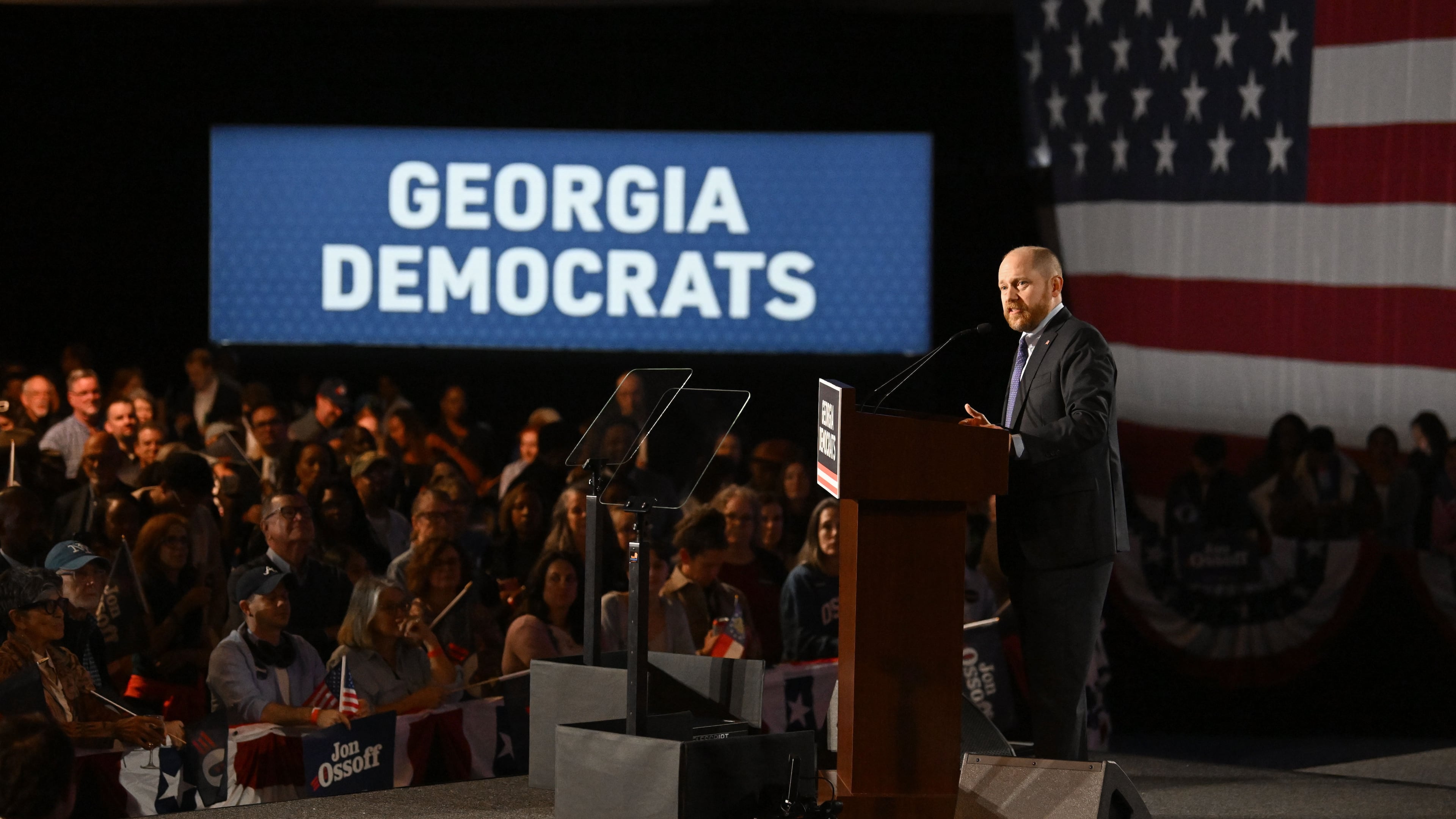
It’s a full circle moment for Bailey and other Democrats who have seen the party go from dominance to the wilderness and, now, back again.
More than two decades ago, Bailey was a member of the College Democrats when he attended the party’s 2002 “victory party” in downtown Atlanta. That’s when Barnes and the late U.S. Sen. Max Cleland went down in defeat. Four years later, he was in another ballroom as a junior staffer for then-Lt. Gov. Mark Taylor when he lost his 2006 bid for governor. Democrats lost the remainder of their statewide offices four years after that.
Bailey would run for attorney general and lieutenant governor himself in 2018 and 2022. In another hotel ballroom, he saw Democrats lose up and down the ballot in those years, too.
But he said Democrats used all of the lessons they learned the hard way in those years to finally turn the tables and win.

The first major change this cycle was making the state party executive director a full-time, paid job and electing Bailey to do it. Without a governor in the Governor’s Mansion or president in the White House, the executive director could became the statewide voice of the party against Republicans.
“Elected officials, senators, they’re doing their job. It’s not their job to drive the negative messaging against Republican rule and talk about the alternative,” Bailey said. “That’s our job.”

Another change came when Bailey and U.S. Sen. Jon Ossoff began raising money for the party in 2025, well ahead of the midterms.
“That enabled us to build it up to be the most robust we’ve ever been by many measures,” he said. Bailey said the coordinated campaign knocked on more than 575,000 doors, had 29 field offices around the state, and nearly 100 staging locations.
The party also produced door hangers featuring the entire Democratic ticket from the U.S. Senate race down to state House and Senate races. They sent mailers in targeted districts tying incumbent Republican lawmakers to President Donald Trump, who was deeply unpopular this year.
Bailey said Trump deserves a big piece of the credit for making Georgia as competitive as it was in 2026. But he said candidates, campaigns and activists, this year and in years gone by, did the rest.

“This was absolutely a response to both Trump and 24 years of Republican rule,” he said. “Sometimes when things start lining up, when what’s happening in D.C. starts to rhyme with what’s going on here, that can supercharge everything,” he said.
Jake Orvis, a veteran Democratic strategist in Georgia, agreed that 2026 was set up to be a good year for Democrats. But he credits Bailey’s work leading the party for the breadth and depth of the victories.
“Charlie is somebody who deeply understands the party architecture and how it can be used because he’s done it himself,” Orvis said. “I think there’s completely a world where had he not been doing this work, it would have been a great night, but we wouldn’t have won nearly as many of the state legislative seats.”
In other words, Orvis said, “Where does the wave stop downballot? Charlie was very, very focused on making sure it carried all the way down.”
Bailey said it’s not yet clear if the election results mark a temporary rejection of Republicans or a full political realignment in the state. He wants to make it the latter.
“We are thinking about what do we need to do now and in 2027 to support all our people and be in the community,” he said. “But we know we’ve got to deliver.”