A dispatch from Rick Jackson’s $200 million campaign for Georgia governor
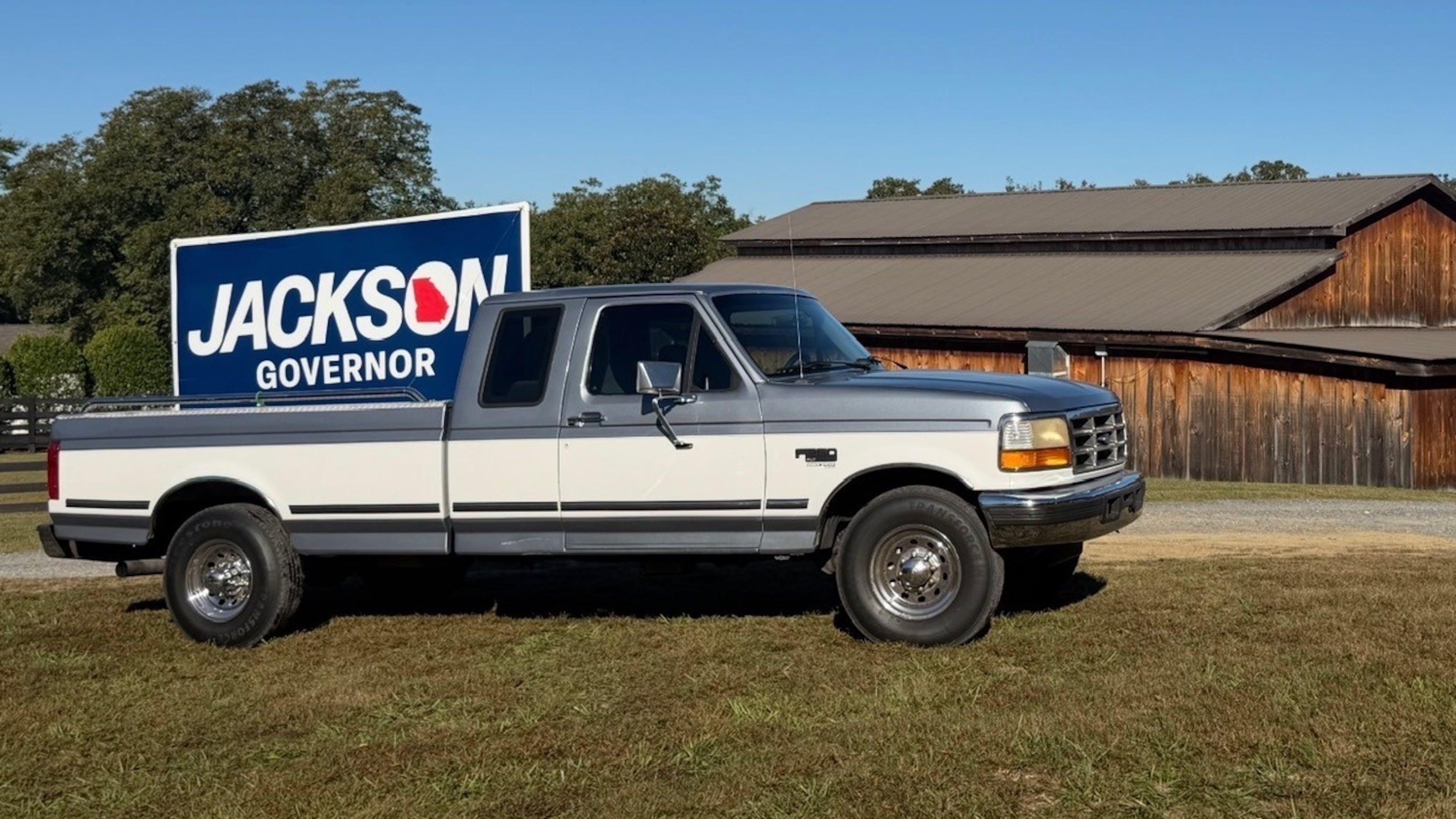

If you’re wondering what it looks like for a candidate to spend up to $200 million to run for Georgia governor — as GOP nominee Rick Jackson is expected to do — it looks a lot like a regular campaign on the surface.
There are the requisite yard signs, campaign volunteers and meet-and-greet events in converted barns like the one where Jackson stumped on a crisp Wednesday morning in Chatsworth this week.
The latest Atlanta Journal-Constitution poll shows the race between Bottoms and Jackson is neck and neck. So on Wednesday, Jackson was in Chatsworth, nine months into his campaign, still doing the work of a first-time candidate, telling voters who he is and why he’s running.
“My father left me when I was 9 months old,” he said. “My mother was a sixth grade-educated waitress who had a severe alcohol problem.”
After explaining his years growing up in foster care and how he went from being a college dropout who could not afford tuition to becoming the CEO of his own billion-dollar healthcare conglomerate, Jackson said running for governor was the last, best way he could think of to help the people in Georgia who need it most.
“The reason I made this impulsive decision last December is that I did not think I could live out the rest of my life and have more ‘kingdom impact’ than representing 11 million Georgians,” he said. A devout Christian, Jackson promised to do the job with a view of “others first” and for “the least of these.”
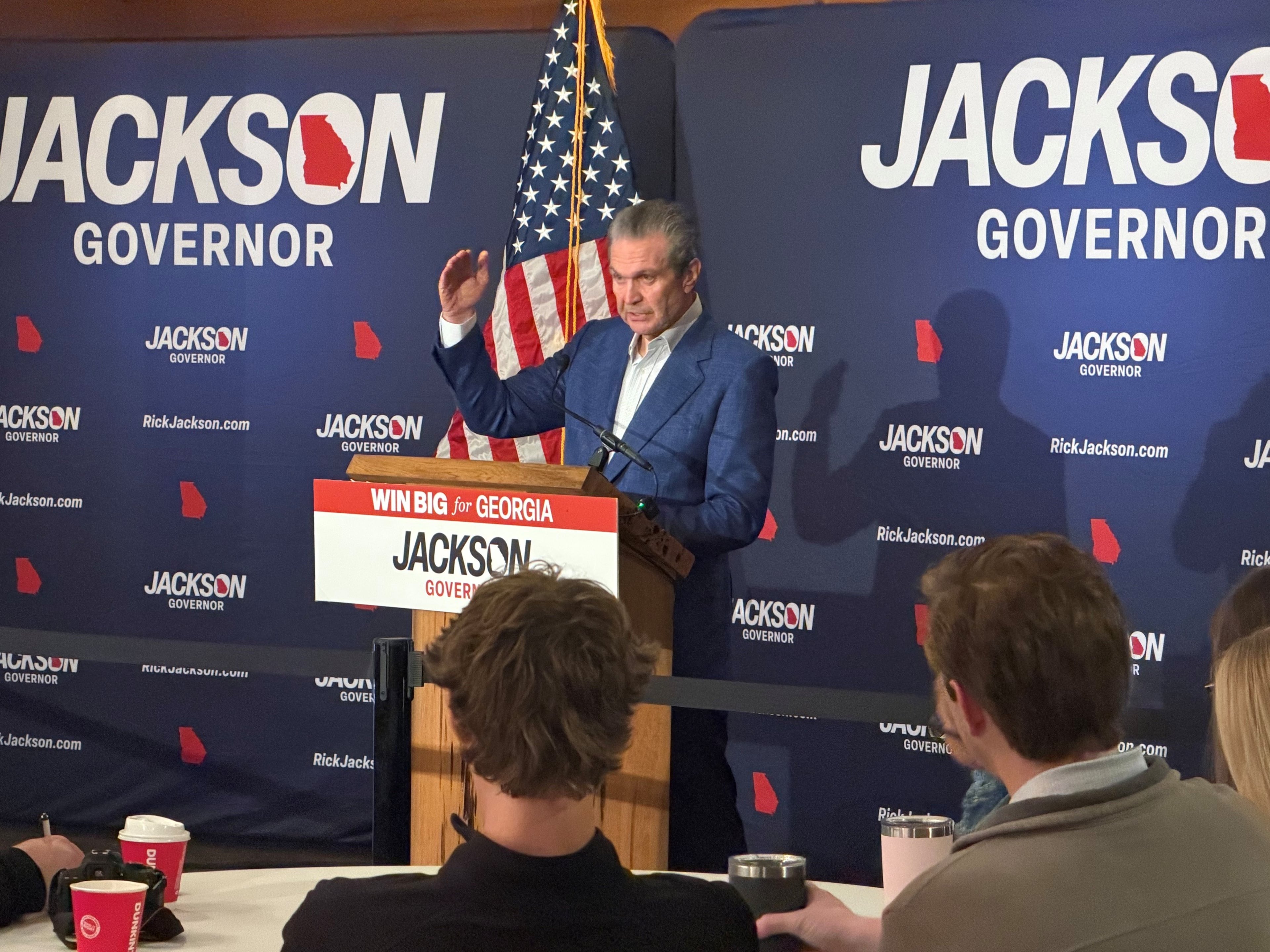
“That’s my motive for what I’m trying to do,” he said.
The crowd nodded along and clapped when Jackson promised to cut income taxes in half and tie property tax increases to local government budgets instead of rapidly escalating property values.
Without mentioning Bottoms in his speech (or Trump, for that matter), Jackson said his No. 1 job as governor would be “keeping you safe.”
“When you take up for criminals over victims and law enforcement, it disqualifies you from being a governor, period,” he said.
Chatsworth sits in the deep red 14th Congressional District, which has plenty of Republican voters for Jackson to appeal to. But the special election to replace former U.S. Rep. Marjorie Taylor Greene in Congress has meant voters have had to cast ballots in multiple special elections this year to elect her replacement, U.S. Rep. Clay Fuller.
Local Republicans now worry that voter fatigue in one of their strongest districts has already set in.
“We got to get up. We got to get motivated,” said state Rep. Kasey Carpenter, R-Dalton, comparing Republicans to the Georgia Bulldogs’ football team that lost to Auburn on Saturday. “We’ve got to dig deep, even though we’ve been voting every other month for the whole year. It’s time to rekindle that flame, get the eye of the tiger and get going, because we got to have this.”
The good news for Republicans in an election year that is growing increasingly grim is that while Jackson makes his case around the state like any other statewide nominee, behind the scenes, Jackson’s campaign is spending on a scale unlike any that has come before it.
While most candidates slog out hours in their cars to drive across the state for events, Jackson zips from stop to stop in either his private jet or his personal helicopter. The ease of movement also means Jackson will have made more than 130 campaign stops, including nearly two dozen rallies, by Election Day.
Jackson’s personal wealth also means he has been able to finance a presidential-level get-out-the-vote operation around the state. That includes 3.5 million calls to voters, 1.3 million doors knocked and dozens of different mail pieces targeted to individual voters. And he has spent or reserved more than $60 million in general election television ads so far, including three new ads this week alone. That’s in addition to the more than $100 million Jackson’s campaign spent during the Republican primary.
But despite all that, Jackson’s money hasn’t closed the door on the contest, not by a long shot. That’s partially because his Democratic opponent, Keisha Lance Bottoms, has two advantages over Jackson that no amount of money can buy: running in an anti-Donald Trump year against a Republican who promised to be “Trump’s favorite governor” during the GOP primary.
Bottoms also has the good fortune of running on a ticket with Democratic U.S. Sen. Jon Ossoff as he seems poised to defeat Republican U.S. Rep. Mike Collins by a wide, maybe even massive margin.
It’s impossible to predict whether Republicans will win the governor’s race in Georgia this year, as they have for the last two decades. But it’s very easy to see that the biggest difference Jackson’s money advantage is making is that he still has a chance to win.
If his fellow Republicans are lucky, the lifeboat he’s building for his political survival may be big enough for at least some of them to jump aboard, too.
The next 10 days will decide both outcomes.