Email shows Trump administration eyed non-English ballots in Georgia

Internal records show the U.S. Department of Homeland Security has examined which jurisdictions in Georgia offer election materials in languages other than English, raising new questions about the administration’s pursuit of investigating claims of noncitizen voting.
A Dec. 19 email from the acting director of border policy for the Department of Homeland Security references a “Criminal Checklist outlining requirements for prosecution of voter related charges.”
The checklist itself is redacted. But the email includes an attachment listing local election laws by state that require ballots be printed in languages other than English, suggesting the administration’s intent to potentially target those jurisdictions for law enforcement actions.
Cobb, DeKalb and Gwinnett counties are among the jurisdictions mentioned.
The email was first reported by NPR and obtained by The Atlanta Journal-Constitution. The Democratic National Committee first obtained the email after it sued the Trump administration over a public records request.
The heavily redacted email does not indicate any plans of deploying law enforcement to polling locations. It’s the latest in a steady drumbeat of information regarding the administration’s aggressive operation to hunt noncitizen voters despite audits and studies showing them to be rare.
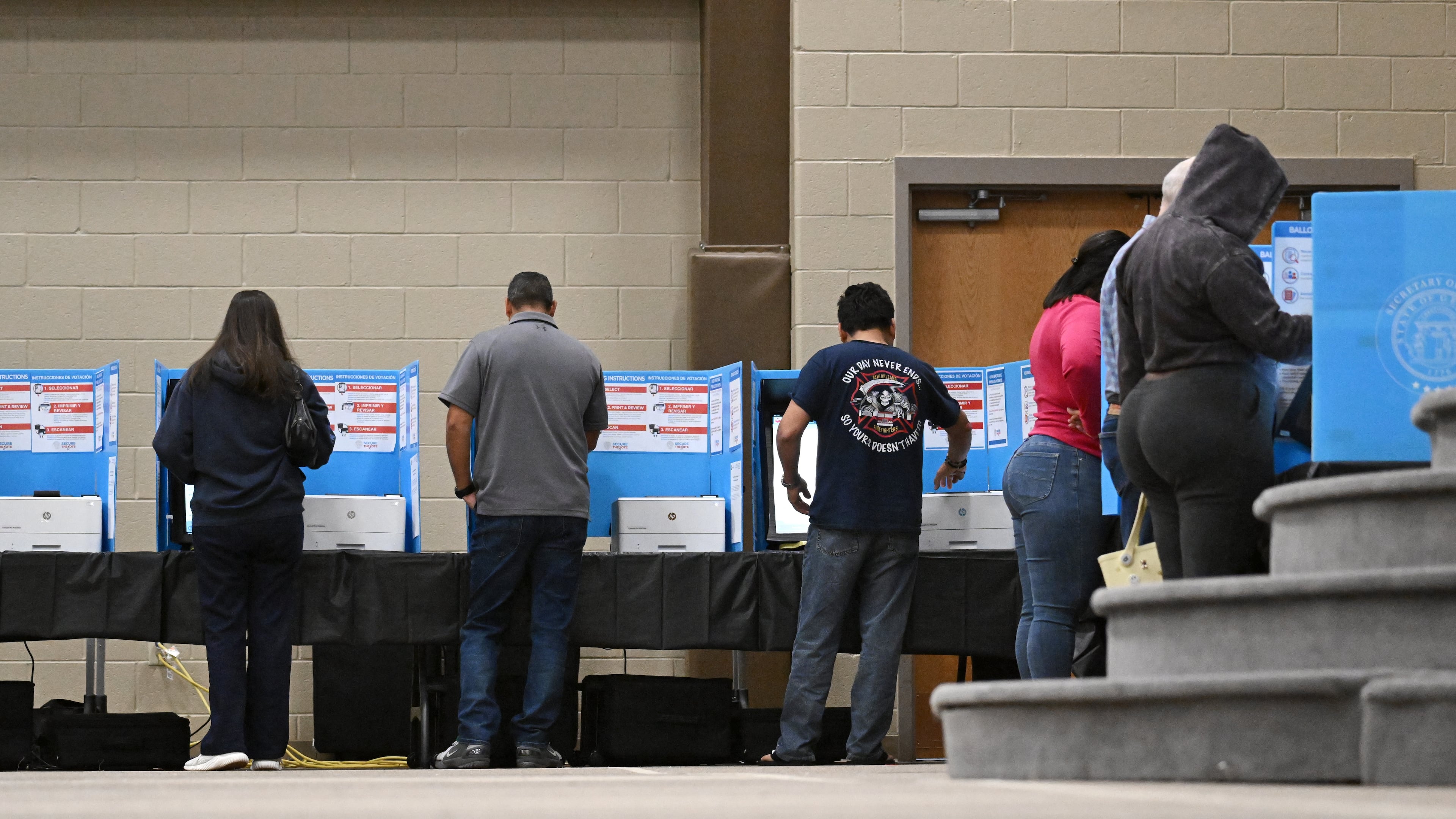
Cobb, DeKalb and Gwinnett are all densely populated counties with a majority of Democratic voters. Federal law requires Gwinnett County to distribute ballots in Spanish and English because a significant share of its residents primarily speak a language other than English.
The documents say Cobb and DeKalb counties both distribute sample ballots in Spanish and Korean. But Leigh Phillips, the Cobb elections director, said the county provides sample ballots in English.
The email was delivered to Rob Law, the DHS undersecretary for strategy, policy and plans. Other department officials also received the email, including Heather Honey, a prominent election denier and the department’s deputy assistant secretary for election integrity.
A DHS spokesperson said there are no plans for ICE to target polling locations, but that ICE “conducts intelligence-driven targeted enforcement.”
The spokesperson added that noncitizens who vote in “U.S. elections should not be able to use a purported lack of knowledge of the English language as an excuse to avoid prosecution.”
The DNC requested records from the administration last year regarding plans to deploy federal agents or troops to polling places, drop boxes and election offices in upcoming elections. The DNC’s litigation to obtain more documents is ongoing.
“It is extremely concerning that the Trump administration may be targeting jurisdictions where voting materials are available in multiple languages,” said Dan Freeman, litigation director at the DNC. “American citizens exercising their right to vote, regardless of the language they speak, have the right to do so without fear or intimidation.”
U.S. elections are run by local governments. But during his second term, President Donald Trump and his allies have stoked fears about noncitizen voters amid the administration’s attempts to get involved in elections.
The president has spoken about potentially deploying federal law enforcement at polling locations, saying he would “do anything necessary to make sure we have honest elections.”

Election experts and Democrats fear the administration may deploy immigration enforcement agents to polling places, worrying they could discourage some citizens from showing up to vote.
“We need to be ready, offensively and defensively, to protect the rights of our Spanish and Korean voters in the district to be able to exercise their constitutional right to vote,” said U.S. Rep. Everton Blair, D-Ga., who represents Georgia’s 13th Congressional District.
Even one clip published online of such an operation could stoke fears of similar actions occurring across the country, experts say.
Under federal law, it’s a felony to station troops or armed agents at polling places except “to repel armed enemies of the United States.”
FBI Director Kash Patel suggested this week he was open to sending federal agents to polling locations. Earlier this month, Homeland Security Secretary Markwayne Mullin said U.S. Immigration and Customs Enforcement would go to polling locations only if agents were responding to a threat or if they were serving a warrant on someone.
“ICE isn’t there to patrol the polling places,” he said. “We’re there to enforce specific threats.”
The Justice Department threatened to prosecute election officials for knowingly allowing noncitizens to cast ballots.
Trump has long fixated on noncitizen voters, but so far few have been charged by federal prosecutors.
The U.S. Attorney’s Office for the Northern District of Georgia on Friday announced it had charged three people whom prosecutors believe to be noncitizens with illegally voting in recent federal elections, including some dating back to 2008.
U.S. Attorney Theodore Hertzberg said in a statement that prosecutors would work with federal and state partners to safeguard the right to vote “through the prosecutions brought to date and more that may soon follow.”
More than 8 million people are registered to vote in Georgia.
Concerns over federal intervention are particularly acute in states such as Georgia, where false conspiracies about a “rigged” 2020 election have loomed large over the state and its politics.
Multiple recounts have shown that Trump lost to Democrat Joe Biden in Georgia by nearly 12,000 votes. No investigation has found evidence of wrongdoing in Fulton or that Trump won. Still, Trump falsely insists the election was stolen.
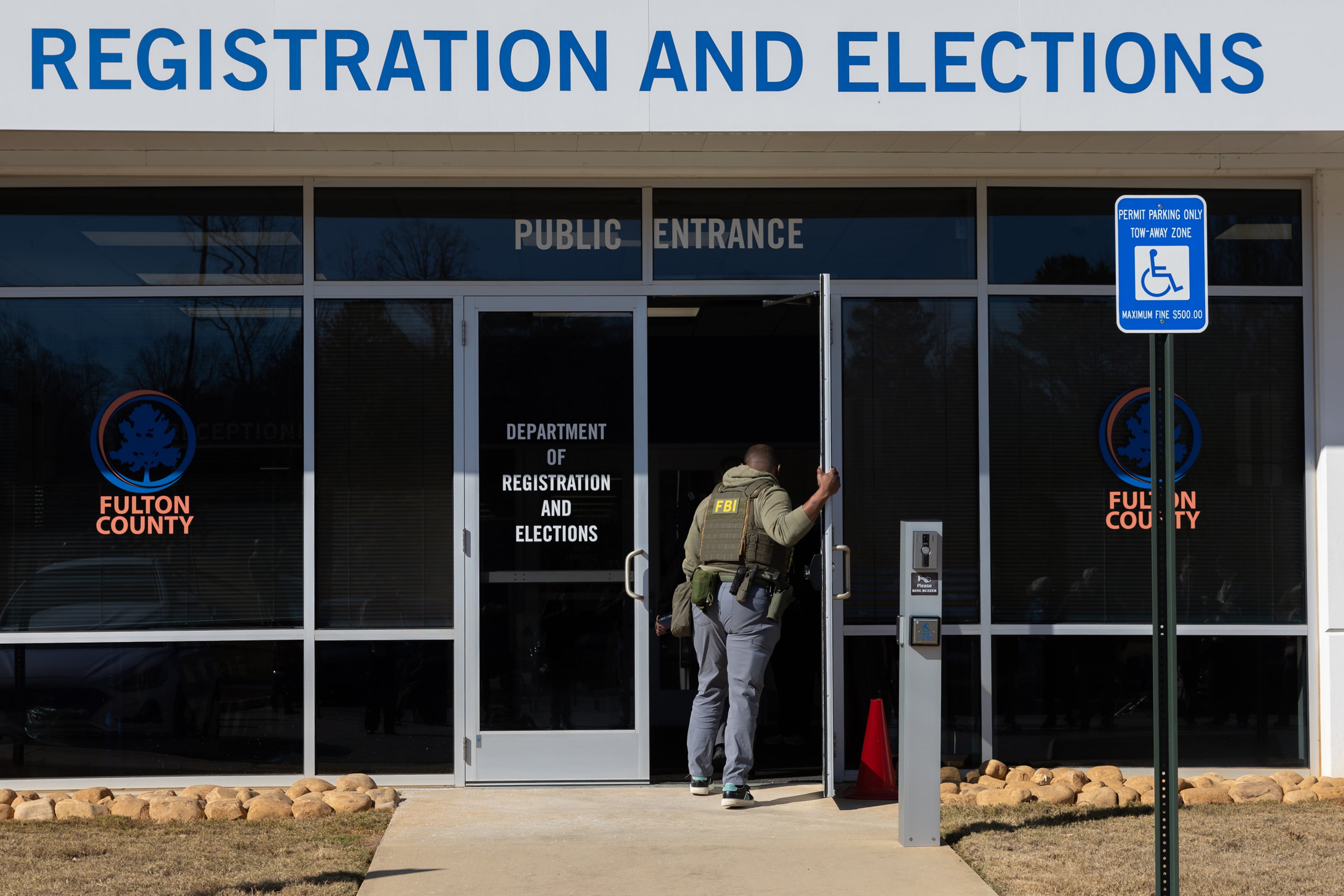
In January, FBI agents seized Fulton County’s 2020 ballots as part of an ongoing criminal investigation that has so far yielded no charges of wrongdoing.
Staff writer Tia Mitchell contributed to this report.