Feds are seeking noncitizen voters. They’ve found three in Georgia.

GAINESVILLE — Federal prosecutors are targeting three alleged noncitizen voters in Georgia as part of the Trump administration’s campaign to seek and prosecute people who are noncitizens ahead of the midterms.
Two of the three were among the 13 voters for whom the U.S. Department of Homeland Security demanded voting records in a subpoena issued to the Secretary of State’s office earlier this month, according to the secretary’s office. The office did not specify which two.
Nathan Kitchens, first assistant U.S. attorney for the Northern District of Georgia, told The Atlanta Journal-Constitution his office expects to prosecute more Georgians they believe voted illegally.
Noncitizen voters are rare, but rooting them out has become a core pillar to the Trump administration’s efforts to insert the federal government into the midterm elections.
One Georgia resident charged with illegally voting in federal elections by mail in 2020, 2021 and 2024 appeared in a federal court in Gainesville on Friday.
A U.S. Marshal ushered Pauline Fernella Lewis, handcuffed and shackled, into the courtroom, where the 65-year-old Dawsonville resident pleaded not guilty. Lewis’ attorney, Brandon Delfunt, argued she’s not a flight risk and has no criminal history. He called her a “good resident of the United States.”
“She is not a danger to the community,” Delfunt said.
U.S. Magistrate Judge Anna W. Howard said that prosecutors’ evidence was strong but granted Lewis bond, denying the government’s request to detain her.
Court records show Lewis applied for a passport in 2018, claiming to be a U.S. citizen.
Passport screeners found indicators of fraud in the birth certificate submitted with Lewis’ application, according to an affidavit from a U.S. Diplomatic Security Service special agent.
Prosecutors say Lewis is a citizen of Antigua and Barbuda who first entered the U.S. in 1979 on a student visa and remained in the country. There’s no indication Lewis has applied for citizenship, according to court records.
Assistant U.S. Attorney Brian Pearce indicated prosecutors could bring other possible charges.
A hunt for noncitizen voters
President Donald Trump has repeatedly claimed that noncitizen voting is rampant, though reviews have shown instances of voting by people who are not citizens to be rare. And the administration has gone to great lengths to curb noncitizen voting ahead of the midterms.
Many of the administration’s efforts to transform elections have stalled or been blocked by courts, including restrictions on mail voting, forcing states to hand over sensitive voter data and requirements for documented proof of citizenship before registering to vote.
There are about 8.2 million registered voters in Georgia.
Earlier this month, Georgia officials released results from a citizenship review that found about 430 voters who cast ballots at some point over the past three decades may not be citizens. Of those, 204 had already been placed in a pending status, meaning election officials needed more information to verify citizenship status before they could cast a ballot.
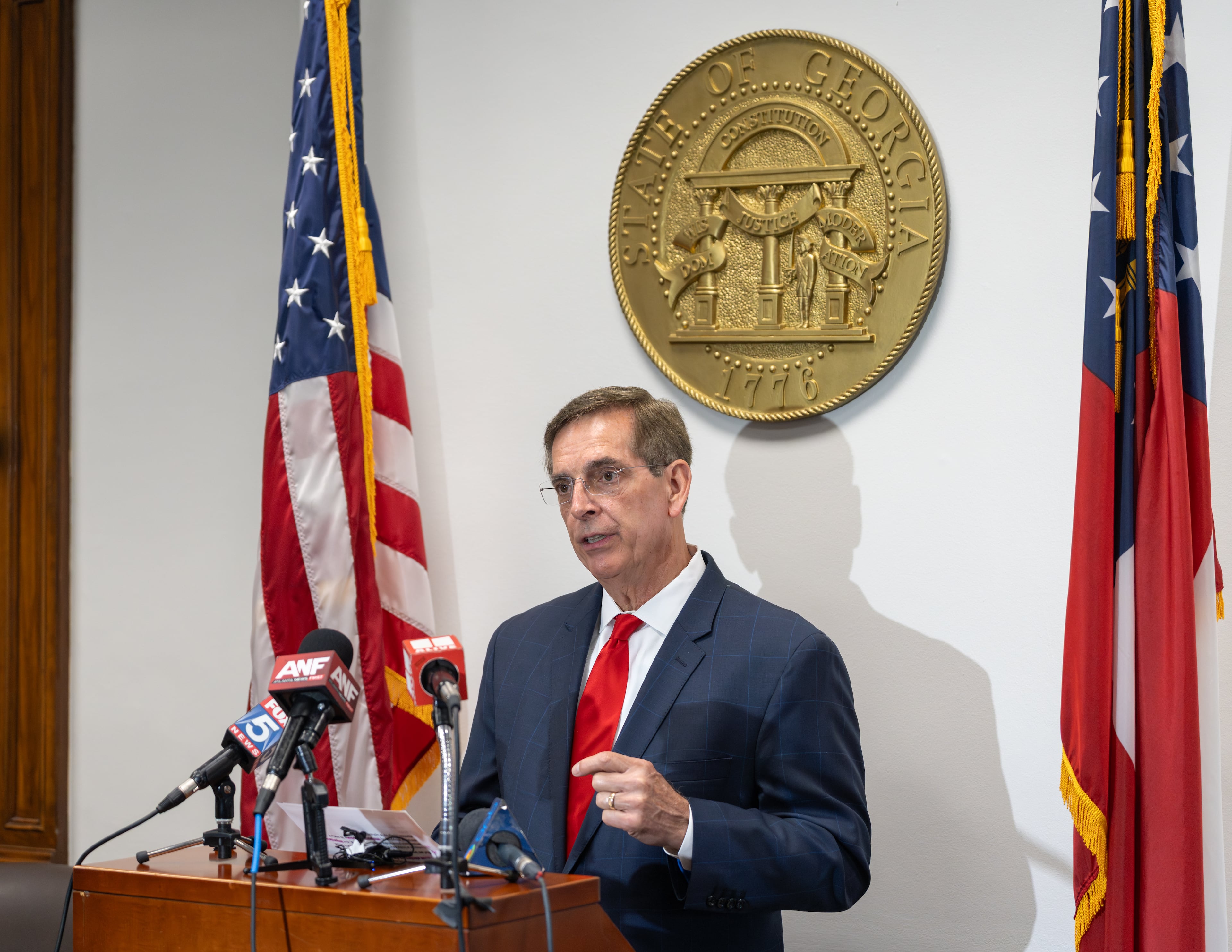
Georgia Secretary of State Brad Raffensperger, who has spoken frequently about ensuring noncitizens are not voting, lauded the prosecutions.
“These cases show exactly why citizenship verification matters,” he said in a statement. “Georgia will verify the voters, investigate potential violations, and work with law enforcement to enforce the law.”
Raffensperger has also embraced running voter registrations through a controversial overhauled federal database to determine their eligibility.
Late Friday, the U.S. Supreme Court lifted restrictions on the database that critics say have wrongly flagged some eligible voters as noncitizens. But the impact the ruling will have on the midterms is limited as federal law bars states from purging large numbers of voter registrations in the 90 days before an election.
Raffensperger’s office has also conducted several citizenship reviews before recent major elections.
Those reviews have found scant evidence of noncitizen voting in meaningful numbers.
Prosecutors also charged Gabriel Covarrubias, 44, of Lawrenceville, and Analiea Milliscent Eccles, 43, of Morrow, with illegally voting in various elections.
Covarrubias allegedly voted in person using a false name in the 2024 presidential election. Prosecutors claim Covarrubias is a citizen of Mexico who falsely asserted that he had a different name and was born in Puerto Rico in a U.S. passport application submitted in 2023.
Eccles allegedly voted nine times between 2008 and 2024. Prosecutors charged her with voting as a noncitizen in a federal election and making a false claim of U.S. citizenship to vote in an election.
Staff Writer David Wickert contributed to this report.