Georgia leaders agree Flock needs guardrails. The rift is over how far to go.
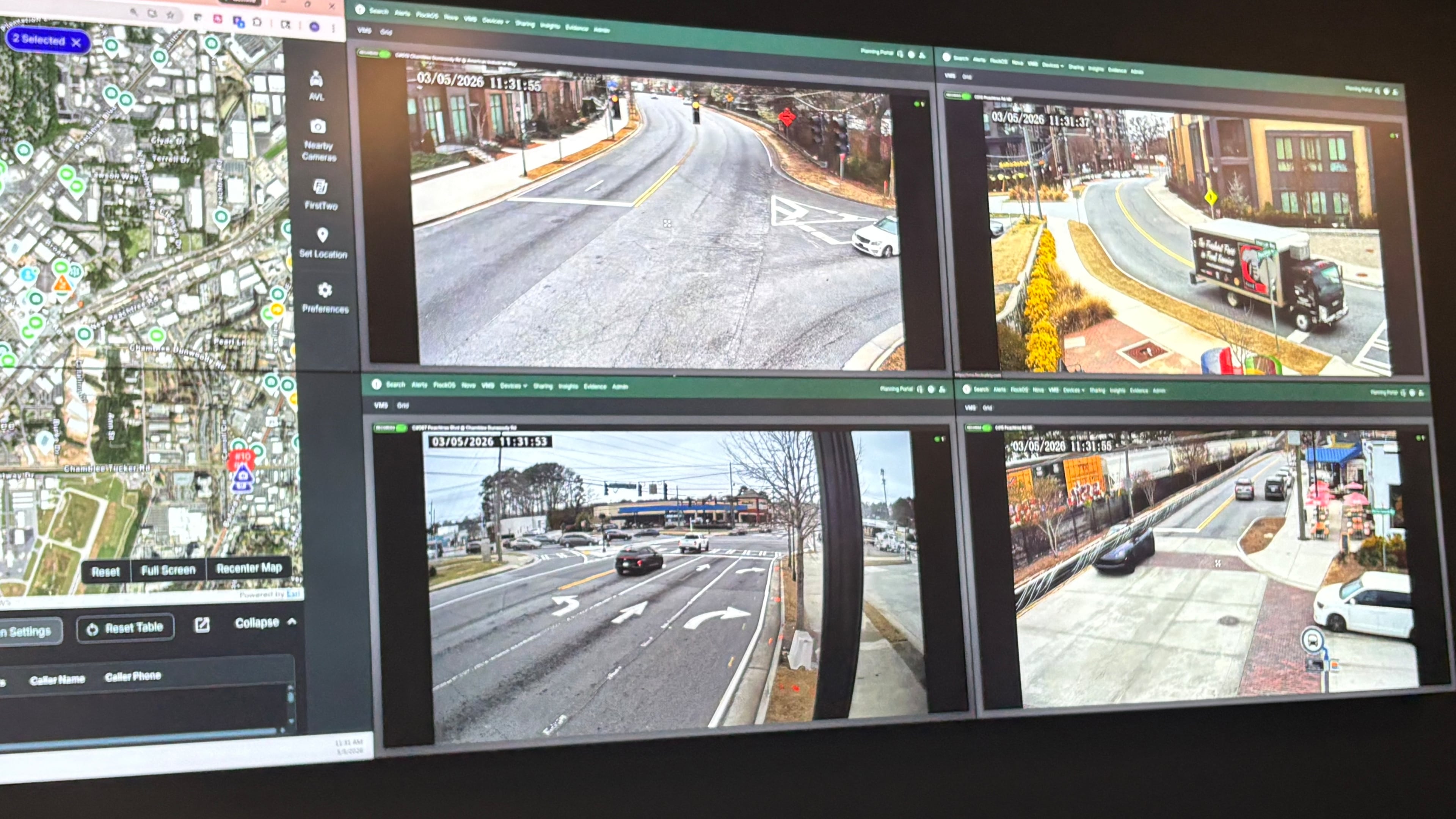

Georgia’s political leaders are endorsing new guardrails around Flock cameras and other license-plate readers after a cascade of reports of law enforcement officers improperly using the technology.
Georgia’s nominees for governor — Republican Rick Jackson and Democrat Keisha Lance Bottoms — told The Atlanta Journal-Constitution this week they support new safeguards on the technology.
And legislative leaders in both parties are pledging to take action during next year’s General Assembly to address the swirl of concerns surrounding Flock Safety, the Atlanta-based company at the center of the debate.
Beneath that emerging consensus is a harder question: How far should Georgia go to restrict a technology that law enforcement officials say has become one of their most effective investigative tools?
Some want to shorten how long motorists’ data is stored. Others are pressing for more regular audits, tighter limits on who can access the network or tougher penalties for those who abuse it.
State Sen. John Albers, a Roswell Republican helping lead the push, said the challenge is finding the right balance.
“We’re not going to throw the baby out with the bathwater,” said Albers, who is working to draft a proposal. “We’re going to make sure we solve the problem, and we work together to keep the public safe, make sure there’s confidence and transparency in the process.”
House Speaker Jon Burns echoed that tension, saying lawmakers must balance privacy concerns with a technology that has helped police track down violent criminals and find missing people.
The calls for action follow months of damaging revelations involving Georgia officers accused of improperly using license-plate reader databases. Dozens have been fired, suspended or criminally charged after being accused of accessing Flock’s vast network for personal reasons.
And Flock recently announced it would tighten its own safeguards, including the launch of a new self-audit tool, though those voluntary changes haven’t quieted calls for lawmakers to impose statewide rules governing the nearly 10,000 cameras estimated to be scattered across Georgia.
“Flock can be an important tool for catching criminals and enforcing the law,” said House Minority Leader Carolyn Hugley, the chamber’s top Democrat.
“But considering recent reports of that tool being abused, it’s clear more guardrails and punishments are warranted for anyone misusing this technology to harass, stalk or illegally monitor the public.”
No ‘blank check’
The debate is underway. Albers, who chairs the Senate Public Safety Committee, said he’s working with law enforcement groups on a task force examining changes ahead of next year’s session.
He’s called the technology an “invaluable crime-fighting tool” that could be strengthened through tighter internal controls, clearer training requirements and stricter limits on who can access the network of cameras.
“Backing the blue does not mean ‘writing a blank check’ for government surveillance,” Albers said, adding: “We do not have to choose between safe communities and individual liberty.”

Republicans seem likely to find willing partners across the aisle.
Senate Minority Leader Harold Jones II is already sketching out potential provisions, including blocking agencies that illegally track people from using the technology and limiting how broadly data can be shared across state lines.
Those questions mirror a national debate over how much information license-plate readers should collect, how long governments should keep it and how widely it should be shared.
Texas Gov. Greg Abbott ordered state agencies to halt funding for Flock cameras, while Gov. Josh Shapiro of Pennsylvania is backing bipartisan legislation to ban the cameras in his state.
Elsewhere, local leaders have shortened retention periods, imposed new auditing requirements or abandoned the technology altogether.
And some critics of the expanding surveillance network have taken matters into their own hands by vandalizing Flock cameras.
The issue has emerged as a rare area of consensus between Georgia’s candidates for governor.
Bottoms told the “Politically Georgia” podcast she wants to explore legislation that ensures the devices are “being used for purely law enforcement purposes and not personal purposes.”
And Jackson told the AJC he’s working with Attorney General Chris Carr, one of his closest GOP allies, to develop a plan.
“We need to have safeguards so nobody can abuse them,” he said. “And I will make sure that absolutely doesn’t happen.”