Democratic socialists aren’t taking over. But their influence is growing.

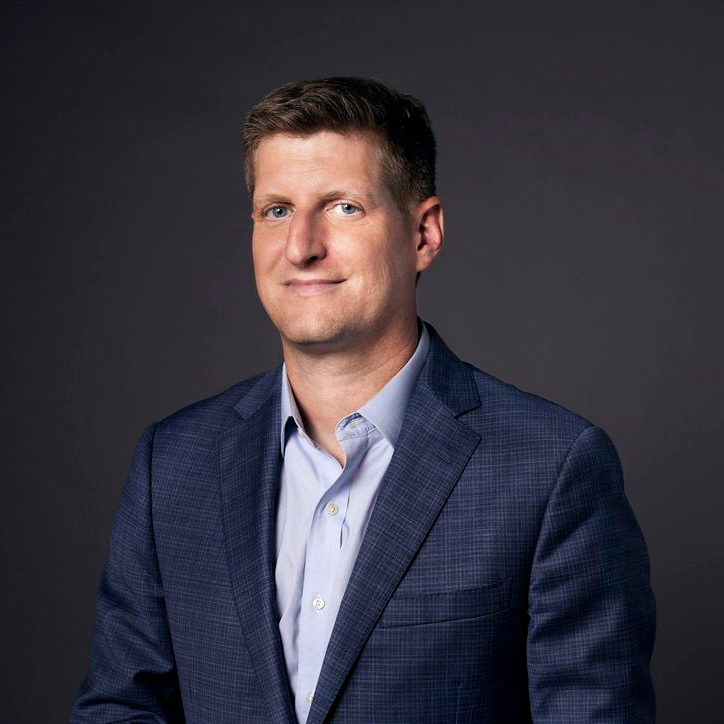

The lone democratic socialist on Atlanta’s City Council didn’t set out to be a thorn in the side of the mayor. But Kelsea Bond doesn’t seem to mind shaking things up at City Hall.
Over eight months in office, Bond voted against Mayor Andre Dickens’ budget that increased police funding, opposed his plan to extend the city’s tax districts and publicly challenged his administration’s definition of “affordable” housing.
“What I’ve found is a lot council members are too hesitant to actually say what they think or how they’re planning to vote,” Bond said, adding: “I don’t understand why people are so scared, but I’m trying to shift that culture.”
Bond’s tenure offers a glimpse of how democratic socialists are impacting politics and policy in Georgia. The organization’s political gains here remain modest compared with New York and other liberal strongholds. Only a handful of DSA-backed candidates hold office or are positioned to win in November. But they are getting harder for traditional Democrats to ignore.

State Rep. Gabriel Sanchez, D-Smyrna, is no longer an insurgent candidate challenging the Democratic establishment. He’s now an entrenched incumbent who helped form a Progressive Caucus aimed at shifting the debate inside the Legislature.
Mathewos Samson, the Democratic nominee in an overwhelmingly blue Atlanta-based state House district, is likely to give the movement another voice at the Capitol next year.
Democratic socialists and their allies aren’t about to take over the party. But the bigger question is whether their faction can shake up Democratic politics at a time when the party is fighting to win statewide races and narrow the GOP’s grip on the Legislature.
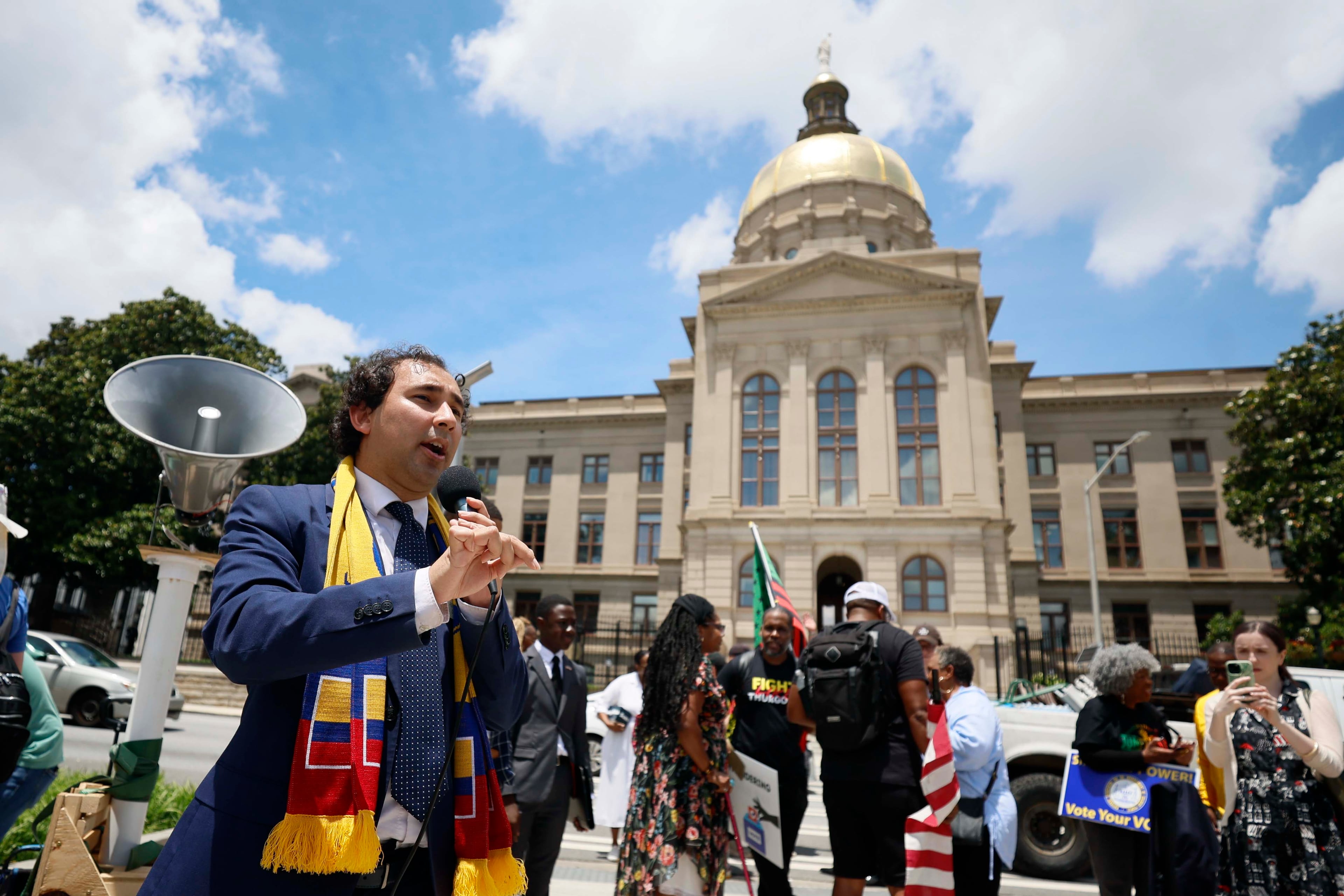
Democratic socialists, in general, believe elected officials should have a stronger role in regulating the economy instead of relying on the free market. The Democratic Socialists of America, the national political party, have endorsed abolishing U.S. Immigration and Customs Enforcement, the U.S. Senate and defunding the police — ideas many traditional Democrats oppose.
Bond, who got started as a local union organizer, has also pushed for more protections for Atlanta’s working class, sought additional oversight for proposed data centers and authored resolutions condemning ICE activity. The 33-year-old University of Georgia graduate speaks four languages and doesn’t own a car, preferring to get around town on an e-bike. Bond represents just one vote on the 15-member Council, but has no qualms about pushing the city’s legislative body to the left.
Atlanta DSA co-chair Brayan Ramirez is explicit about that strategy. He pointed to the possibility of a tighter GOP majority in the Georgia House, where Democrats need to pick up a net of 10 seats in November to seize control of the chamber. If the margins get thinner, lawmakers on the party’s left could exert more leverage over what passes.

“They could act as a swing vote,” Ramirez told the “Politically Georgia” podcast. “They could vote to not pass any legislation unless it’s progressive enough for them to vote yes on.”
A balancing act
The movement’s growing visibility is colliding with a Republican strategy that makes socialism and far-left politics the villain of Georgia’s midterms.
There’s just one complication: The socialists aren’t claiming the Democrats at the top of the ticket.
Atlanta DSA has not endorsed U.S. Sen. Jon Ossoff or Democratic nominee for governor Keisha Lance Bottoms. Ramirez said neither qualifies as a democratic socialist and made clear the organization has significant disagreements with both.
That distinction hasn’t stopped Republicans from trying to paint the entire Democratic coalition as characters in a socialist drama, especially after DSA candidates and their allies scored victories in recent races in Michigan and New York.
Republican U.S. Senate nominee Mike Collins took the argument a step further Sunday, predicting that Ossoff would inherit the mantle of Vermont U.S. Sen. Bernie Sanders, the nation’s best-known democratic socialist.
“He’s running for president. And he’s going to be the DSA candidate for president,” Collins said of Ossoff at a Republican Jewish Coalition conference in Las Vegas. “Bernie has to pass that moniker on and he’s going to take it.”
Ossoff has repeatedly said he is focused on his reelection campaign and is not running to for president in 2028, while also emphasizing his GOP support. Atlanta DSA’s leadership hardly sounds ready to draft him for the White House.
“He’s not a socialist and he is complicit in or at least supports the capitalist system,” Ramirez said.
Bottoms, too, has drawn criticism from the group over her handling of the 2020 racial justice protests and her support of the Atlanta Public Safety Training Center. She said in a “Politically Georgia” podcast interview that the movement hasn’t had a “huge imprint” on the narrative of the race.

“As I’m moving around the state, people just want people who are going to deliver for them and make their lives better,” she said. “And my truth will be my truth, whether I’m sitting here in downtown Atlanta talking to you, or if I’m in Ringgold, where Trump won by 77%, I’m talking about the issues. I’m not talking about labels.”
Asked why the organization hasn’t endorsed either of the contenders, Ramirez was blunt. He said Republicans would be a “disaster” for working Georgians, but that doesn’t mean his movement is embracing the Democratic nominees.
“We only endorse socialists and they are not socialists,” he said. “We’re not actively working against them. We’re just focused on our own candidates.”
A marriage by convenience?
That uneasy truce is shaking the party’s trajectory.
Many Democrats reject policies embraced by Atlanta DSA, which has adopted the national organization’s platform. It calls for a 32-hour workweek, abolishing ICE, phasing out police and prisons, sharply taxing the wealthy and expanding public ownership of major industries and other key parts of the economy.
Another fault line is the Israeli-Palestinian conflict, which has widened divisions between establishment Democrats and progressives calling for an end to U.S. military support for Israel.
At City Hall, Bond’s staffers wear tiny Palestinian flag pins. Bond and other DSA members say Israel is committing a genocide in Gaza. It’s an allegation Israel and its supporters sharply dispute.
The billions of dollars the U.S. spends each year to support Israel, Bond said, could instead be used to help Americans afford health insurance.
“That’s money we could be spending lifting Americans out of poverty and we’re not making that choice right now,” Bond said.
But Democratic leaders also have little incentive to pick an open fight with a movement that has shown growing appeal among younger and more progressive voters, particularly on issues such as affordable housing and expanded healthcare coverage.
Democratic socialists have scored some of their biggest electoral victories yet over the past year, led by Zohran Mamdani’s election as mayor of New York City. The movement has built on that success with other congressional and legislative victories this year, including in Michigan and New York.
Democratic Party of Georgia Chair Charlie Bailey dismisses the notion that DSA poses an existential threat to the party as “overplayed.” He turned the socialism charge back on Republicans, pointing to the roughly $1 billion no-bid contract GOP nominee Rick Jackson’s healthcare company secured during the coronavirus pandemic.
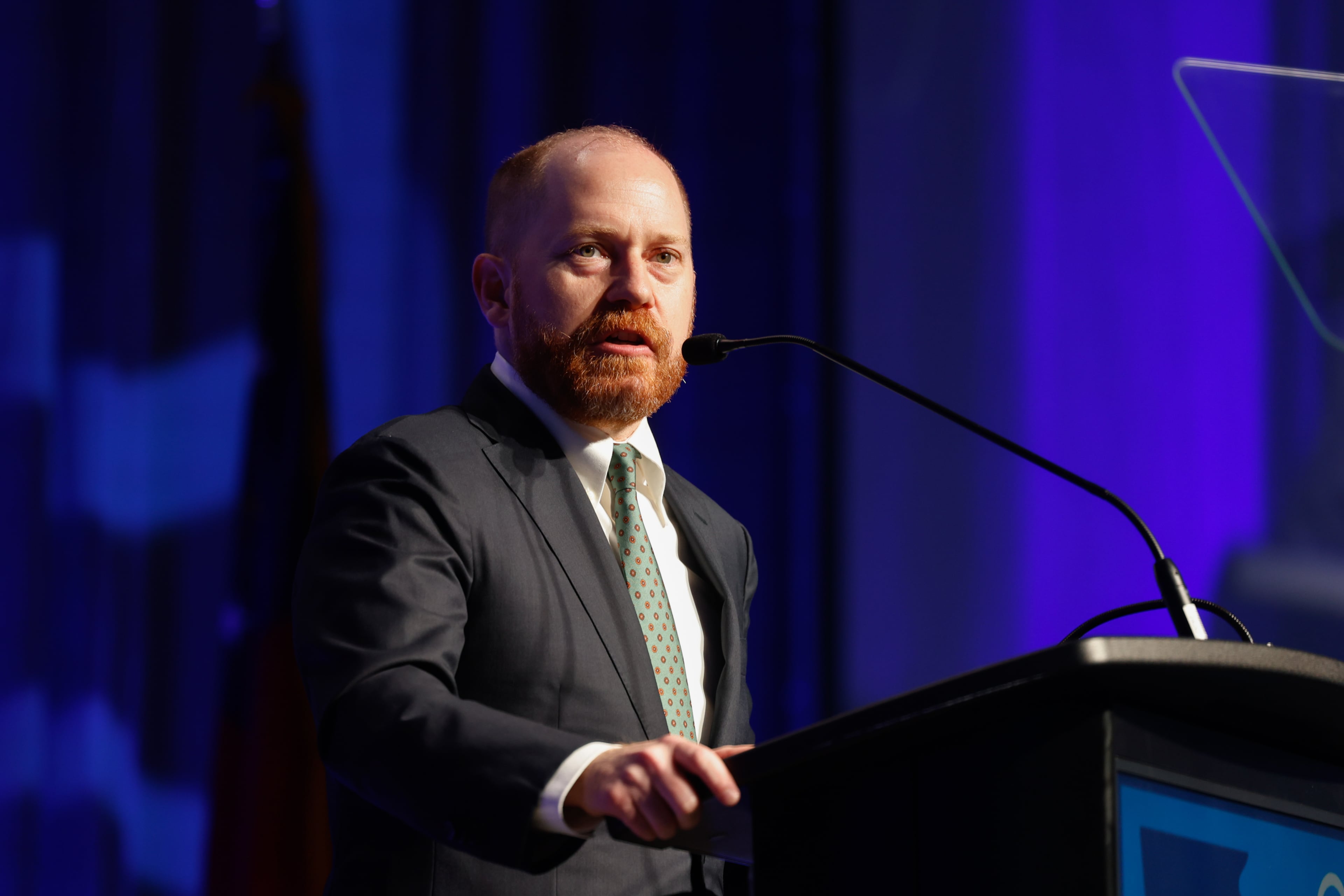
“I mean, that’s when you’re picking and choosing who gets contracts and people who get no bid contracts,” he said. “We want to talk about socialism? That’s socialism, that’s what has made Rick Jackson all his money.”
Jackson, for his part, has relied less on the socialism label so far than other Republicans. He has instead framed the governor’s race as a test of “character” and made Bottoms’ record as Atlanta mayor the centerpiece of his case against her.
For Democrats, the political challenge is keeping distance from DSA positions that could prove damaging with swing voters without alienating activists and younger voters whose energy and organizing muscle are increasingly important to the party.
State Rep. Ruwa Romman, a progressive Democrat who isn’t a DSA member, said Democrats shouldn’t be afraid of pressure from the party’s left flank.
“We talk about pulling the Democratic Party left. The reality is that the Democratic Party has also been pulled right as a result of the rise of Trump, the far-right and the MAGA movement,” she said.
For Romman, the more important divide isn’t ideological labels but whether Democrats address the economic frustrations fueling so much discontent.
“The times that we win are the ones that where we’re laser focused on affordability issues and not just as a buzzword, but specifically on wages, rising healthcare costs, rising utility costs, which requires an anti-institutionalist sort of framing to it.”