Culture wars take a back seat in Georgia governor’s race


Georgia Republicans haven’t abandoned hard-fought culture war issues. But the party’s nominee for governor isn’t leading the charge this campaign cycle.
Eight years after Gov. Brian Kemp put gun expansions, abortion restrictions and immigration crackdowns at the center of his campaign for Georgia’s top job, GOP nominee Rick Jackson is betting that tax cuts, ethics overhauls and public safety measures are more potent November issues.
The contrast came into sharp focus Tuesday when Jackson rolled out a sprawling governing blueprint that seemed to touch almost every corner of state policy — except the divisive social issues that Republican leaders have long used to energize the party’s base.
The billionaire healthcare executive proposed what he called an “intelligent Medicaid expansion,” promised to halve the state income tax, pledged to conduct more audits of state spending and vowed to pursue term limits for state lawmakers.
It was an expansive agenda from a candidate who spent much of the Republican primary trying to prove his conservative credentials on a very different footing.
Jackson is no moderate. He supports Kemp’s 2019 anti-abortion law, backs transgender limits, routinely slams “woke ideology” and proudly promised to be President Donald Trump’s “favorite governor” during a bitter fight for the party’s nomination.
But those subjects are strikingly absent from the nine-page policy agenda Jackson outlined at a Sandy Springs hotel. The document mentions taxes almost two dozen times and doesn’t once invoke abortion, guns or other fights that dominated past GOP campaigns.
The race for Georgia Governor
All about Democrat Keisha Lance Bottoms and Republican Rick Jackson and what they would do if elected.
The Issues: Education | Healthcare | Data Centers | Taxes | Abortion | Immigration
Polls and predictions: Track the race for Governor
Their agendas: Keisha Lance Bottoms | Rick Jackson
‘Shadow mayor:’ As Keisha Lance Bottoms rose to power, one adviser was close by
The $3B candidate: Unpacking Rick Jackson’s vast business empire
Bottoms’ record: Crime roiled Atlanta during COVID. Its fallout has shaped governor’s race.
Jackson’s business deal: Why Rick Jackson poured millions into a failing Alabama hospital
Debate: 5 takeaways from the Georgia governor debate
Crossover voters: Prominent Georgia Democrat crosses aisle for Rick Jackson
Complete coverage: 2026 Georgia Voter Guide
In one sense, it’s no surprise. Jackson’s approach is part of a well-worn playbook to pivot toward broader concerns after winning a GOP nod. But Jackson casts the shift as something more than strategic positioning, saying he’ll finally address stubborn problems that have long plagued Georgia.
“Georgia families cannot pay their power bills with press releases. A slogan cannot get a patient to see a doctor, a bumper sticker cannot teach a child to read,” he said. “Georgia does not need a governor who simply wants the title. Georgia needs a governor who wants the work.”
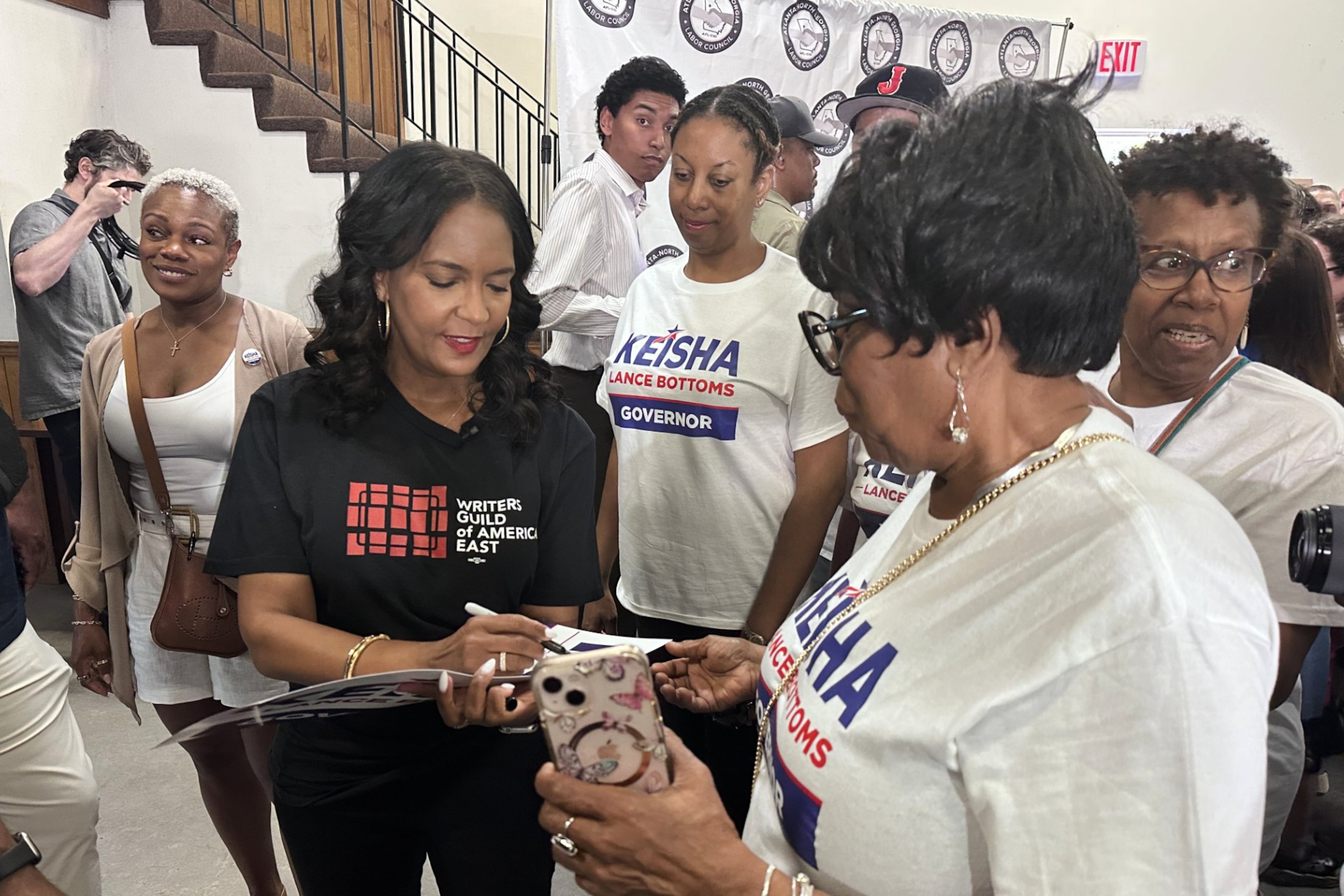
Former Atlanta Mayor Keisha Lance Bottoms, the Democratic nominee for governor, said social divides have also receded for her party.
“Those issues are still as important as ever. But when you are trying to figure out how to put food on your table, gas in your car and keep a roof over your head, they tend to take a back seat,” she said on the “Politically Georgia” podcast.
“And every stop that we’ve made throughout the course of this campaign, the cost of living conversation has come up.”
‘The craziest’
Georgia Republicans are at once trying to energize MAGA supporters drawn to Trump’s combative style without alienating swing voters who increasingly decide close statewide elections.
Kemp pulled off a similar shift in 2018, when his primary campaign might have been a catalog of the culture wars of the era.
The Republican vowed to sign the nation’s “toughest” abortion limits, and let more licensed gun owners carry their weapons in public places. His TV ads showed him wielding shotguns, brandishing chain saws and boasting he could “round up criminal illegals” in his rickety pickup.
The race against then-Lt. Gov. Casey Cagle became so consumed with base-pleasing issues that Cagle privately complained the primary had devolved into a fight over “who had the biggest gun, who had the biggest truck, and who could be the craziest.”

Kemp leaned into it through the July runoff, then somewhat shifted gears. In the run-up to the November race against Democrat Stacey Abrams, he ran ads centered on his upbringing and business acumen. Another featured his wife, Marty, describing him as “too honest for politics.”
But he also didn’t back down from those red-meat policies after he took office.
In 2019, Kemp signed sweeping abortion restrictions into law, fulfilling one of his signature campaign promises. Over his two terms, he checked off other longstanding GOP priorities, including signing a “religious liberty” measure in 2025 after a decade of debate.
“Georgians and the business community know that I’m not going to back down,” Kemp said at the time.
‘The Crusades’
Other Republicans are making a different calculation this cycle.
State Sen. Greg Dolezal, the GOP nominee for lieutenant governor, has paired promises to cut property taxes and improve government efficiency with a pledge to revive a long-dormant push against Islamic law.
At a rally in Rome, he framed the midterm in existential terms as he warned of creeping leftist policies.

“I’m not telling people I just believe we’re in a fight to save America, because I do believe it’s deeper than that,” he said. “I believe that we are in a fight to save the West. And I believe that we save the West by saving America. And I believe that we save America by saving Georgia.”
U.S. Rep. Mike Collins, the Republican nominee for Senate, has frequently targeted Democratic U.S. Sen. Jon Ossoff’s votes opposing transgender limits while trying to tie him to the far-left democratic socialist movement.
“What he wants to do is to use us as a springboard,” Collins said at a recent stop in Acworth. “We have to stop this in Georgia before Georgia’s problem becomes a United States of America problem.”
Democrats say last year’s Public Service Commission races offered a cautionary tale for Republicans leaning heavily on those fights.
Throughout the campaign for two PSC seats, the GOP incumbents and their allies repeatedly invoked MAGA themes and portrayed Democrats as “woke” liberals bent on importing California-style policies.
Democrats largely refused to engage, training their focus instead on rising power bills and mounting concerns over data centers. They won both statewide contests by roughly 26 percentage points.
Republican Tim Echols later questioned his own decision to go “full MAGA” while crediting Democrats for keeping the focus on voters’ wallets.
Democrats are already trying to exploit a similar tension this cycle. At an event this month at an Alpharetta burger joint, Democratic leaders warned voters not to be enticed by the threat of “fake moderates.”
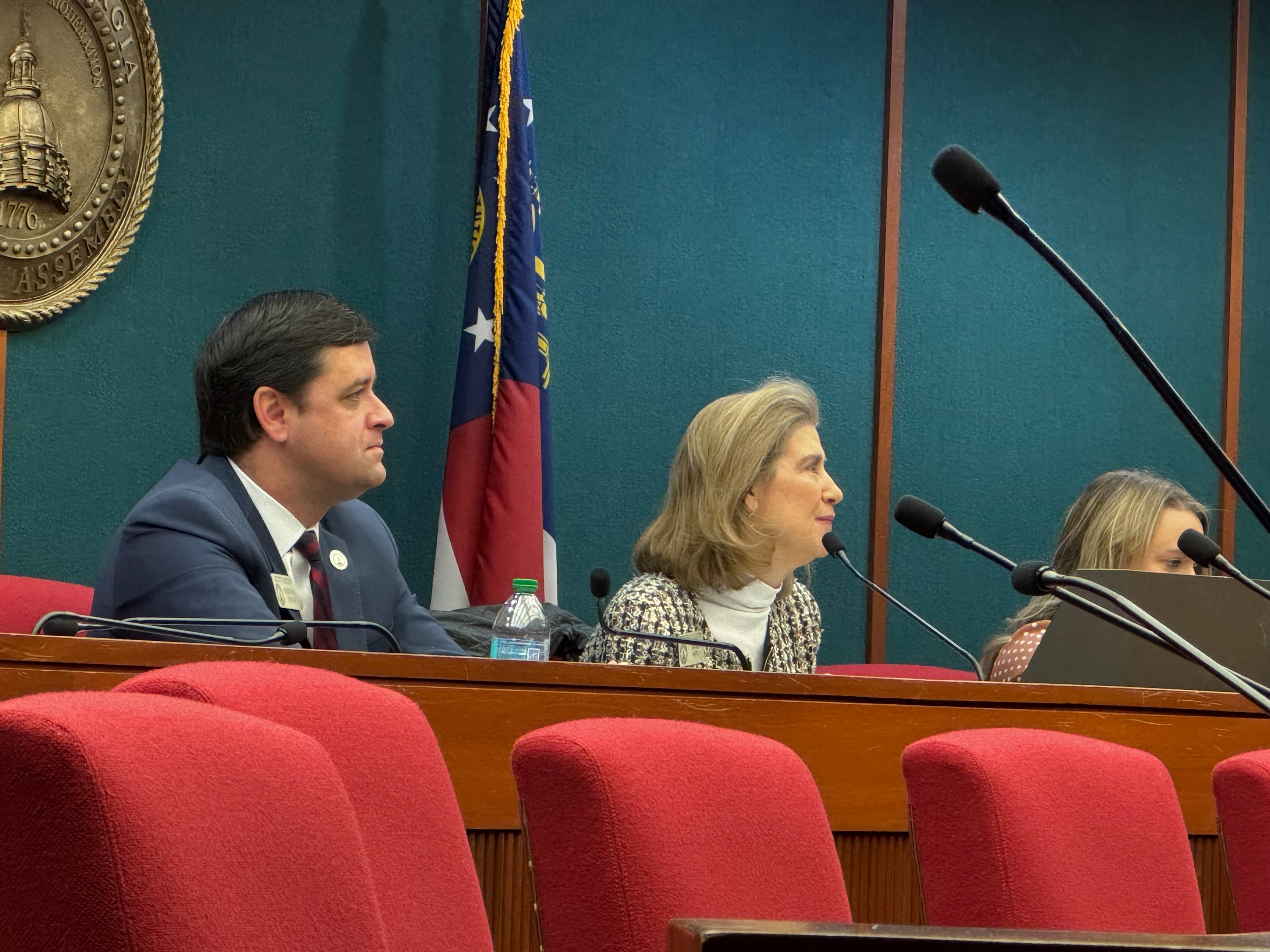
The event featured challengers to Republican state Reps. Scott Hilton of Peachtree Corners and Deborah Silcox of Sandy Springs. But organizers made the broader argument that voters should look beyond messaging and judge Republicans directly by the party’s record on abortion and other issues.
“Their opponents are telling the world they’re moderates,” Democratic state Rep. Stacey Evans told dozens of attendees. “I don’t believe that. They sure don’t act like it with their votes. They sure don’t act like it with their policies.”
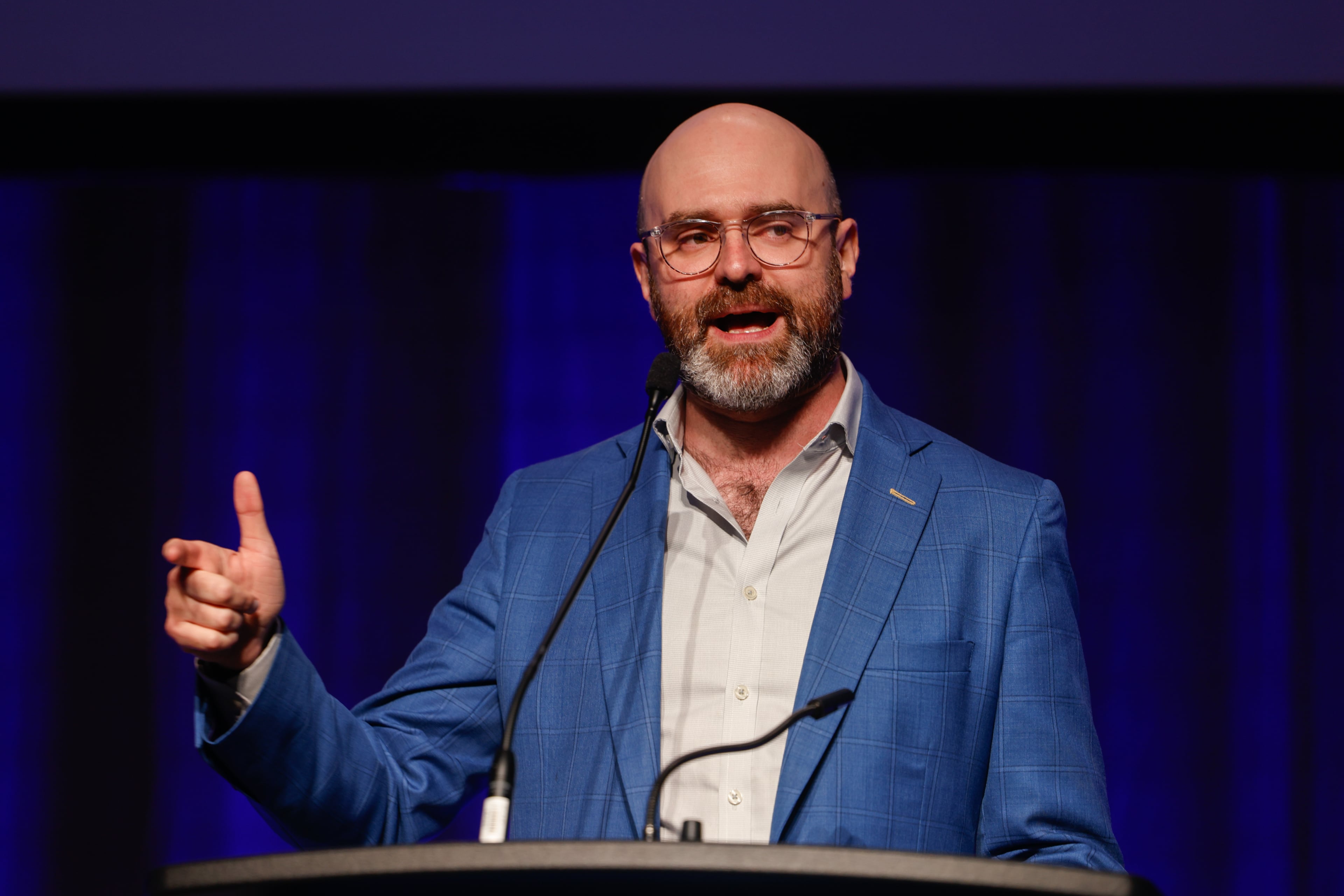
Democratic state Sen. Josh McLaurin, his party’s nominee for lieutenant governor, argues Republicans who keep returning to those fights are misjudging what Georgians want.
“Dolezal apparently thinks this midterm election is the Crusades. Like, the medieval ones,” said McLaurin, who added that voters see it far differently.
“They’re concerned about a reckless president destroying our economy and fighting unwinnable foreign wars.”