Why Raphael Warnock, not Jon Ossoff, is fueling Georgia’s 2028 speculation

COLUMBUS — U.S. Sen. Jon Ossoff has fueled a wave of speculation about a potential 2028 presidential campaign with his viral rallies and cutting commentary on Republicans.
But the pundits are focused on the wrong Georgian.
U.S. Sen. Raphael Warnock is the Georgia Democrat taking the most visible early steps to raise his stature beyond his home state.
He released a new book, his second since his 2021 victory. He’s traveled to battleground states like Minnesota and Nevada this year. He’s led high-profile campaigns against President Donald Trump’s agenda.
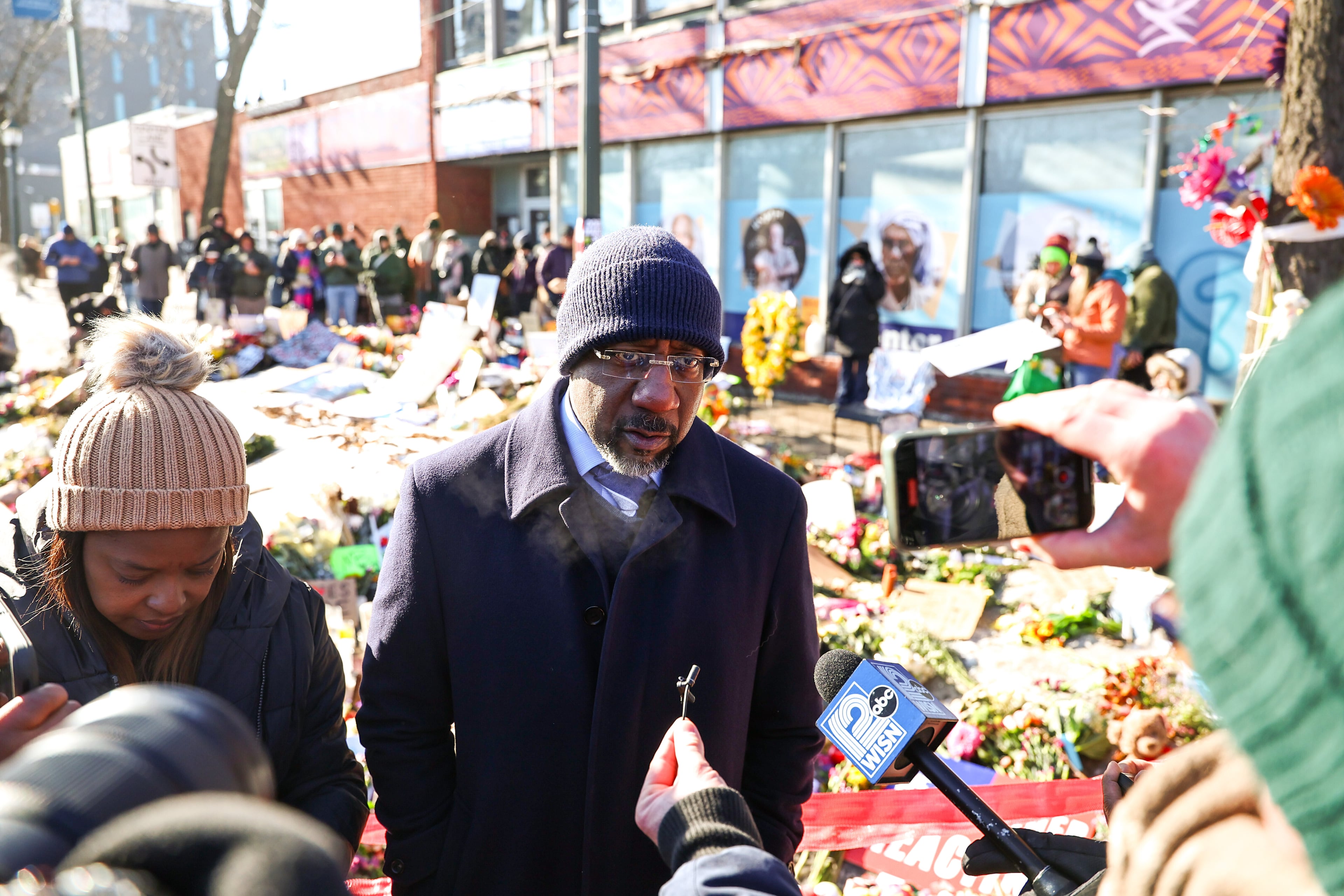
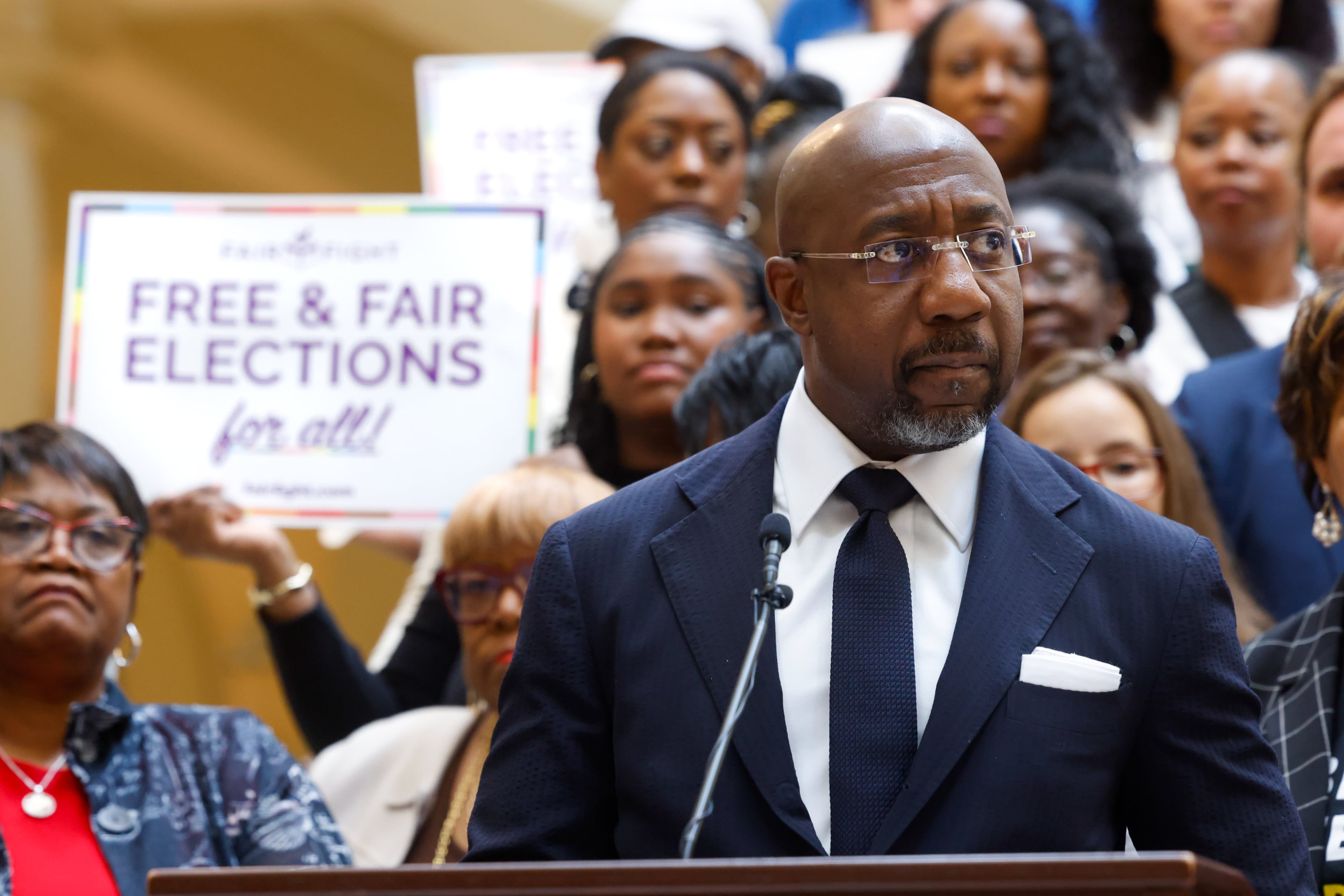
And he’s a frequent presence on the national news, emerging as one of the Democratic Party’s most visible voices on affordability, voting rights and the battle over new maps diluting Black voting power after a landmark U.S. Supreme Court decision.
None of it amounts to a presidential campaign. Allies say he’s using his platform to shape the national debate. And Warnock has given no public indication he intends to run. But he’s also declined to rule out a future White House campaign as he checks many of the boxes that have helped launch past White House bids.
“This sounds corny, but I remain deeply honored that I get to represent the 11 million people in Georgia in the Senate and that I get to fight for them every single day,” Warnock told The Atlanta Journal-Constitution this week.
That sets him apart from Ossoff, who has repeatedly and unequivocally said he has “zero interest” in running for president in 2028, dismissing it as “fantasy football” that distracts from his reelection campaign against GOP nominee Mike Collins.
That distinction hasn’t been lost on many Georgia Democrats, some of whom increasingly view Warnock as the state’s more plausible presidential prospect.
“The conversation around Warnock is not political hype. It is a result of leadership,” said Essence Johnson, head of the Cobb County Democratic Committee. “He is already proven. He has won in one of the toughest political landscapes, built broad coalitions, and shown he can speak to the moral and practical challenges facing this country today.”
Republicans, meanwhile, see him as an easy foil who lucked into office against lackluster opponents. Dan McLagan, a longtime GOP strategist, compared him to a political version of the Inspector Clouseau “bumbling his way to victory because his opponents were talking about each other rather than him.”
McLagan added: “He couldn’t find the presidential launching pad, not to mention getting off it.”
Unconventional candidate
Warnock’s rise has been anything but conventional.
The Savannah native grew up in public housing as one of 12 children before attending Morehouse College and eventually becoming senior pastor of Atlanta’s historic Ebenezer Baptist Church, where Martin Luther King Jr. once preached.
He has led the congregation since 2005 while building a national profile as both a pastor and advocate for voting rights, Medicaid expansion and other progressive causes.
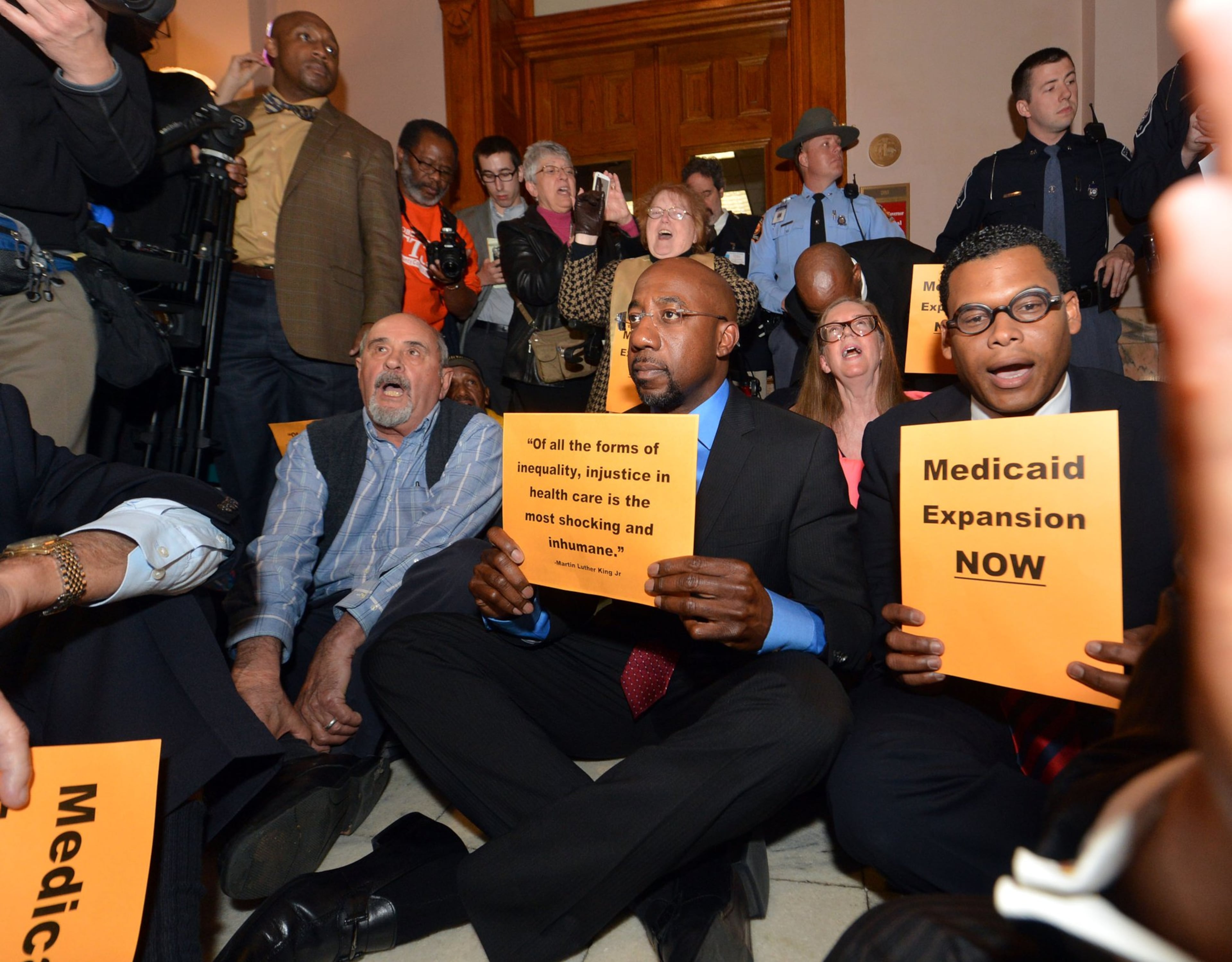
He started dabbling with the idea of running for higher office ahead of the 2016 election before opting against a challenge to former Republican U.S. Sen. Johnny Isakson, who resigned in 2019 before his death in 2021.
In 2020, Warnock rallied the party’s leaders for a special election for Isakson’s open seat before defeating GOP incumbent Kelly Loeffler to become Georgia’s first Black U.S. senator.
He used a series of disarming television ads to blunt attacks labeling him a “radical liberal,” appearing in puffy vests with a friendly beagle named Alvin and, in another spot, diving into a vat of Georgia peanuts to showcase his advocacy for farmers.
Less than two years later, he won a full six-year term by defeating Republican Herschel Walker in another runoff, cementing his status as one of the Democratic Party’s national figures.

In all, Warnock finished first in five consecutive statewide elections: the 2020 special election, the special election runoff, the 2022 Democratic primary, the 2022 general election and the 2022 runoff.
The back-to-back Senate victories also transformed him into one of the party’s most prolific fundraisers. Powered by the historic 2021 runoff that gave Democrats control of the Senate, Warnock has raised more than $338 million since announcing his first campaign.
That political resume gives him unusual flexibility. Unlike many other potential Democratic candidates, he has twice won statewide in a battleground state carried by Trump, blending progressive priorities with a style that has appealed to swing voters.
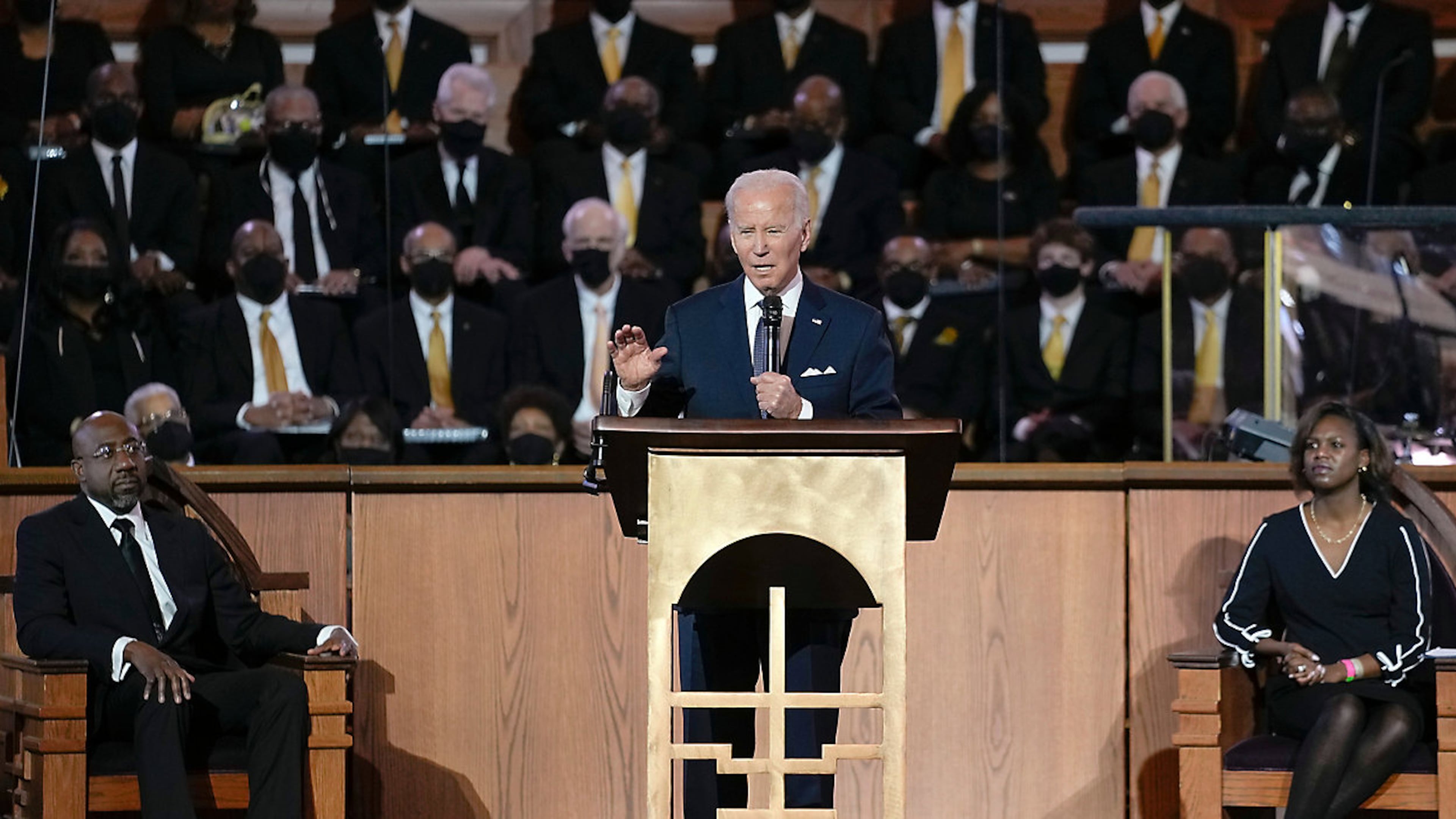
He’s also used the historic Ebenezer Baptist Church pulpit to elevate issues and as a platform to help political allies.
President Joe Biden visited Ebenezer in 2023 after Warnock kept him at arm’s length through the 2022 campaign. Already this year, former U.S. Transportation Secretary Pete Buttigieg and U.S. Rep. Alexandria Ocasio-Cortez, D-N.Y., have made the pilgrimage to stand by Warnock’s side.
It’s that combination that fuels talk of a bigger future among his staunchest allies.
Melissa Clink, an influential Democratic activist, is among those who see Warnock as a more likely 2028 presidential contender than Ossoff.
“He gives a voice to the voiceless, and he demands that we legislate with a spirit of: How can we make everyday people’s lives better?” she said. “That’s the kind of servant leader we need in the highest office in the land.”
A Washington shift
A national campaign would also revive attacks that shadowed his Senate races, including scrutiny of his divorce and criticism from religious conservatives about his view of Christianity.
Cole Muzio, founder and president of the conservative Christian organization Frontline Policy Council, cast Warnock as the lucky beneficiary of drawing a challenge from Walker, whom he called “one of the most inept and unqualified candidates Georgia Republicans have ever nominated.”
“Too few headlines, ads and attention have been directed at Warnock,” Muzio said. “But a 2028 presidential bid would expose him to a degree of scrutiny that would jeopardize his entire public image and reputation. Few candidates make it through the national spotlight unscathed. Warnock would undoubtedly wither entirely.”
Whether or not Warnock intends to mount a national campaign, he is increasingly acting as one of the Democratic Party’s standard-bearers.
The shift also reflects the realities of Washington.
During Democrats’ first two years in control of the Senate, Warnock focused heavily on legislation he could pass.
Now, with Republicans in control and uncertain prospects for a Democratic takeover, he’s increasingly using his platform to elevate issues he believes can resonate beyond Washington.
He’s urged Democrats in Nevada not to “outsource democracy,” headlined a No Kings rally in Wisconsin, met with small business owners in North Carolina and joined immigration protests in Minnesota. Advisers expect more travel this year as he campaigns for vulnerable Democratic senators and candidates.
His national profile is increasingly tied to a pocketbook agenda.
After making a $35 insulin cap the signature issue of his 2022 reelection campaign, Warnock has turned his attention to housing affordability, sponsoring bipartisan legislation aimed at preventing large private equity firms and institutional investors from buying up starter homes.
His advisers also believe Warnock can help Democrats reconnect with men who have grown disillusioned with politics, particularly working-class voters who feel left behind economically. He’s leaned into his biography as a product of Savannah housing projects, a pastor and a senator who talks frequently about both faith and economic mobility.
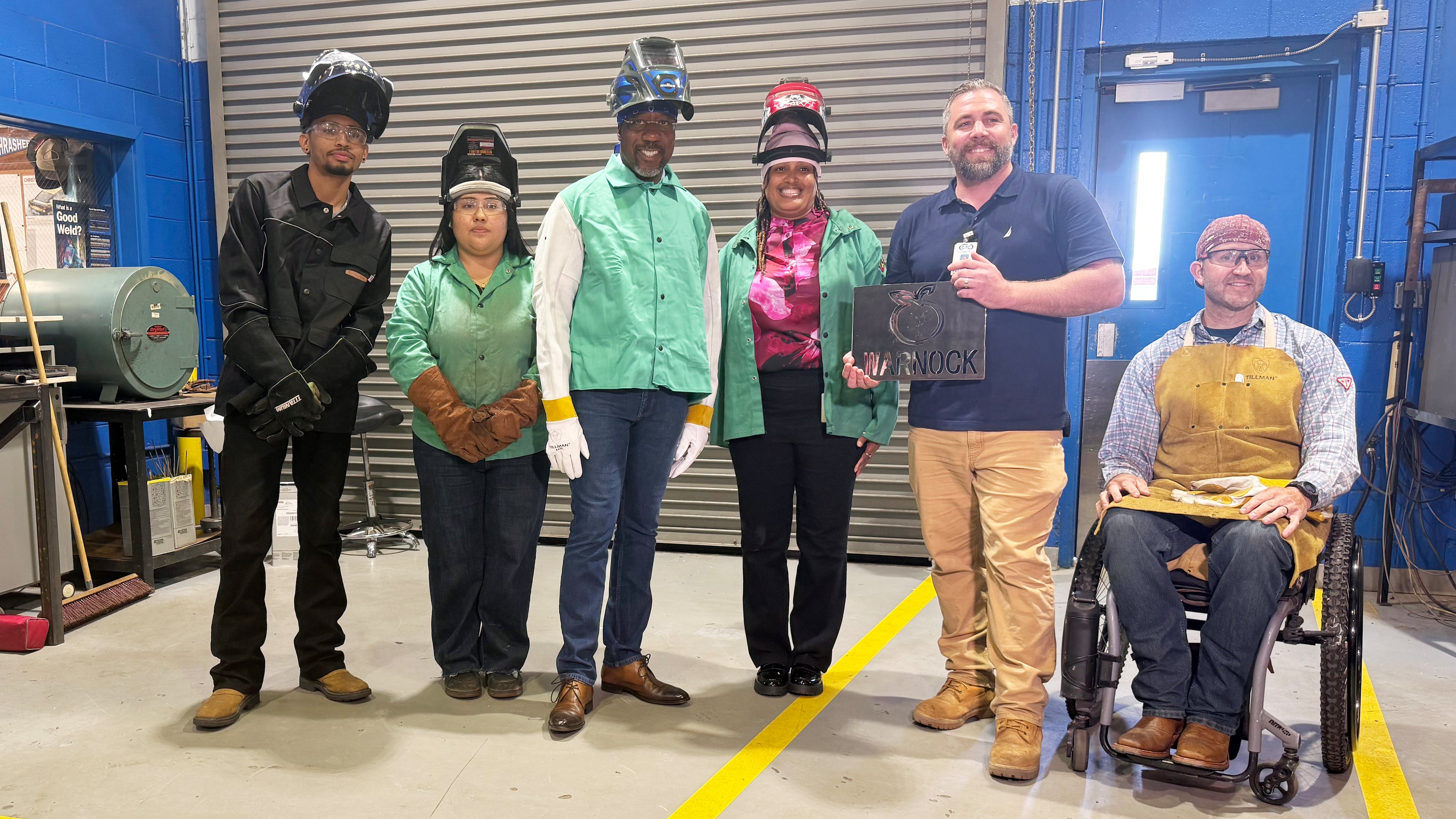
That message was on display this week in Columbus, where he held a roundtable with technical college students to hear about student debt, rising costs and uncertain job prospects.
Wearing heavy-duty safety gear, Warnock tried his hand at a welding station before turning to the students with a simple question.
“What could we do to make life easier?”