Bankers Life to repay about $7M to some investors in First Liberty scheme

A major financial services firm agreed Wednesday to repay nearly $6.7 million to more than 40 investors who lost money in the collapse of the politically connected First Liberty Building & Loan.
The restitution stems from allegations that a former financial adviser with deep roots in Georgia GOP politics steered clients to the Newnan-based firm, which federal regulators accuse of orchestrating a $140 million Ponzi scheme that defrauded some 300 investors overall. A recent court filing now contends First Liberty raised about $156 million from investors.
First Liberty, which courted conservative-leaning investors and touted its ability to say yes to borrowers when the big banks said no, shut down last June, leaving investors unable to access their money. The U.S. Securities and Exchange Commission soon stepped in, filing a lawsuit accusing the company of operating an investment scheme. Probes by state agencies soon followed.
Secretary of State Brad Raffensperger said Wednesday that Bankers Life Advisory Services and Bankers Life Securities “chose to do the right thing and help the Georgians who lost everything in this alleged Ponzi scheme.”
Wednesday’s announced agreement comes weeks after Raffensperger’s office levied a $500,000 fine against Nathaniel Darnell, a former Bankers Life adviser, and referred his case to local prosecutors for possible criminal charges over allegations that he deceived First Liberty investors.
“This agreement means that 46 seniors and hardworking Georgians can begin to recoup their losses,” Raffensperger said. “Many of them (are) seniors who saw their life savings taken from them by people they thought they could trust.”
It is the latest fallout from the collapse of First Liberty and a sign that the state’s widening investigation is reaching beyond the firm to others accused of profiting from its operations.
Darnell leads the insurgent conservative Georgia Republican Assembly organization and is a close ally of First Liberty founder Brant Frost IV and his son.
The state’s civil complaint accuses Darnell of selling unregistered First Liberty investments to nearly four dozen clients without informing his employer. Investigators also allege he concealed from both clients and the firm that he was collecting nearly $250,000 in commissions over several years.
Bankers Life President Cheryl Heilman said Darnell acted independently without the firm’s knowledge or authorization.
“Our clients come first,” she said. “And that’s why we agreed to make a monetary contribution to this fund.”

Darnell’s attorney, Douglas Gilfillan, has said his client denies the allegations and accused Raffensperger, a GOP candidate for governor, of rushing to judgment for political reasons.
“Although we previously asked the Secretary of State for the chance to discuss this matter before it took any action, the Secretary of State ignored that request and did not provide us an opportunity to address these allegations before making them public,” Gilfillan said in a prior statement.
“Although we have sympathy for those who lost money, we will continue to defend Mr. Darnell in this matter.”
Matt Wolper, an attorney for about a dozen families who are Bankers Life clients alleging they were victims of Darnell, said the move showed Bankers Life “understanding its responsibility to protect its clients from misconduct perpetrated by employees and registered people at the firm.”
“It’s a meaningful step in the right direction to righting the wrong that occurred here,” Wolper said.
First Liberty wasn’t a bank. The company made loans and sold interests in those loans to investors. It advertised them as safe investments offering hefty returns.
“My clients were retirees. Many of them are not experienced in the investment world, and so they trusted Nathaniel that these were sound investments that were vetted and approved by Bankers Life,” he said.
Wolper said his clients and the other affected Bankers Life clients can decide to take the compensation and resolve their claims, or move forward with them.
The 46 investors who will be made whole under the Bankers Life agreement represent roughly one-third of the victims who have come forward to Raffensperger’s office, officials said.
But Raffensperger also said his office has heard from only “about half of the victims we suspect may be out there.”
Jay McMaster, a retiree who invested $1.3 million with First Liberty and saw that savings wiped out, spoke at the Secretary of State’s office news conference and said some victims may not be coming forward because “they don’t want their families to know what they’ve done.”
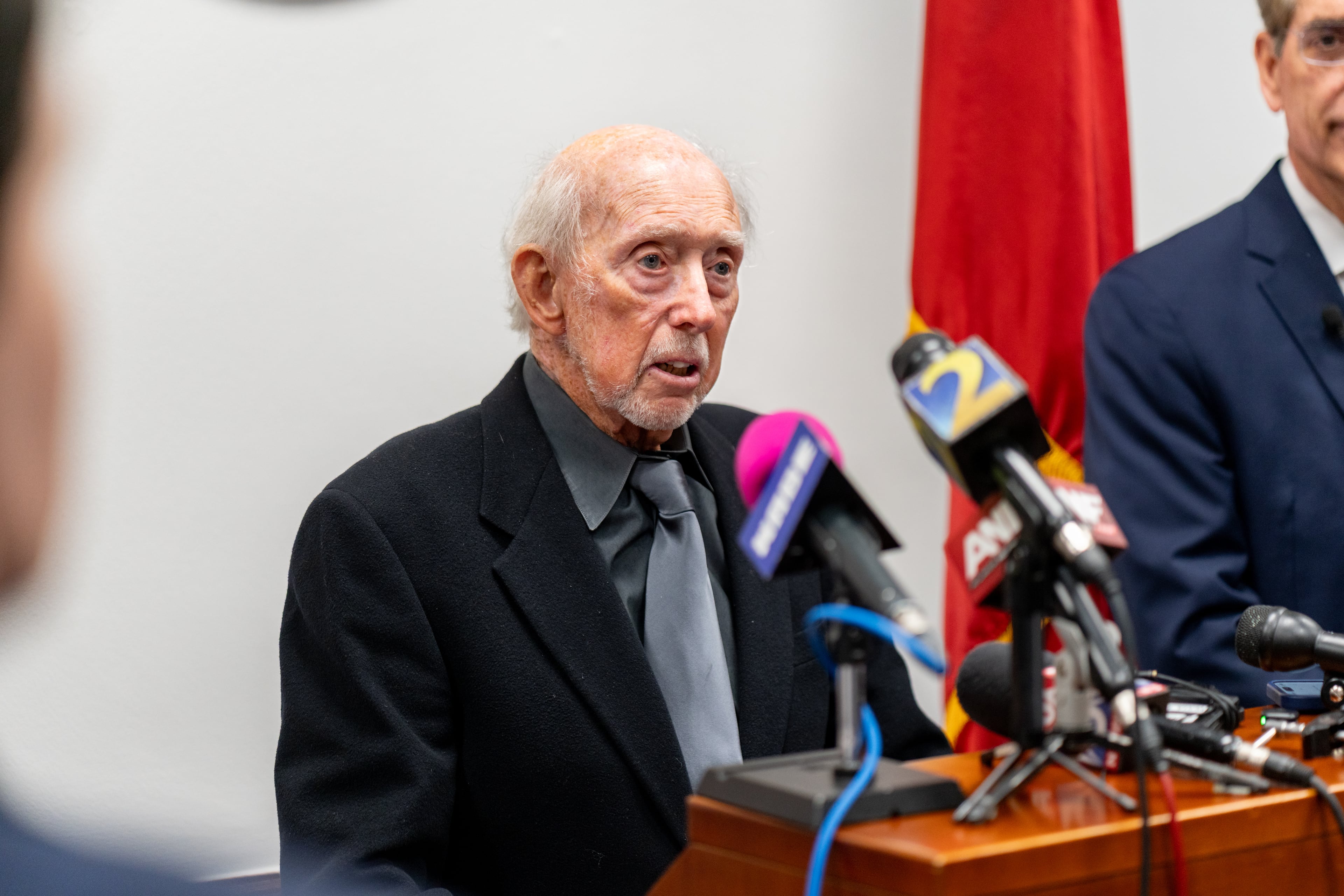
“They’re embarrassed. They’re devastated,” McMaster said.
The secretary of state is urging other firms to follow Bankers Life’s example. More than 150 people have submitted complaints to the Secretary of State’s Office saying they were victims of the scheme.
“Do the right thing. Let’s work together to get these hardworking Georgians their money back,” he said to other firms connected to First Liberty.
S. Gregory Hays, the court-appointed receiver tasked with recovering money for jilted First Liberty investors, called the restitution from Bankers Life “a fantastic result” for the 46 investors.
“It’s an unbelievable result when they thought yesterday they had lost everything,” Hays said.
“And it benefits all the investors,” he said, because it stands to reduce the pool of claims to be repaid through the money Hays recovers.
A filing from Hays late last month showed First Liberty entities raised more than $155.7 million from investors, while paying a total of $89.4 million back to investors. That indicates a shortfall of about $66 million. Some investors received more than their investment amounts, while others “incurred significant losses,” according to the filing.
‘Greater obstacles’
The U.S. Securities and Exchange Commission in July accused Frost IV in a lawsuit of orchestrating the scheme, funneling millions to the family to boost conservative causes.
Federal authorities froze First Liberty’s assets, and Frost publicly apologized. No criminal charges have been filed so far in that case.
State regulators have launched parallel investigations into campaign finance issues and alleged violations of Georgia securities laws.

And the State Ethics Commission charged the Georgia Republican Assembly and its PAC with civil violations of campaign finance law, accusing it of illegally trying to influence elections.
Darnell has previously said the PAC was “completely separate” from the organization and that only the Frost family oversaw its operations. He said the PAC disbanded in June, shortly after members of the Frost family resigned from the Georgia Republican Assembly amid a broader revolt over the group’s direction.
The scandal has also triggered a legislative response. Lawmakers last week passed Senate Bill 284, a top priority for Raffensperger that would expand his office’s power to crack down on investment fraud. The measure is now headed to Gov. Brian Kemp’s desk.
If signed, the bill would allow Raffensperger, who also serves as the state’s securities commissioner, to order fraudsters to repay investors directly. Under current law, most penalties flow to the state rather than victims.
Raffensperger is framing the bill as both a deterrent and a path to restitution.
“When this becomes law, scammers will face greater obstacles in Georgia,” he said.
About the Authors

Greg Bluestein is the Atlanta Journal Constitution's chief political reporter. He is also an author, TV analyst and co-host of the Politically Georgia podcast.