Trust in Georgia’s elections requires clear rules and public confidence
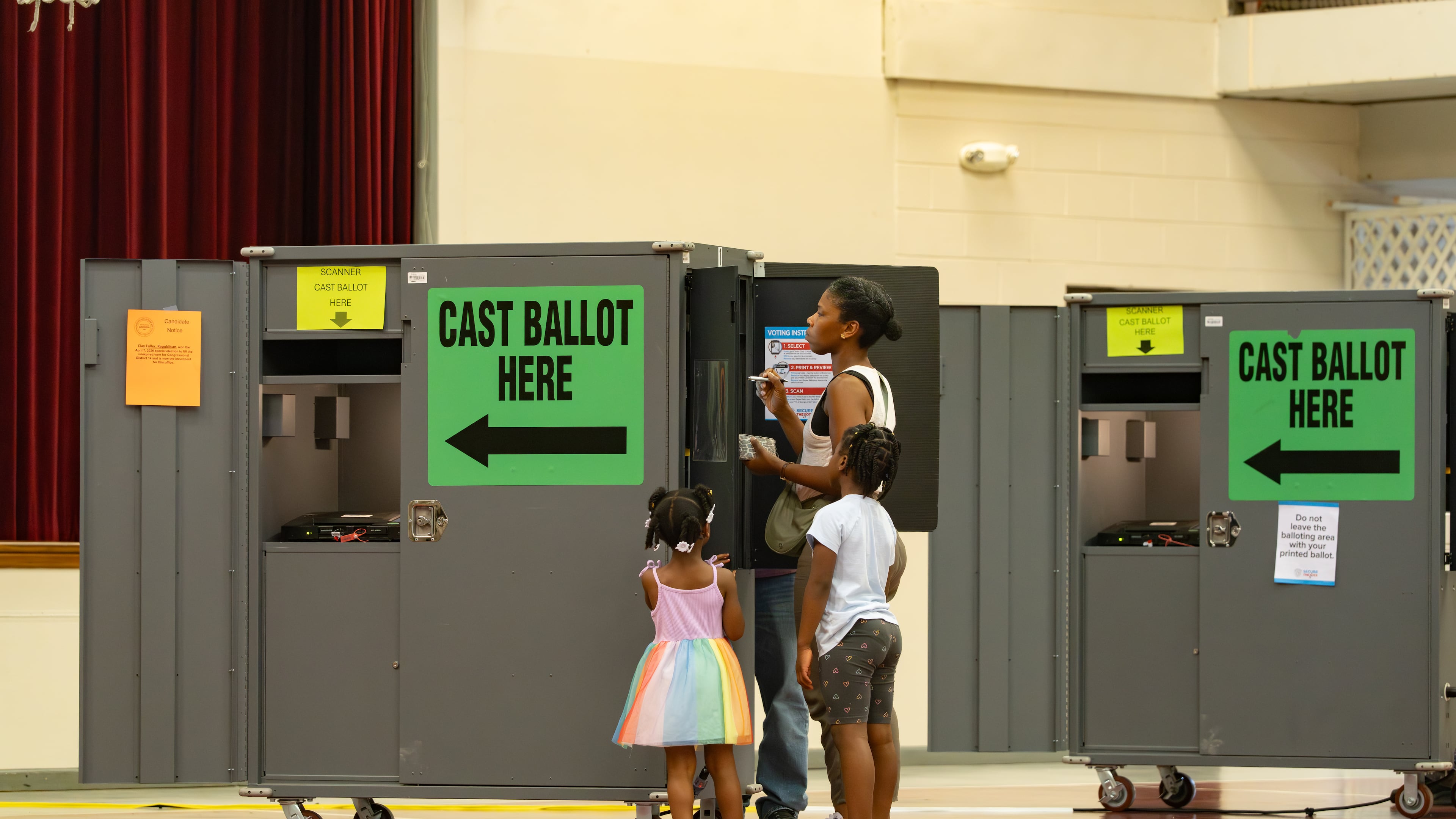
Georgia’s election officials are being asked to solve a problem they did not create.
In county offices from the mountains of North Georgia to metro Atlanta and the coast, local election administrators are once again in the midst of another demanding election cycle.
Having just finished the primary election, they are immediately pivoting to the runoff elections in just a matter of weeks, requiring that they train poll workers, test voting equipment, coordinate early voting, prepare ballots and answer anxious questions from voters — all while uncertainty grows around how future elections in Georgia may actually be conducted.
The challenge stems from the state’s looming deadline to discontinue the current QR-code ballot tabulation system without a finalized replacement plan in place. The result has been confusion among voters, frustration among election officials and an increasingly public dispute over who has the authority to decide what comes next.
The Legislature acted in setting up the July 1, 2026, deadline. The State Election Board has limited authority. Advocacy groups are pursuing litigation. Courts may ultimately become involved. Meanwhile, county election officials are left waiting for guidance while trying to prepare for upcoming elections under compressed timelines and intense public scrutiny.
None of this is ideal.
Disconnect leads to misinformation and mistrust
Election administration is not something that can be overhauled casually or at the last minute. Even modest procedural changes require months of preparation, public communication, equipment testing and training.
Large-scale changes to voting systems involve legal, logistical and financial considerations that directly affect every county in Georgia, as well as funding to purchase new equipment for all 159 Georgia counties.
Yet too often, the people responsible for actually carrying out elections are left out of the broader public conversation.
That disconnect can become dangerous in today’s political climate. Uncertainty creates opportunities for misinformation and mistrust.
Already, Georgians are hearing competing narratives and conflicting claims about election integrity, hand-counting ballots, voting machines and who can legally make decisions regarding election procedures.
Some of these concerns are legitimate questions deserving thoughtful answers. Others are rooted in longstanding myths that continue to erode confidence in election administration despite repeated evidence to the contrary.
What should not be lost in this debate is the professionalism and commitment of Georgia’s local election officials.
Across all 159 counties, these public servants have consistently demonstrated resilience under extraordinary pressure. They administer elections in highly polarized environments while facing growing workloads, public criticism and evolving legal requirements. Most voters never see the countless hours of preparation required to ensure Election Day runs smoothly.
And despite the current uncertainty, Georgia’s election officials will continue doing what they have always done: adapting, problem-solving and working to ensure lawful elections proceed efficiently and securely.
Still, they should not have to navigate these challenges alone.
Conversations on election administration should be nonpartisan
America at 250 essays: Read more from Georgians celebrating Independence Day
In May, the AJC started publishing publishing Opinion essays to commemorate the 250th anniversary of the United States’ Declaration of Independence.
- America at 250: Georgia cities like Eatonton restore our faith in democracy (By AJC Opinion Editor David Plazas)
- America at 250: Celebrate independence by remembering the ladies of Georgia (Margaret E. Holt of Watkinsville, Suzanne M. Minarcine of Macon, Madeline Van Dyck of Athens and Marilyn Vickers of Athens
- America at 250: Civic hygiene can save election integrity in Ga. and beyond (Lori Ringhand, UGA law professor and author of “We the Voters”)
- America at 250: Dr. King’s Prince Hall reminds us to honor the whole story (Carrie Besnette Hauser and Phillip June, Trust for Public Land)
- America at 250: KKK granite from Georgia built U.S. Treasury. Trump wants you to forget that. (Bethany Luchetta, a Daughter of the American Revolution)
- America at 250: Georgians put aside political differences for one night (Keith Strigaro, Georgia Historical Society)
- America at 250: My immigrant clients believe in U.S. system. We should too. (Mills Fleming, immigration attorney in Savannah)
- America at 250: Adams, Jefferson disagreed to the end on Revolution’s meaning (Marianne Holdzkom, Kennesaw State University professor)
- America at 250: Thanks to civics educators for forming the nation’s future (David Bobb, president and CEO, Bill of Rights Institute)
- America at 250: How to live the ‘Georgia Way’ as a discipline for public life (Chris Clark, CEO, Georgia Chamber of Commerce)
- America at 250: First-generation Americans lean into their parents’ cultures (AJC Photojournalist Arvin Temkar)
- America at 250: Atlanta created the model for civil rights and prosperity (John Hope Bryant, CEO of the Operation HOPE)
- America at 250: Celebrating 2-1/2 centuries of disagreeing about our democracy (Page Alexander, CEO, The Carter Center)
- America at 250: Expand who is seen, who is heard and who has opportunity (By Margaret Mitchell, CEO of YWCA USA, and Danita V. Knight, CEO of YWCA Greater Atlanta)
- America at 250: Was slavery wrong? Museums must now answer that question. (Yaba Baker, a fourth-generation grandson of David Drake, aka Dave the Potter)
As our nation approaches its 250th anniversary, Americans should remember that democratic systems are strongest when institutions function transparently and when public trust is treated as something to be earned and protected. Confidence in elections does not come from political talking points. It comes from clear processes, consistent rules, civic education and respect for the people administering the system.
Whether Georgia changes its voting process is a decision that should emerge through the constitutional framework that has guided this country for nearly two and a half centuries. Legislatures make laws while public input is provided. Executive officials implement the laws. Courts resolve disputes. Sometimes that process is slow and messy. But it is precisely how democratic self-government is supposed to function.
At Keep Our Republic, we believe moments like this require more public engagement, not less.
That is why nonpartisan conversations around election administration are so important right now. In the coming months, Keep Our Republic will convene public forums throughout Georgia that bring together front-line election officials, legal experts and civic leaders to answer questions directly from voters and explain the realities of election administration.
We believe local election officials deserve not only public scrutiny but public support. They are neighbors, community members and dedicated professionals working under difficult circumstances to uphold confidence in our democratic process.
As political tensions continue nationally, Georgia can show the country another way forward. Just as our state ran a smooth primary election with record turnout on May 19, and numerous losing candidates offered generous concessions to their opponents afterwards, Georgia has an opportunity to demonstrate even further that despite disagreement about voting processes, trust in democratic institutions can still be strengthened through transparency, constitutional order and civic dialogue. Let’s hope the special legislative session starting June 17 to address this issue models that ideal.
That would be a worthy way to approach America’s 250th birthday.
Don Balfour, who served as a Republican in the Georgia State Senate from 1993 to 2015, and Cathy Cox, who served as a Democrat in the Georgia House of Representatives from 1993 to 1996 and as Georgia Secretary of State from 1999 to 2007 are both members of Keep Our Republic’s Georgia Advisory Council.