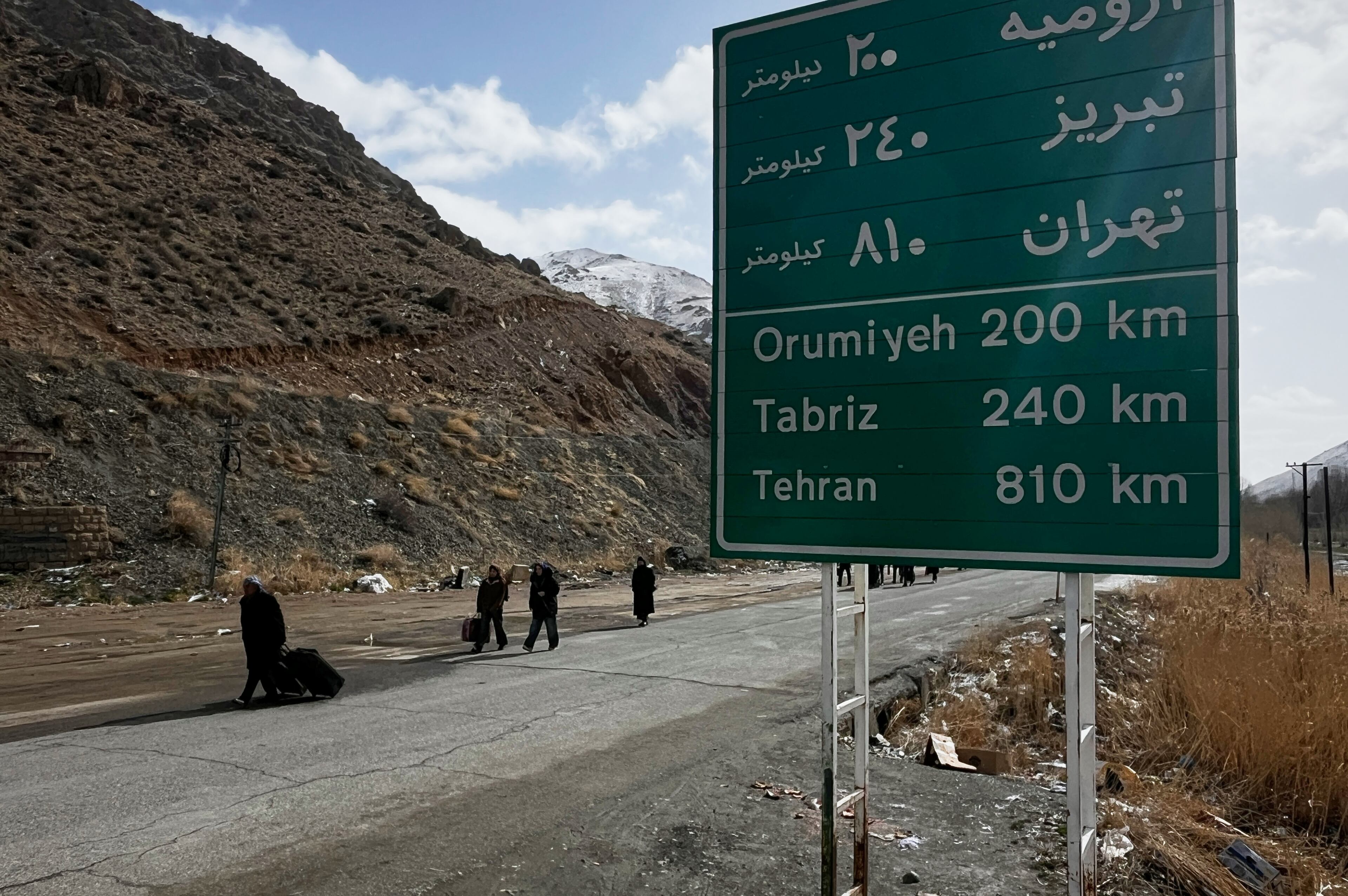
Iranian people don’t want war. They want peace and freedom.

While headlines focus on war and political strategy, one reality is often overlooked: The Iranian people want peace.
They want freedom and the right to decide their own future.
Here in Georgia, many of us follow these events not as distant observers, but as people whose families and loved ones are directly affected.
For years, Iranians have endured repression, economic hardship and the absence of basic political rights.
Their response has not been silence. It has been visible in protests across provinces and hundreds of cities, voices that persist despite enormous risk.
Cost of dissent in Iran remains high
Even amid external conflict, the regime has intensified its crackdown at home.
Multiple executions have been carried out, including individuals accused of affiliation with the main opposition group, the MEK, according to Reuters.
From March through April 6, the regime executed one to two members of the MEK each day, underscoring an escalating campaign against organized opposition, according to a combination of human rights reports, news reports and accounts from activists.
The cost of dissent in Iran remains extraordinarily high.
Individuals such as Mohammad Taghavi, 59, Akbar Daneshvarkar, 59, Pouya Ghobadi, 33, Babak Alipour, 34, Ali Fahimi, 23, Mohammad Amin Biglari, 19, Shahin Vahedparast Kalour, 30, Amirhossein Hatami, 18, Vahid Bani Amerian, 32, and Abolhassan Montazer, 66, were executed or hanged after being accused of armed rebellion or “waging war against God,” a capital offense under Iranian law.
These cases reflect the regime’s growing reliance on executions to suppress organized resistance.
Even during times of war, the government’s primary focus is not external threats, but its own population, especially the organized and legitimate resistance inside Iran, along with a growing and determined population demanding change.
That is because the demand for change is not only widespread, but organized.
Iran is not a passive nation waiting for change
Recent reports have described coordinated activities in Tehran involving networks linked to organized opposition groups. Despite arrests and casualties, these developments point to a persistent and structured resistance operating inside the country.
Iran is not a passive nation waiting for change from the outside. Its people are actively engaged in shaping their future.
There is also a vision for what comes next. The National Council of Resistance of Iran has outlined a road map for democratic transition.
At its core is Maryam Rajavi’s Ten-Point Plan, which calls for free elections, separation of religion and state, gender equality, minority rights, abolition of the death penalty and a non-nuclear Iran at peace with the world.
It also proposes a provisional government limited to six months, tasked solely with organizing free and fair elections for a constituent assembly. That body would then draft a new constitution and transfer power to representatives chosen by the Iranian people.
As someone who has spent decades advocating for democracy, I have seen how deeply this struggle affects families. Many in the Iranian-American community carry these experiences every day.
The future of Iran will not be decided by outside powers. It will be determined by its people, a nation that has paid a heavy price, with tens of thousands executed over decades of repression, and countless protesters killed for demanding change. And the cycle continues.
Executions are still being carried out, including those reported since March 30. Yet the people of Iran do not step back. Because this is ultimately about one thing: a nation determined to reclaim its destiny, to secure peace and freedom, and to place its future in its own hands.
That future is neither a return to monarchy nor a continuation of religious dictatorship. It is a clear rejection of all forms of authoritarian rule and a firm commitment to a democratic republic chosen by the people of Iran.
Batool Zamani is a human-rights activist and president of the Iranian American Community of Georgia.