DOJ targets some church protesters, but not all. Justice cannot be selective.
The sanctuary is sacred ground. More than a building — it is a place set apart for prayer, worship, fellowship and ritual.
Across faith traditions, houses of worship are meant to be protected spaces where people gather without fear of disruption, intimidation or violence.
That principle matters to me deeply, which is why I state clearly and unequivocally: No church service, anywhere in this nation, should be interrupted or used as a stage for protest.
Not at New Birth Missionary Baptist Church in Stonecrest.
Not in Minnesota.
Not anywhere.
And yet, we now find ourselves confronting an unnerving inconsistency in how such intrusions are perceived and redressed — not in the court of public opinion, but by the very leaders who swore an oath to support the Constitution.
AG talked tough in Minnesota but not Georgia
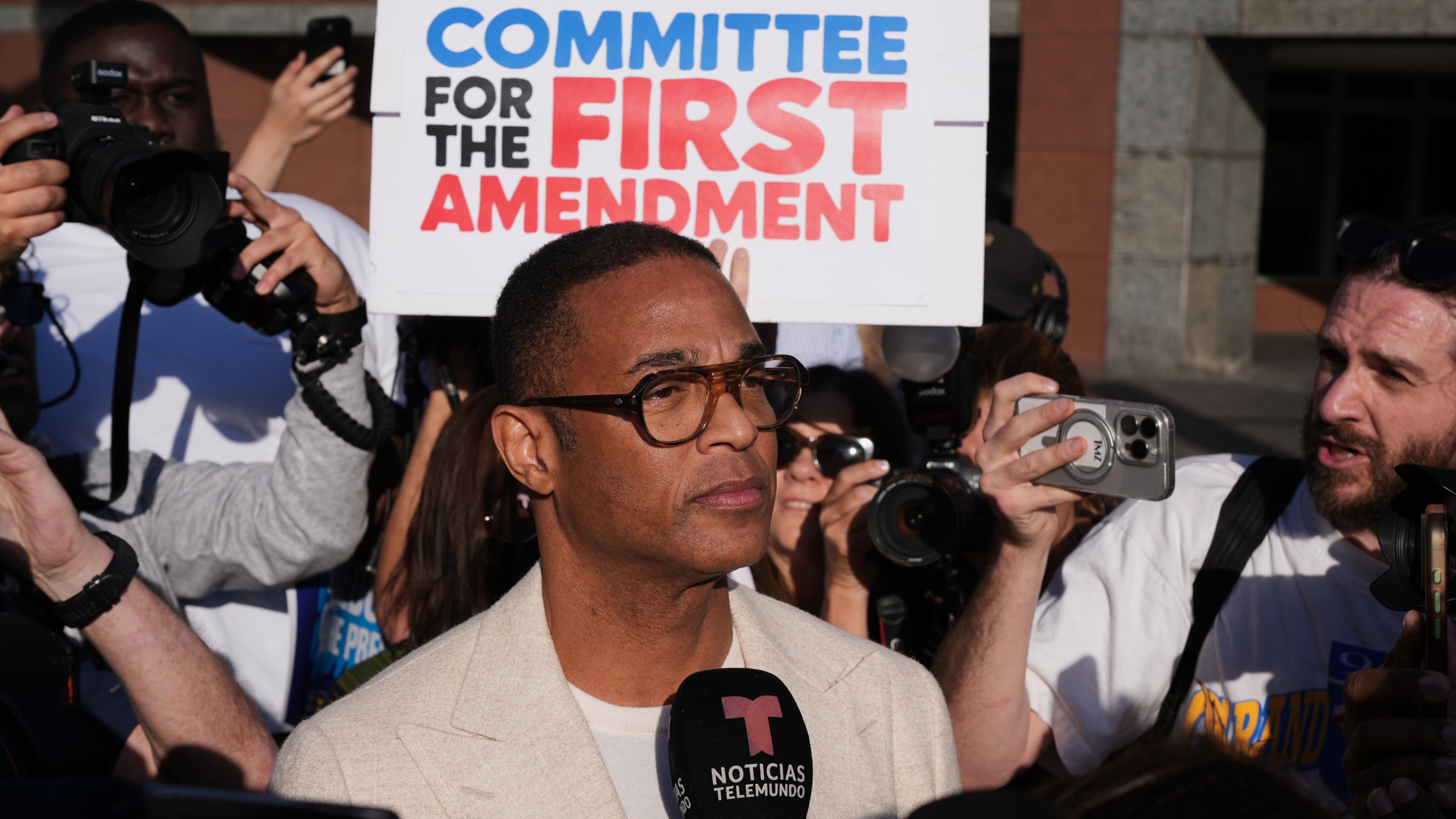
Recently, Attorney General Pam Bondi said the government wouldn’t tolerate attacks on places of worship and moved swiftly to arrest and charge journalist Don Lemon and others for their alleged involvement in the disruption of a church service in Minnesota.

Federal charges were filed and arrests were made even though a judge had previously rendered the accusations meritless.
Despite the fact that a federal magistrate refused to sign the criminal complaint against the journalists, Bondi, by her own admission, directed the Department of Justice and the FBI to move forward with the indictment and arrests, delivering an unmistakable message: Interrupting a worship service is a serious offense, worthy of aggressive prosecution.
Contrast that disposition to the response of our federal government when a man stormed into New Birth Missionary Baptist Church on a recent Sunday morning, being disruptive, verbally attacking me as the pastor and causing alarm among congregants — an incident captured on video and broadcast nationally.
No arrest has followed. No federal charges. No urgent statements about protecting religious freedom. Just deafening (and predictable) silence.
This dichotomy raises a fundamental question: Why is one church disruption treated as a federal crime, while another is ignored?
DOJ acts on politics not principle
Let me be clear: I do not believe Don Lemon or any journalist should have been arrested. They were not the individuals who disrupted the Minnesota church service. They were well-credentialed journalists covering a very relevant news event.
But if the position of the DOJ is that journalism does not grant immunity from this perceived offense, and protest — no matter how passionately motivated — does not belong in the sanctuary, why is the outrage selective and uneven?
If interrupting worship violates the sanctity of religious freedom, then it violates it everywhere. If it is worthy of arrest in Minnesota, it must be worthy of arrest in Georgia. Anything less is not justice — it is hypocrisy dressed up as law enforcement.
Bondi must explain why her response appears not to be driven by principle, but by politics. When prosecutorial discretion blatantly aligns with political ideology rather than in the interest of justice, these actions erode trust not only in the justice system, but in democracy itself.
The danger here is greater than one case or what happened at my church. When justice is weaponized — when enforcement is unequal or retaliatory — it sends a chilling message: that the law is not blind but watching closely to see who you are and what side of the political divide you stand on.
That is not the intent of our founders or the America we claim to be.
‘Am I not American?’
Black churches know this story too well. We have historically been spaces of both worship and witness, sanctuaries and staging grounds for social change. Yet that dual role has often made us targets — surveilled, scrutinized and selectively policed.
When disruptions in predominantly Black congregations are minimized while others trigger the full weight of federal government, it reinforces a painful and familiar imbalance.
Frederick Douglass, in many of his post-Civil War speeches and essays, was known to ask, “Am I not American?” when trying to make sense of the plight of the African American in the 1860s. I find myself wondering the same in 2026.
Do I deserve the right to equal protection under the law?
Is my First Amendment right to freedom of speech real?
Do the members of my church deserve to worship openly and freely without disruption and chaos from unhinged strangers?
I have been one of the most outspoken critics of the Trump administration, particularly when policies and rhetoric damage and demoralize vulnerable communities, weaken democratic norms and abandon moral accountability. My criticism has not been quiet, nor has it gone unnoticed.
In fact, just last year, I was publicly mocked during a ceremony inside the White House — a moment that underscored how dissenting voices are often treated with contempt rather than engagement in Trump’s America.
I mention this not for sympathy or even empathy, but for context and clarity.
When the church I pastor is disrupted, and the response from the Department of Justice is indifference — while journalists who are perceived as adversaries of the administration are swiftly arrested and charged — it becomes painfully obvious that the law is not being applied evenly but enforced on who is deemed an enemy.
That is not how justice is supposed to work.
Keep sanctuary sacred everywhere
I am calling for consistency and equal application of the law.
I am calling for a Department of Justice that protects religious freedom without squinting through the lens of political opportunism.
The sanctuary must remain sacred. Protest belongs in the public square, not the pews. And the rule of law must apply evenly — no matter the political slant of the offender. Because when justice becomes selective, it ceases to be justice at all.
And the American people — people of faith especially — deserve better.
Jamal-Harrison Bryant is the senior pastor of New Birth Cathedral in Stonecrest. He is a noted author, philanthropist, social organizer and civil rights leader.