In Midtown, Atlanta reached new heights, but green building has room to grow

Atlanta just changed in a big way. The topping-out of Rockefeller Group’s 1072 West Peachtree development, the city’s tallest building in three decades, marks more than just a notable addition to our local skyline.
It seized several titles: Atlanta’s tallest residential tower, tallest mixed-use building and fifth tallest high-rise.
That’s not all. 1072 West Peachtree also holds a global title. At 60 stories, it’s the tallest structure in the world built with carbon‑mineralized concrete.
How does it work? When we produce concrete, we inject captured carbon dioxide (CO2) that reacts with calcium ions in the mix, embedding nano-sized particles of calcium carbonate within the concrete matrix.
Why does this matter? After water, concrete is the most used material on Earth, but its key ingredient, cement, comes with a significant carbon footprint. Cement manufacturing accounts for an estimated 7% to 8% of global CO2 emissions. Reducing that footprint requires multiple strategies and techniques.
Here are four innovations in making cement greener
This milestone project in Atlanta shows what’s possible when developers, designers and builders remove barriers to innovation and embed sustainability in new construction.

Yet for every tower that rises, our industry still has room to grow. Green building has not kept pace with industry ambition.
The good news is that the number of tools in our toolbox is expanding.
A growing cohort of concrete industry leaders are deploying innovations such as:
- Supplementary cementitious materials (SCMs), like fly ash, slag or calcined clay, as a replacement for cement to lower the carbon intensity of concrete products
- Plant decarbonization, by making changes such as electrifying operations, improving energy efficiency and using greener vehicles
- Optimized mix designs to reduce overall cement content while maintaining strength and durability
- Carbon capture and utilization, permanently mineralizing CO2 in concrete and enabling further cement reductions
While concrete producers have leveraged many of these techniques for decades, carbon utilization is the industry’s newest, fastest-growing sustainability solution.
Recommendations to increase eco-friendly innovation
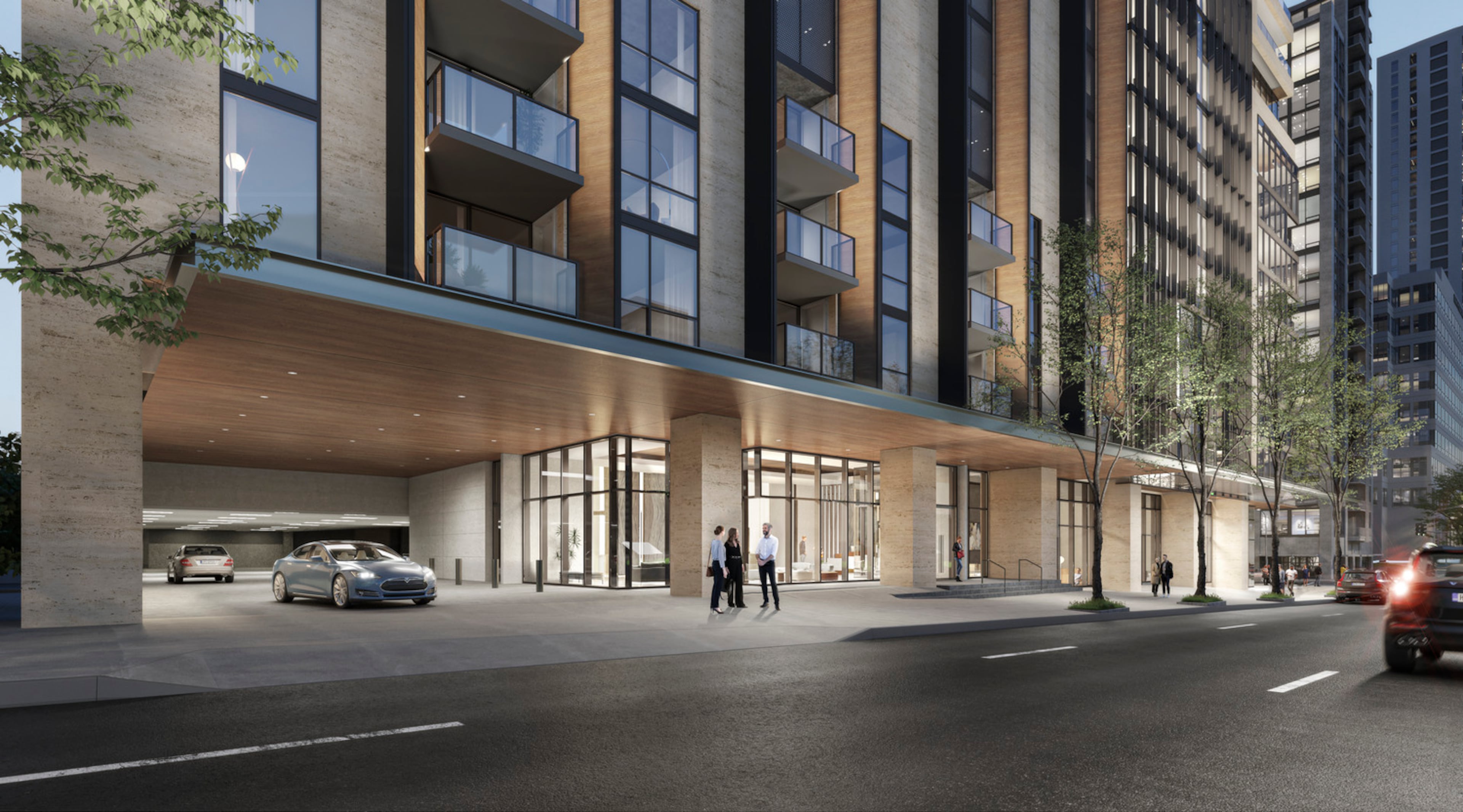
For the 1072 West Peachtree project, Thomas Concrete used a technology called CarbonCure to inject and lock captured CO₂ in concrete during mixing.
This approach reduces cement content, maintains or improves performance and produces measurable carbon savings. Yet one major barrier still slows progress for such innovation, blocking the world’s path to lower-carbon concrete construction: prescriptive concrete specifications.
Many owners and engineers still specify fixed mix designs, cement content and ingredient percentages. These rules were developed decades ago when quality control was less robust and not as reliable.
However, more cement does not assure concrete performance; in fact, it can result in poorer material quality, higher emissions and unnecessary cost.
Performance-based specifications offer the solution. By focusing on measurable outcomes, including strength, durability, permeability and freeze-thaw resistance, developers empower producers to innovate, optimize mixes and deploy cutting edge technologies while still meeting engineering requirements.
The 1072 West Peachtree project proves these tools work today. Carbon-mineralized concrete can meet the demanding performance requirements of major construction, even high rises, demonstrating that sustainability and high performance are not mutually exclusive.
My message to the construction sector is simple:
- Remove barriers
- Adopt performance-based specifications
- Seek out lower-carbon materials
- Encourage suppliers to innovate
By doing so, developers, designers, builders and building owners can accelerate both sustainability and construction performance. Concrete will always be the foundation of our built environment. But if we want it to meet the needs of the 21st century, it must evolve.
The topping-out of 1072 West Peachtree is more than a local milestone. It serves as a case study for the world, proving that when innovation is unharnessed, sustainable construction can rise as high as our ambitions.
Ryan Chandley is the CEO of Atlanta-based Thomas Concrete, which supplied the concrete for 1072 West Peachtree project in Midtown.

