Atlanta’s drop in murders is a quiet miracle. Here’s how to sustain progress.
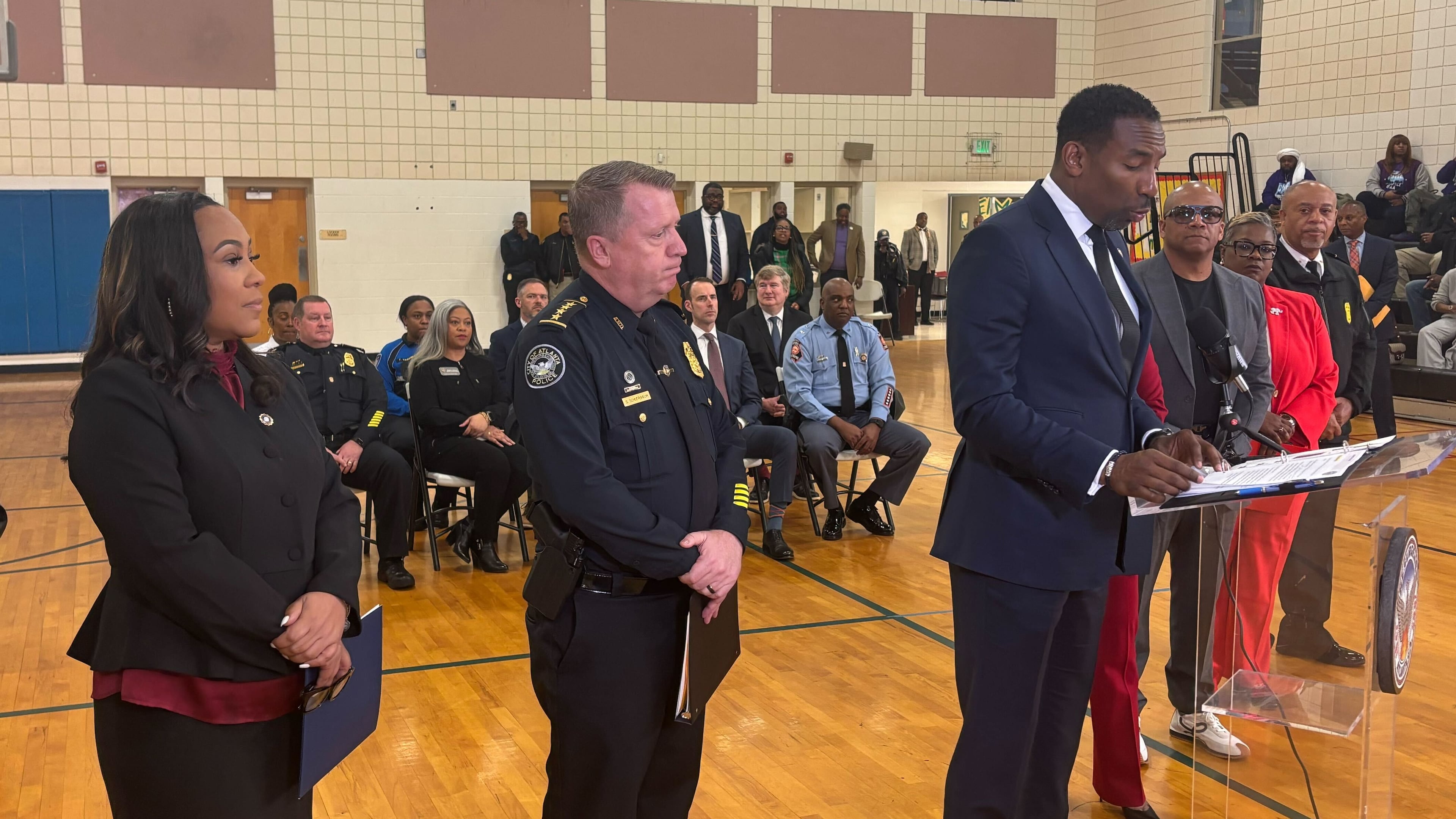
Atlanta recorded 98 homicides in 2025. Let that number sit with you for a moment. Not because it represents 98 tragedies — which it does — but because of what it represents in the arc of this city’s history.
Just three years ago, in 2022, Atlanta suffered through 171 homicides. To move from 171 to 98 isn’t just statistical noise. It’s part of a larger transformation.
Crime peaked in the city of Atlanta in 1989. Nearly 17,000 violent crimes and 248 homicides were recorded that year.
In 2025, we had 3,850 violent crimes and 98 homicides. Overall, crime of all types is down nearly 80% since 1989. And Atlanta’s story is not unique. It’s part of something larger, a national phenomenon that has been unfolding with remarkable consistency.
Murder declined at what appears to be the fastest rate ever recorded in 2025, marking the third consecutive year of historic drops. Cities from Providence, Rhode Island, to Philadelphia, from Detroit, Michigan, to Newark, New Jersey, have seen homicides fall to levels not witnessed in generations.
Twelve major cities hit all-time lows. Chicago, Baltimore and Oakland saw murders drop by roughly 50% since 2021. San Francisco reported its lowest number of homicides since 1942.
Neighborhood revitalization is a critical factor
This is the kind of news that should dominate our national conversation, yet it barely registers. We’ve become so accustomed to narratives of urban decay and disorder that we struggle to process evidence of urban renewal and recovery.

The cognitive dissonance is palpable: How can crime be plummeting when our social media feeds and cable news chyrons insist that American cities are spiraling into chaos?
The answer reveals something profound about the American condition in 2026. We’ve lost faith in our institutions’ capacity for self-correction. What strikes me most about this moment is not just the magnitude of the decline in crime, but its breadth.
This isn’t a story of one innovative police chief or one visionary mayor. Cities with radically different political leadership, different policing philosophies and different demographic compositions have all experienced similar trajectories.
Richmond, California, went from 61 murders in 1991 to just five in 2025. Bridgeport, Connecticut, fell from 60 in 1993 to four last year. Modesto, California, reported zero murders in 2025.
We should want to understand why. While it is tempting to attribute the decline to investments in policing and violence prevention programs, the breadth and depth of this change suggest that something more fundamental is going on here, something that connects to deeper currents in American life.
One factor that deserves more attention is the role of neighborhood revitalization. In Atlanta and cities across America, the physical transformation of once-struggling areas has gone hand in hand with falling crime rates.
When vacant lots become pocket parks, when abandoned buildings are converted into mixed-income housing, when grocery stores and coffee shops return to main streets that had been written off — something shifts.
It’s not just about aesthetics or property values. It’s about the presence of what “The Death and Life of Great American Cities” author Jane Jacobs called “eyes on the street.”
It’s about residents developing a stake in their community’s future. Investment signals that a neighborhood matters, that it hasn’t been forgotten. And that signal changes behavior in ways both subtle and profound.
Revitalization doesn’t solve everything — poverty and inequality persist, but it creates the conditions in which communities can rebuild the social fabric that keeps people safe.
Let’s not squander this opportunity to build on success

For decades, we’ve lived through what you might call the Great Fragmentation — the dissolution of social bonds and institutions that once knit communities together. We’ve watched Americans sort themselves into increasingly homogeneous bubbles, physical and digital.
But perhaps we’ve been too focused on what’s falling apart to notice what’s being rebuilt. The crime decline suggests that in cities across America, people have been reconstructing trust, cooperation and collective efficacy — the essential ingredients of healthy communities. They’ve been doing it neighborhood by neighborhood, usually without fanfare.
Atlanta’s crime reduction means hundreds of young men who didn’t get shot, didn’t retaliate and didn’t perpetuate the cycle. It means children who can walk to school without fear, grandmothers who can sit on their porches and entrepreneurs who can invest in neighborhoods they once fled.
But here’s what worries me: This remarkable achievement could be squandered if we don’t recognize it, study it and build on it. Success unacknowledged tends not to be sustained. The American public remains convinced that crime is rising even as it plummets. Politicians still campaign on “tough on crime” platforms in cities where crime has been cut in half. The National Guard is being sent to cities that are much safer than they used to be. Resources are being allocated based on perception rather than reality.
We need a new narrative that matches the new reality. Not a naive one that ignores remaining challenges — we should never become complacent about crime. But one that recognizes the extraordinary progress that has been made and asks:
- What can we learn from this moment?
- How do we sustain it?
- What would it mean to take the lessons from Atlanta, Baltimore and Oakland and apply them with intention and resources?
The quiet miracle unfolding in American cities deserves to be shouted from the rooftops. Because if we can’t recognize success when it happens, we’ll never be able to replicate it.
David Edwards is the senior policy adviser for neighborhoods, City of Atlanta, and founder and co-director for the Center for Urban Research at the Jimmy and Rosalynn Carter School of Public Policy at the Georgia Institute of Technology.


