Atlanta Housing builds on legacy of innovation and empowering residents
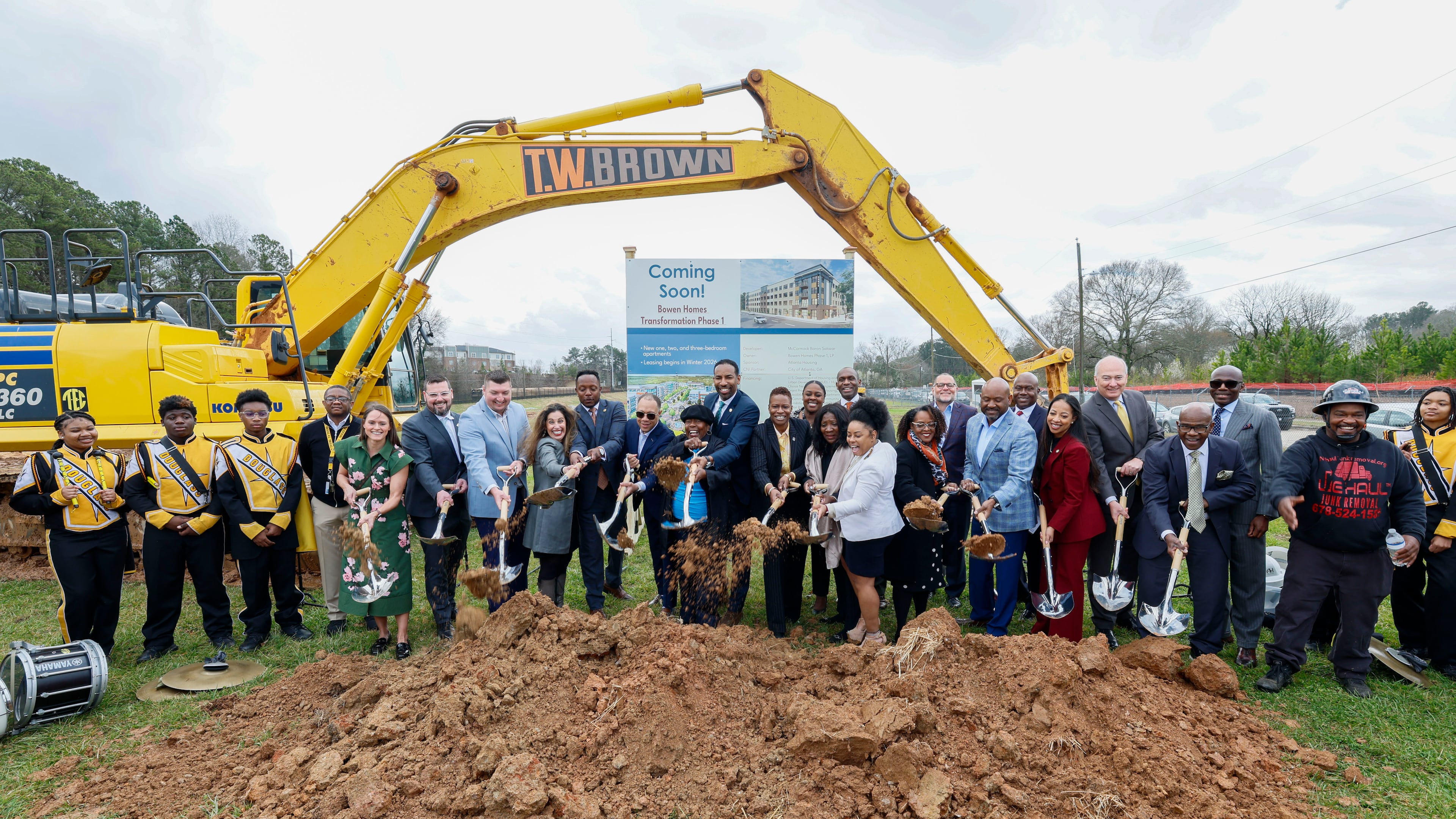
A proving ground for housing innovation, Atlanta has long been a pioneer in the affordable housing space.
For generations, the city has set national precedents, blending policy, partnership and purpose to expand housing access for underserved populations.
Today, that legacy continues as Atlanta redefines affordable housing as a foundation for stability, mobility and shared opportunity.
Nearly a century ago, Atlanta Housing and affordable housing became intertwined when our city built the nation’s first public housing. That moment launched a tradition of leadership that continues to shape how cities across the country approach housing and community development.
In 1934 and 1935, the construction of Techwood Homes and University Homes marked the beginning of federally funded public housing in the United States. These developments, followed by the creation of the Atlanta Housing Authority in 1938, established Atlanta as the birthplace of public housing and a model for national policy.
By 1955, Atlanta Housing had expanded its mission through the Urban Renewal Program, which cleared deteriorated areas and repurposed them for new schools, parks, infrastructure and housing. Even then, the agency’s focus extended beyond buildings to the broader systems that strengthen communities.
Public housing was reframed as community building
By the 1990s, Atlanta once again led the nation through the U.S. Department of Housing and Urban Development’s HOPE VI program.

Atlanta Housing became the first housing authority in the country to use HOPE VI funding to transform the former Techwood-Clark Howell Homes into Centennial Place.
This new community replaced concentrated poverty with a vibrant, mixed-income neighborhood that integrated education, recreation and private investment.
It was a turning point for how housing authorities across the country approached redevelopment and resident engagement.
The work continued through the Choice Neighborhoods initiative, which HUD launched nationally in 2010 to expand the HOPE VI model of connecting housing with education, workforce access, transportation, and health.
Atlanta received a planning grant that same year, followed by an implementation grant for the University Choice Neighborhood in 2015 and, most recently, a 2023 implementation grant for the Bowen Choice Neighborhood. These programs reframed public housing as community building. They demonstrated that housing policy, when aligned with human development, can be a powerful driver of mobility and inclusion.
Today, Atlanta Housing carries that legacy forward. The agency serves more than 27,000 households with 61% of those households earning less than $17,200 per year. More than 8,700 residents are seniors ages 62 and older. Atlanta Housing’s programs also support 16,700 adults and 16,400 children, including nearly 9,500 individuals with disabilities. For many of these residents, affordable housing provides the much needed path to stability and progress.
Bowen Homes and Civic Center redevelopment are transformative

Through public and private partnerships, Atlanta Housing is reactivating more than 200 acres of land citywide.
Across our portfolio, 21 developments are currently under construction, representing more than $163 million in Atlanta Housing commitments and a total construction budget exceeding $1 billion. Between now and June 30, 2026, we expect to close on an additional 16 developments, investing another $50.3 million to support nearly $320 million in total construction activity.
Among these transformative efforts are the historic Bowen Homes community on the Westside and the former Civic Center property downtown, each symbolizing a different dimension of the city’s future.
The Bowen Homes redevelopment will revitalize roughly 74 acres in northwest Atlanta into a mixed-use, mixed-income community with nearly 2,000 new homes. Of those, approximately 875 will be affordable and workforce homes, alongside about 1,125 market-rate homes for rent and sale.
The first phase, now under construction, includes 151 rental units, half of which are affordable. Bowen will bring together housing, education, parks and retail to restore a thriving neighborhood that reconnects residents to opportunity and community pride.
The Civic Center redevelopment will reactivate 14.6 of the site’s 18 acres to create about 1,500 residential units, a dynamic mixed-use community that blends affordability and market-rate housing in the heart of the city.
Roughly 38% of these homes will be income-restricted, while the remainder will serve market-rate households. The first phase, now under construction, includes 148 affordable units. Once complete, Civic Center will pair new housing with public space, retail, and cultural amenities, restoring a key piece of Atlanta’s urban fabric.
Resident Renaissance is a ‘platform for holistic empowerment’

Earlier this year, I declared 2025 the start of Atlanta Housing’s Resident Renaissance, a people-first strategy that builds on the principles established by HOPE VI and Choice Neighborhoods.
Resident Renaissance positions housing as a platform for holistic empowerment.
For families, it creates pathways to housing stability and homeownership through resource access. For seniors, it provides supportive services that allow them to age in place with dignity.
For children, it fosters academic growth and lifelong opportunities. Together, these efforts ensure that the promise of affordable housing extends well beyond the walls of a home.
Atlanta’s history reminds us that leadership in housing innovation is part of the city’s DNA. As we look ahead, our challenge is to continue treating housing as essential infrastructure and a shared civic responsibility.
Terri M. Lee is president and chief executive officer of Atlanta Housing, the largest public housing authority in Georgia.


