Long hours, strange faces await children in city court
Note: This article originally ran on June 9, 1989 as part of the AJC’s award-winning “Suffer the Children” series.
Atlanta Municipal Court offers a magnifying glass for the problems children face in court.
In the city with probably the largest number of abused children in the state, children are routinely put on the stand in preliminary proceedings. In the county with the greatest volume of abuse cases - Fulton - there is no special unit in the district attorney's office to ensure that one prosecutor follows a case to its conclusion.
» "SUFFER THE CHILDREN" SERIES: Full series | Part 1 | Part 2 | Part 3 | Part 4 | Part 5 | Part 6 | Part 7
PART 6 OF THE SERIES
Both practices fly in the face of the American Bar Association's "Guidelines for the Fair Treatment of Child Witnesses in Cases Where Child Abuse is Alleged," which specifically recommend the use of hearsay at pretrial hearings and one prosecutor to follow a case from beginning to end.
"It's part of the whole mentality," said Kathryn M. Gannon, who helped found Georgia CASA, a court advocacy program. "Children are just not a priority in this county."
Last year, more than 150 allegedly abused children were required to testify at preliminary hearings in Atlanta Municipal Court.
"There have been cases [in the Atlanta courts] where we have seen children as young as 4 take the stand at 10 at night and refuse to talk and the magistrate court judge throws it out," said Assistant District Attorney J. Tom Morgan of neighboring DeKalb County. "We tell city of Atlanta police who have jurisdiction in DeKalb County, forget this, we do not want children from DeKalb County to have to take the stand at Atlanta Municipal Court. We will take the case straight to grand jury so that the judge will not put that child up."
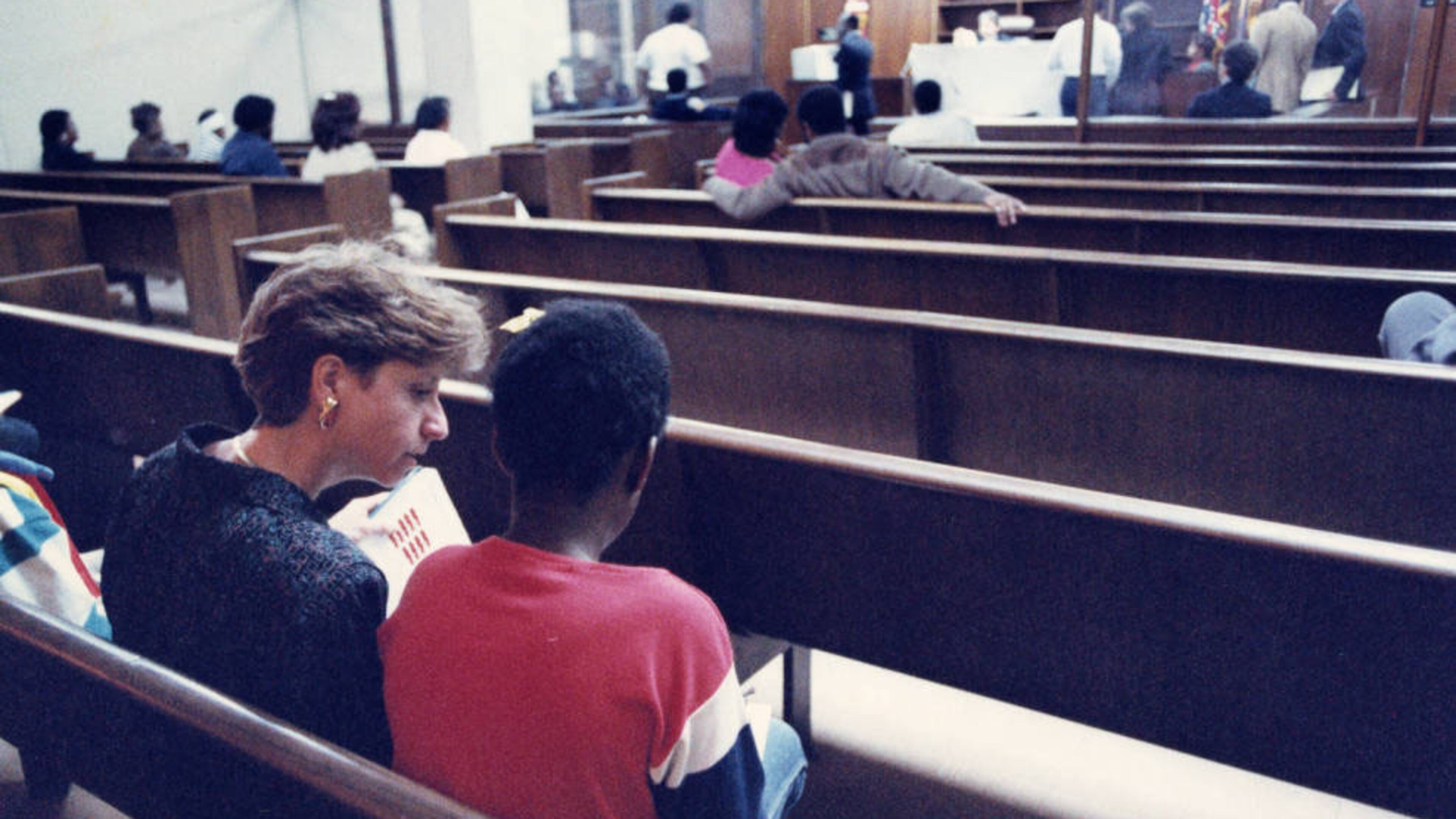
At the city court, children sometimes wait for hours in a dimly lit hall where adults accused of crimes mill about, waiting for their own hearings. "This is a horrible building; the environment here is awful, just awful for anyone, let alone a child," said Lisa W. Wise, the court's victim-witness assistant. Ms. Wise often can be seen kneeling before a terrified child who is waiting on a wooden bench outside the courtrooms.
Recently, she tried to comfort a 2-year-old who was asked to testify about alleged sexual abuse by her mother's boyfriend. After waiting for three hours, the child fell asleep in Ms. Wise's arms. "I carried her up before the judge and she was asleep and he reset the hearing for a week," she said. "The judge instructed me to be sure the child was happy and fed the next time."
When the toddler returned the next week, they endured another long wait before the little girl and Ms. Wise were summoned for the hearing in the judge's chambers.
A police officer and a detective had already testified that the child had told them she'd been abused. But in the judge's chambers, the child froze. First she cried, then she fell asleep again in Ms. Wise's arms.
Despite her failure as a witness, the case was bound over to Superior Court for prosecution, but not before the public defender put on record that the child could not testify. "I mean we're talking about a baby," Ms. Wise said. "It's so traumatic for these kids and so unnecessary."
Judge Clinton Deveaux, Atlanta's chief Municipal Court judge, agrees that children are not treated particularly well in his court system, but he blames it on an overloaded system and a lack of any prodding by Atlanta or Fulton County prosecutors.
"There's no one saying, 'Your honors, this child shouldn't have to testify,' " he said. "That should come from the city solicitors in conjunction with the [ Fulton County] D.A.'s office. The prosecutors quite frankly should make a stronger case."
Judge Deveaux said child witnesses would be better protected if the same prosecutor handled a case from start to finish. Ideally, he said, two or three people in Fulton County District Attorney Lewis R. Slaton's office should be assigned full time to children's cases.
But Mr. Slaton says the sheer number of the county's criminal cases makes that impossible. "We don't have any extra people," he said.
The district attorney also is not convinced children should get any special dispensation. "Usually the rule of thumb is they have to go through the preliminary [hearing]," he said. "They're going to be examined anyway."
He said if the abuse has been particularly traumatic, sometimes an exception is made. "If they're a tender age, we'll bring them straight to grand jury," he said. "If they're boys, we may leave them over there [in Municipal Court to testify] if the psychologist says it's OK."