HOPE won’t end, but it will change
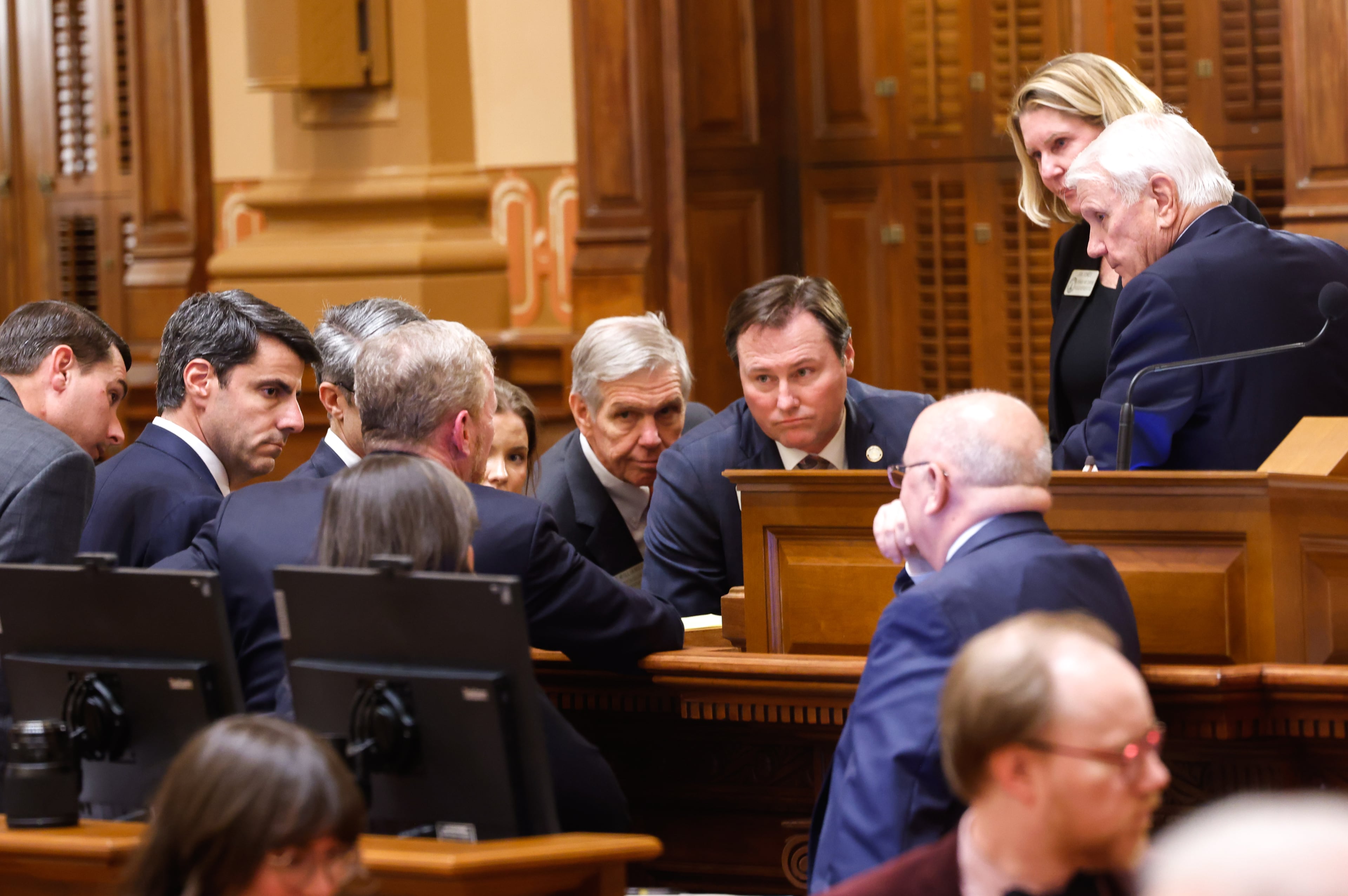
Georgia students and their families can expect to spend more of their own money on college now that lawmakers and Gov.-elect Nathan Deal have put dramatic changes to the HOPE scholarship on the table.
Suggestions include decreasing the scholarship’s amount, raising the minimum grade-point average from a 3.0 to a 3.2 and eliminating remedial classes from what’s covered, said Rep. Len Walker, R-Loganville, chairman of the House Higher Education Committee.
Deal said last week that the intent is to “salvage the program.” Walker expects to have formal recommendations by Jan. 1.
“HOPE will continue for our deserving students, but it just won’t be the same HOPE they’ve seen before,” Walker said. “But it is not reasonable for us to expect the scholarship to cover 100 percent of tuition anymore.”
The merit-based program has helped more than 1.4 million Georgians attend college since 1993, but lawmakers say the state lottery can no longer keep up with rising student enrollment and tuition costs.
Students are afraid any changes will make it difficult for them to afford college. The award currently covers tuition and provides some money for books and fees.
Joshua Delaney, president of the student body at the University of Georgia, said the scholarship is what kept him in-state for college.
“They may be pricing us out of college,” Delaney said. “The state made a decision years ago to start this program, and they need to honor that commitment. Why not look for other ways to pay for this? They need to be creative and not just make cuts.”
Last year — for the first time in nearly a decade — the state tapped into a $1 billion reserve to cover costs. At current spending rates, the reserve will drop to about $321 million by the end of the 2012 fiscal year, said Tim Connell, president of the Georgia Student Finance Commission, the agency that oversees HOPE.
The dwindling reserve is already triggering a series of reductions that start in July. First, students will see money for books cut from $300 a year to $150 — a savings of about $20 million, Connell said. That subsidy will be eliminated the following year. In July 2013, students will no longer get money for mandatory fees.
“Eliminating book and fee money will help, but that isn’t enough,” Walker said.
Lawmakers know just how popular HOPE is, not only with parents and students, but with those marketing the state to potential new businesses and industries.
When Deal predicted significant changes last week, he said “some of these will have to be statutory changes to salvage the program.” He declined to provide specifics, but he questioned whether remedial courses should be covered. The classes are for students who are not ready for college-level work.
Connell said his agency is running data to determine how much that would save. While it might not be substantial, he said it could be a good policy change.
Walker said there is widespread consensus that remedial courses shouldn’t be covered anymore. Support doesn’t exist for reinstating an income cap, he said. When the program began, only students whose families earned less than $66,000 a year were eligible. The cap was quickly lifted to $100,000 and then eliminated.
As for increasing the grade-point average students must earn to be eligible, Walker predicted that would be phased in over four years to give students time to raise their marks.
Ali Kamran, the student body president at Kennesaw State University, said raising the GPA to a 3.2 seems like a “quick fix” that would not resolve the scholarship’s long-term problems.
“How are we to ensure high schools will not inflate GPAs to get their students on HOPE?” Kamran said.
Attending Georgia State on the wings of HOPE
To obtain an undergraduate degree at Georgia State University, a student will attend 9 semesters (taking 15 hours each), or 4.5 years.
- $0: Tuition for student with HOPE
- $31,815: Tuition for student without HOPE* for the 4.5 years ($3,535 a semester)
- $3,204: Student fees covered by HOPE ($356 per semester)
- $7,326: Student fees without HOPE in 4.5 years
- $1,350: Book allowance ($300 per year)
*Students can receive other grants, loans ?and scholarships.
HOW HOPE MAKES A DIFFERENCE
HOPE 101
About 200,000 Georgia students receive money for college each year through HOPE (Helping Outstanding Pupils Educationally). For rules about eligibility and application guidelines, go to www.gacollege411.org.
Who is eligible?
The award goes to Georgia students with a minimum grade-point average of 3.0 who are attending college in-state. The HOPE scholarship typically goes to students attending a University System of Georgia campus, while those in the Technical College System of Georgia receive the HOPE grant. Students enrolled in a Georgia private college may also receive money.
What is the legacy?
Zell Miller became governor in January 1991 and initiated legislation to amend the state constitution to allow for a lottery. Georgia voters approved the amendment by a narrow vote — 1,146,340 to 1,050,674 in November 1992. Miller said the proceeds would go to the HOPE scholarship program, a voluntary pre-kindergarten program and capital outlay/technology grants.
The first ticket was sold June 29, 1993, and the lottery set a national record of $1.13 billion in sales in the first year, providing $360 million for the three education programs. In 1995, President Bill Clinton modeled his America’s Hope program, a tax credit for two years of education beyond high school, after Georgia’s HOPE Program.
Lawmakers eliminated the capital outlay/technology grants in 2004.
Why does the program have financial problems?
Money comes from the Georgia Lottery, one of the most successful lotteries in the country. But the program is struggling to keep up with demand as both college enrollment and tuition rise.
In 1994, about 42,700 students received HOPE. Now more than 200,000 students receive it annually. Meanwhile, in-state tuition at the University of Georgia, for example, has increased by 94 percent since 2005 to $3,535 a semester this fall.
What does it cover?
Students at a public university or technical college receive HOPE to cover all tuition and some money for books and mandatory student fees. Full-time students attending private universities receive $4,000 a year for tuition.