
The red brick Victorian house where Emmett Till grew up in Chicago has been designated a historic landmark.
The Chicago City Council on Thursday approved an ordinance designation to honor the memory of the 14-year-old Black boy who was brutally lynched in the Jim Crow South in the summer of 1955 — a tragedy that became the catalyst of the civil rights movement, reports said.
»AJC EXCLUSIVE: An American tragedy — the lynching of Emmett Till
“Last year we celebrated the 65th anniversary of the murder of 14-year-old Emmett Till, and a lot of times history that happens for African Americans are forgotten about,” Alderman Jeanette B. Taylor said after the vote. “So before there was Trayvon Martin, before there was Eric Garner, there was Emmett Till. We still have a real problem in this country of not addressing the brutality that has happened to Black folks, but also making sure we apologize and recognize it and do things to move forward. I’m excited the Emmett Till home is going to be preserved.”
The home is in the West Woodlawn neighborhood.
Till’s murder more than 65 years ago shocked the nation.
Photos of his mutilated body were published in magazines to expose the brutality of racism and segregation in Southern states, where white-power lynchings were carried out, often with impunity.
During the eras of Reconstruction, Jim Crow and civil rights, bands of white vigilantes usually led by the Ku Klux Klan would carry out lynchings, bombings and assassinations on Black people with few — if any — legal consequences. The majority who committed hate crimes were never held responsible, and many slayings remain cold cases to this day.
Historians say lynchings such as Emmett Till’s were designed to instill terror in the Black community and set vicious examples that would uphold the idea of white supremacy.

A kind and fun-loving kid from Chicago, Till was on summer vacation in Mississippi, visiting a great-uncle on his mother’s side of the family, when two white men abducted him in the middle of the night, beat and tortured the boy, then shot him in the head before throwing his lifeless body into a nearby river.
Till was found there three days later, on Aug. 28, 1955.
Money, Mississippi, in those days was a racial tinderbox — a world mostly unknown to Till until he arrived there for summer vacation.
Around that time, white Southern legislators were disgruntled about liberal principles of equality for Black people beginning to creep into mainstream conscience, which they saw as a threat to racist customs and values. As a result, new laws were put on the books to discourage integration, including a ban on interracial relationships.
The mere suggestion of a Black man interacting in any way with a Southern white woman during these times carried unmitigated risk, as the murder of Till would ultimately prove.

One day during his visit to Money, Till was accused of flirting with the young wife of a white grocer named Roy Bryant, who hunted down Till. Bryant, along with his brother J.W. Milam, were acquitted for the crime, and they never expressed any remorse.
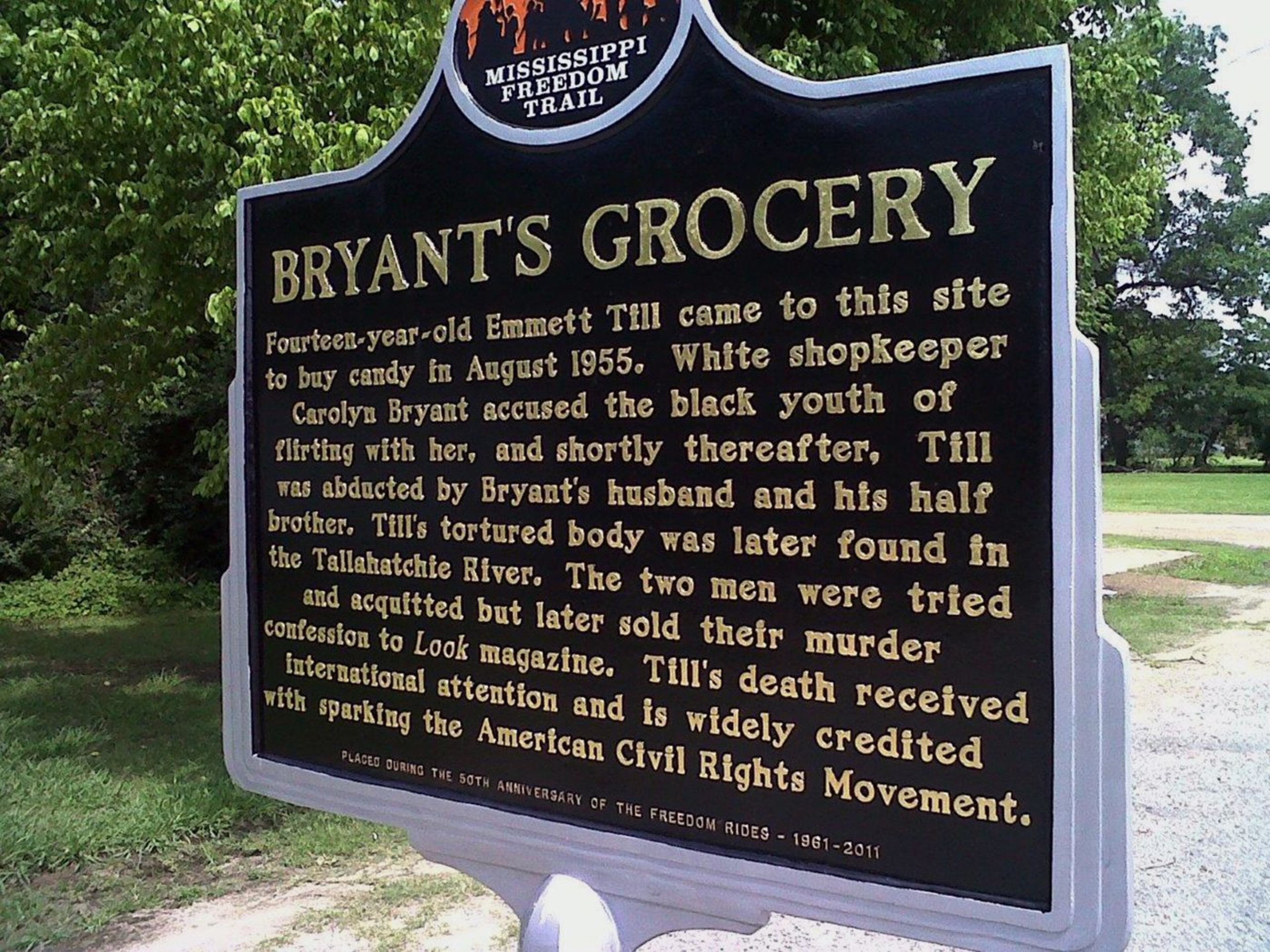
A national historic marker was placed years ago at Bryant’s Grocery & Meat Market, the site where Till had his fateful encounter.