US futures in a holding patter ahead of midterm elections though oil rebounds after US attacks Iran
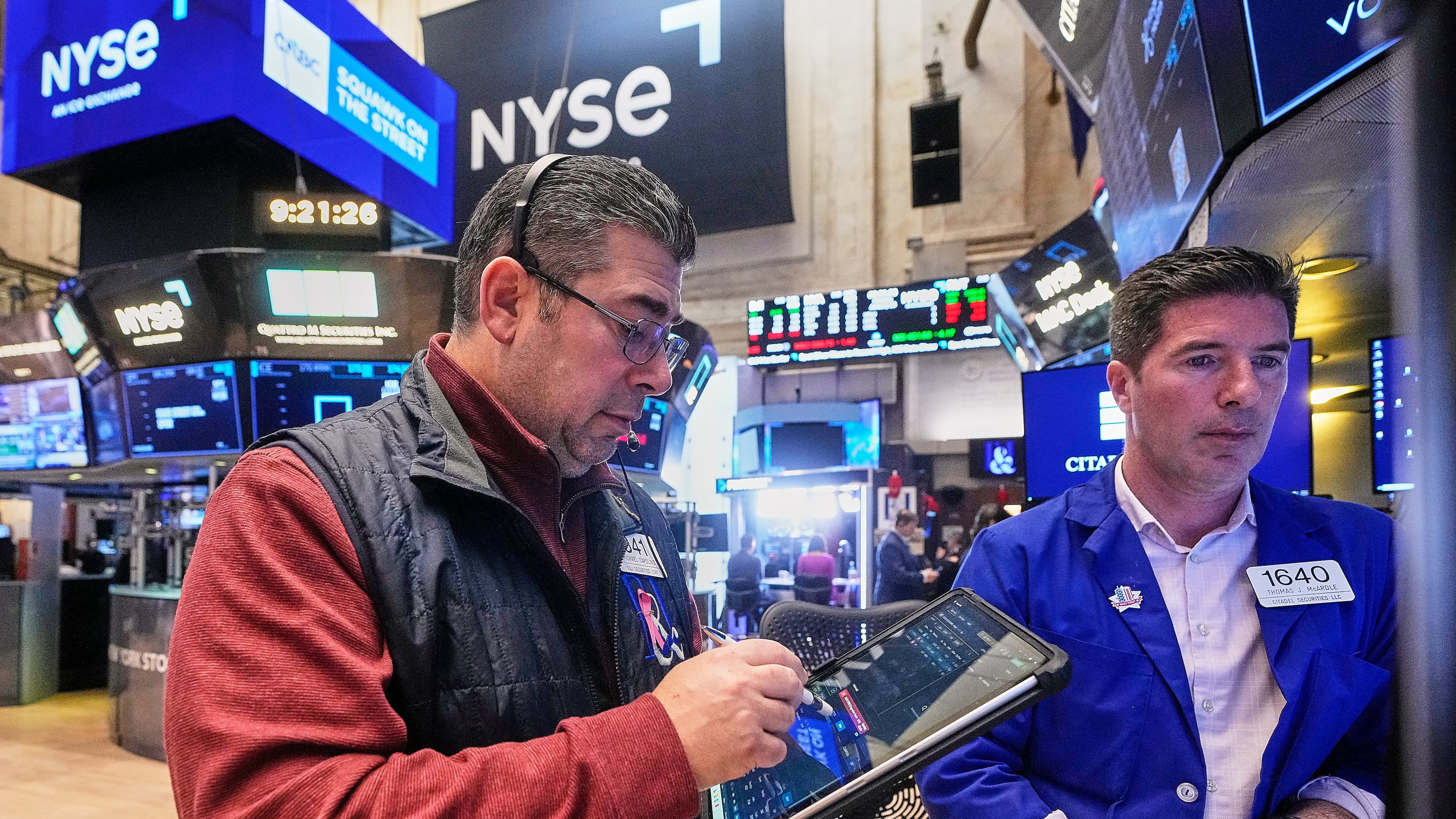
FRANKFURT, Germany (AP) — U.S. futures were mixed Tuesday ahead of the U.S. midterm elections and with concerns continuing to grow about the huge costs of expansion in the artificial intelligence sector.
Oil prices rebounded from a sharp retreat to start the week after the United States conducted defensive strikes on Iranian targets in the Strait of Hormuz.
The outcome of Tuesday's vote could fundamentally reshape President Donald Trump's final two years in the White House. Republicans and Democrats are battling for control of Congress and key governors' offices at a time of widespread disaffection over high prices.
The futures for the S&P 500 fell less than 0.1% and that for the Dow Jones Industrial Average dipped 0.5%. The Nasdaq composite gained 0.25%.
It's been a mixed performance for indexes to start the week though the majority of stocks within the S&P 500 climbed as oil prices retreated. After falling nearly 8% Monday, Brent crude rose almost 2% to $106.50 per barrel early Tuesday after the U.S. attacked Iran's Qeshm Island. U.S. benchmark crude tumbled 8% to start the week, but rose 2% to reach $98.49 per barrel Tuesday. Energy prices have been extremely vulnerable due to uncertainty over when the war with Iran will end.
It has also been volatile for artificial-intelligence companies amid criticism that shares have surged too high and are in a bubble. Worries are growing that all the hundreds of billions of dollars Big Tech companies are pouring into AI data centers won’t yield enough productivity and profit to make the investments worth it.
Apple, which has been perceived as a late-starter in the AI race, posted stronger-than-expected revenue in the fourth quarter after the bell Monday, but shares slid 4% early Tuesday amid surging global demand for memory and expenses related to its release of Siri AI. Palantir also reported quarterly earnings after the bell. Its shares slumped 8% in premarket trading after a slowdown for its U.S. commercial bookings.
The latest profit reports from Alphabet and other Big Tech companies also showed how AI may be dragging on their own businesses. Google’s parent company burned through more cash during the latest quarter, as measured by free cash flow, and it reported slower-than-expected growth in its search business.
Expectations are high for all kinds of companies to continue to deliver big gains in profits as the U.S. economy keeps chugging along, even with high inflation and elevated interest rates. That helped send the S&P 500 to a record high last month.
In early European trading, the CAC 40 in Paris fell 0.2% to 8,035.07, Britain’s FTSE 100 slid 0.5% to 10,701.09, and Germany’s DAX declined 0.6% to 25,830.22.
In Asia, South Korea’s benchmark Kospi fell 4% to 5,626.08. Memory chipmaker SK Hynix dropped 5.7% and Samsung Electronics declined 4%, giving up Monday’s gains. Markets in Tokyo were closed for a holiday. In Hong Kong, the Hang Seng added 0.6% to 23,525.97.
The Shanghai Composite index retreated 0.8% to 3,608.10, near its lowest level in more than a year. Gains from market-supporting measures announced Monday were short-lived.
The U.S. dollar rose 0.2% to 158.28 Japanese yen while the euro fell less than 1% to $1.1179. ___
Rod McGuirk in Melbourne, Australia, contributed to this report.