So long, conference title games. The marquee events are the biggest casualty in an expanded playoff
It was a groundbreaking idea that a large swath of football fans, coaches and athletic directors didn't really like. The biggest losers, they argued, would be the very programs that were pushing for it to go forward — the teams in the Southeastern Conference.
More than 35 years ago — a generation before the SEC backed down and said yes to a once-unthinkable 24-team playoff that was officially announced Monday — the same league invented the groundbreaking, divisive and, some said, self-defeating idea of splitting into divisions and holding a league title game.
Those title games — which eventually caught on with the other conferences and generated billions in TV money over three decades of high-stakes, highly viewed December showdowns — are the single largest piece of collateral damage in the wake of the latest expansion of the College Football Playoff.
They are also what might now be labeled as a relic, an iconoclastic and quirky puzzle piece that made the college game something much different from the pro game it emulates a bit more every year.
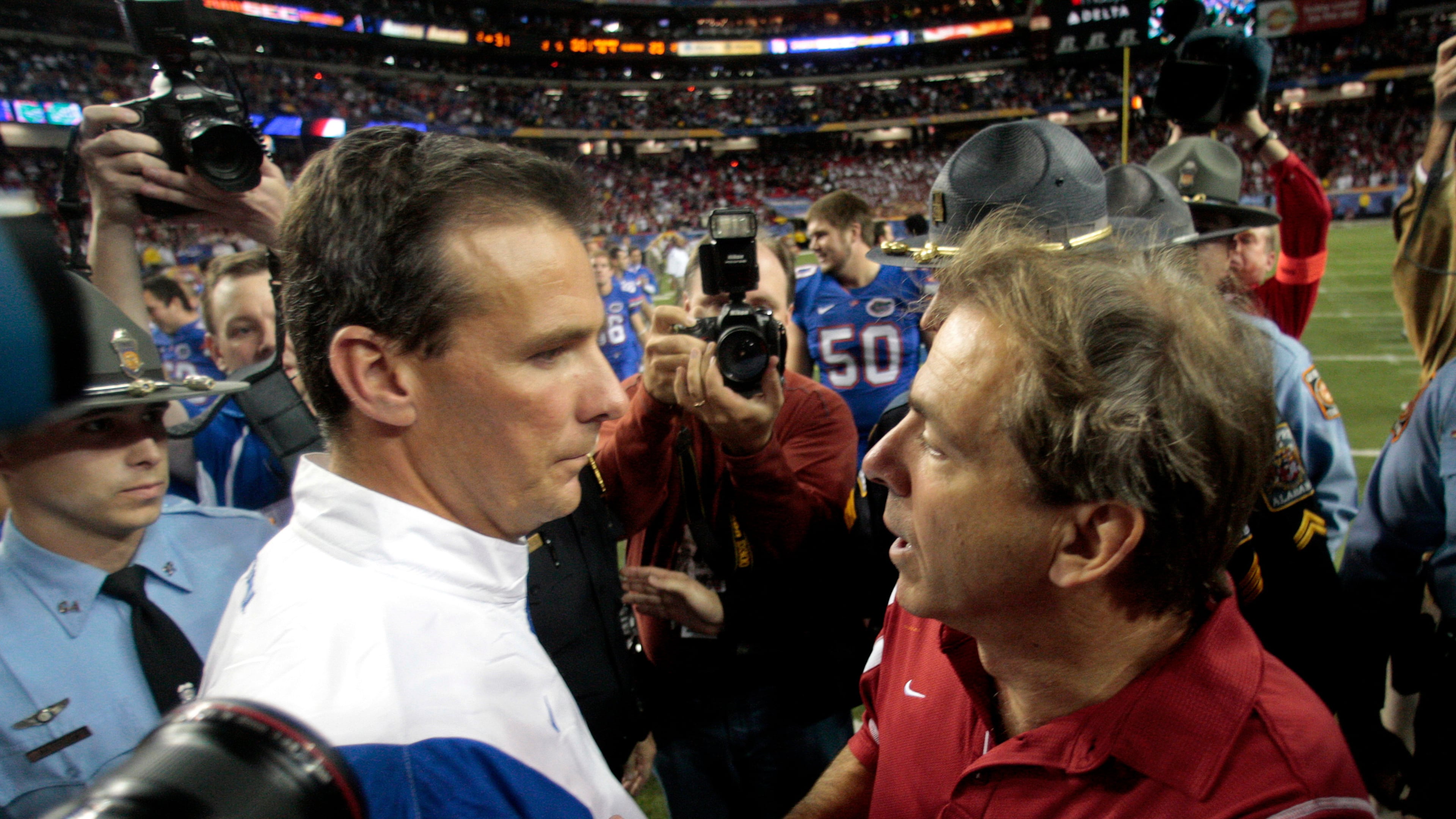
“They were important games. I covered the Urban Meyer-Saban games in ’08 and ’09 when it was a 1 versus 2 matchup and they were literally the center of the year,” said Paul Finebaum of ESPN, who has reported and commented on the SEC and college football for more than 40 years. “But I’ll also say, the last two years, I haven’t felt it. It’s a little like, ‘What are we doing here?’”
With 24 playoff teams, there is no more room on the calendar for those title games. And other than the clear value they command as TV products — around $345 million a year, according to ESPN — the games have become increasingly irrelevant or, in some cases, downright harmful.
The 2024 game, for example, featured Georgia against Texas, the biggest outcome of which was the injury to Georgia quarterback Carson Beck, which hurt the Dawgs in a playoff bracket they would have made, win or lose. Last year, Georgia crushed Alabama 28-7 but the Tide made the playoff anyway.
A slow decline for a game that used to mean everything
It wasn't always that way.
For a run that began in 1992, the SEC title game offered a league that yearned to be more than just a regional curiosity — albeit one that produced Herschel Walker, Bo Jackson, Emmitt Smith and populated between 25%-35% of the NFL's rosters — a chance to shine alone on the national stage. The Big 12 didn't get on board until 1996, the ACC in 2005 and the Big Ten in 2011.
To solidify its future, the SEC invited South Carolina and Arkansas into the conference — a mini expansion that foreshadowed much bigger moves to come and kicked off the demise of the Southwestern Conference — then split into six-team divisions. The league leaned into the NCAA rule that allowed for leagues with at least 12 teams to stage a title game between the winners of the two divisions.
Finebaum's reaction to it then: “Have the folks running the Southeastern Conference lost their minds?” he opened his column on the front of the Birmingham Post-Herald sports page the day the news broke.
He was hardly alone. A league without an overwhelming national power and whose best team at the time of the announcement, Florida, was on probation, was doing itself no favors by adding must-play conference games to the regular season, then piling on another for a division winner that might be lucky enough to contend for No. 1.
The new SEC schedule made it tricky for, say, Florida to keep Florida State on the schedule (which it did) and resume regular meetings against Miami (which it did not).
“We're disappointed,” said Bill Arnsparger, the Gators athletic director at the time. “We don't like it, but we accept it.”
A change not everybody liked ended up turning the SEC into a national power
It's a good thing they did.
Over its first 10 seasons, then-commissioner Roy Kramer's invention put Steve Spurrier's Fun ‘N’ Gun offense on national TV seven times and the Gators won five of those, including the game in 1996 that catapulted Spurrier and Heisman Trophy winner Danny Wuerffel to the national title.
From 2006-13, the winner of the SEC title game played in the national championship game every year during the BCS era that was also a creation of Kramer's. Those included the classic 1 vs. 2 matchups between Meyer of Florida and Saban of Alabama.
Saban, who won seven national titles coaching in the SEC during the title-game era, was, not surprisingly, sad to see it go.
“There's a lot of pride in winning a conference championship,” Saban said on a podcast with Travis and Jason Kelce. “And we're going to give that up to have an extra game where the 24th team is going to play the ninth-best team. I'm not a big proponent of it.”
The advent of the playoff in 2014, conference expansion across the country and the adoption of similar title games by nearly every conference have slowly chipped away at the meaning of the events, even if the networks were still signing on for nine figures.
So, time marches on. The reworked playoff deal with ESPN — an added $1.7 billion over five years — will more than make up for the lost revenue from the title games. A 24-team playoff won't include those games, but will produce a monthlong menu of headlines for an industry that struggles to pay its bills and, for all its time-honored traditions, has long lived in the shadow of the pro ball.
“The NFL, as much as we want to hate it, has mastered it and college football continues to struggle,” Finebaum said. “I think at a time when there’s so much money at stake, this might help in December — a month where college football often gets completely forgotten.”
Except, of course, during that first weekend in December — when good (but maybe not great) teams knew they'd have a chance to play for a title, regardless of where the season might go from there.
“Kids live for that,” said Pat Narduzzi, who has led Pitt to two ACC title games over 12 years, winning it once, while never sniffing the CFP. “There’s something to being a champion. And to say there’s only one champion, one national champion, there’s no other champions, I think is bad for college football.
"That’s me," Narduzzi said, "but I do like the 24-team access.”
___ AP National Writer Will Graves contributed.
___
Sign up for Top 25 poll alerts here, visit the Top 25 here and see AP’s full college football coverage here