Wall Street steadies after absorbing big swings for Nvidia's stock and oil prices
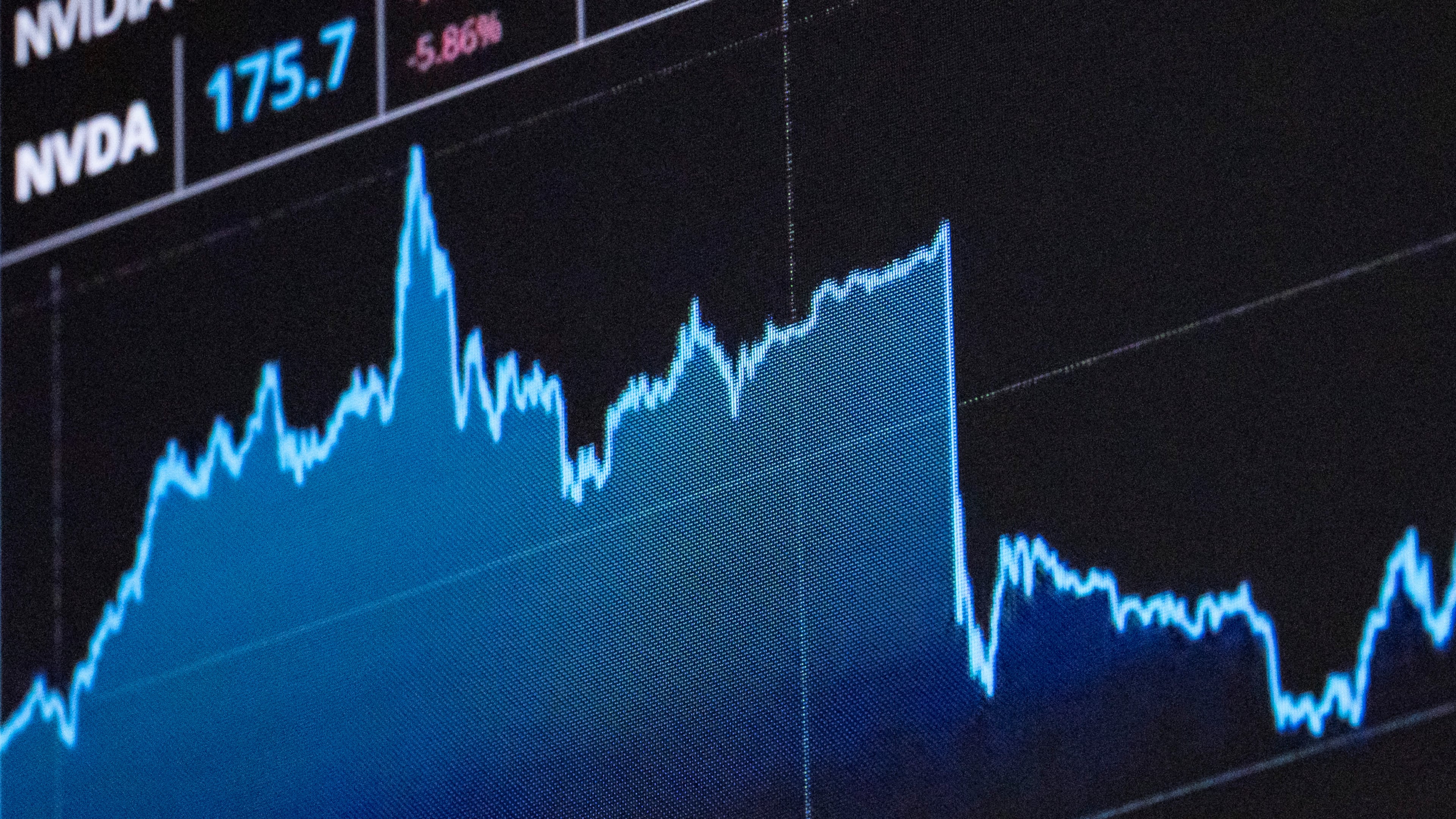
NEW YORK (AP) — Big swings for Nvidia's stock and oil prices hit Wall Street Thursday, but the U.S. market appears to be absorbing them.
After falling nearly 1% at the start of trading, the S&P 500 quickly erased all of the loss and turned 0.1% higher. The Dow Jones Industrial Average was up 135 points, or 0.3%, as of 11 a.m. Eastern time, while the Nasdaq composite was up 0.1% after eliminating its early loss of 1.6%.
The market felt pressure after President Donald Trump said he’s no longer interested in a deal with Iran to end their war, which sent oil prices, worries about inflation and Treasury yields higher. Instead of that, Trump said he asked his vice president to investigate U.S. cities and states run by Democrats.
On a typical day, that could be the main driver of action on Wall Street. But little has been typical recently for the yo-yoingmarket.
The focus instead was on Nvidia's stock. It plunged as much as 14% at the start of trading following the resignation of Jensen Huang, its CEO, co-founder and face of the brand. The chip company’s stock has been sinking since its board announced an investigation into Huang for a relationship with a woman suspected of being a Chinese government agent.
It’s a stunning fall for Huang and for Nvidia, which had become Wall Street’s most valuable and influential stock because of its central role in the artificial-intelligence boom. Its stock price set a record last month after soaring an astounding 1,722% in four years. That compares with the already healthy gain of nearly 109% for the overall S&P 500 over the same time.
But Nvidia’s price dropped 27% from then through Wednesday on worries about whether Huang would remain as CEO and how Nvidia would navigate a future without him. Nvidia’s board answered the first question Thursday morning, when it said Huang resigned, and it named Chief Financial Officer Colette Kress as its interim CEO.
The second question remains to be determined. And it looms over the entire market because Nvidia and the broader AI industry have been the main reasons the U.S. stock market has set so many records in recent years.
Nvidia, to be sure, is still selling AI chips at a quick rate regardless of who stands on a stage and talks them up, and analysts said it remains the industry's leader. That helped Nvidia quickly halved its early loss from Thursday, and its stock was most recently down 4.7%. That paring helped the broader market to recover.
Outside of Nvidia, other stocks across the AI industry swung in the uncertainty.
CoreWeave, which buys Nvidia chips and then rents out access to them to customers over the cloud, fell 6.4%. Micron Technology, which sells memory for computers that’s been getting gobbled up in the AI frenzy, sank 2.8%.
But Broadcom rose 5.3%, and Advanced Micro Devices added 5.8% on hopes the rival chip companies will gain a competitive advantage.
Demonstrating how much uncertainty was washing through the market was GE Vernova, which is helping to power AI data centers. It flipped from an early loss of 3% to a gain of 2.9%.
Also helping to support the U.S. market were gains for companies in the oil and gas industry. Marathon Petroleum climbed 2.2%, and ExxonMobil added 0.9%.
They benefited from a rise in oil prices following Trump's social-media posting about the war with Iran.
“We don’t need a deal with Iran,” Trump said. “Those days have long since passed. We’ve got their money, Hundreds of Billions of Dollars, and we’ve got their Strait!”
The price for a barrel of Brent crude oil suddenly went from about $92 to more than $94 following Trump’s posting, before it later eased back. It was most recently at $93.69, up 1%.
It’s been veering sharply since the United States and Israel began the war with Iran in late February, bouncing between roughly $70 and $150.
Higher oil prices push up worries about inflation, and the yield on the 10-year Treasury climbed to 5.06% from 4.98% late Tuesday. Trading in the bond market had been closed Wednesday for Veterans Day.
Higher yields make borrowing money more expensive for everyone, from the U.S. government to companies building AI data centers to regular people buying houses. High mortgage rates helped send sales of previously occupied U.S. homes in October to their slowest pace in more than 16 years.
The housing industry has been slowing the U.S. economy but not upending it. A separate report on Thursday said that slightly more U.S. workers applied for unemployment benefits last week, but the number remains relatively low compared with history.
In stock markets abroad, indexes ticked higher in Europe following a weaker finish in Asia.
Hong Kong’s Hang Seng fell 1.3% for one of the world’s biggest moves.
___
AP Business Writer Yuri Kageyama contributed to this report.