Saudi-backed forces in Yemen bolster defenses near Aden to deter Houthis, and other Mideast news
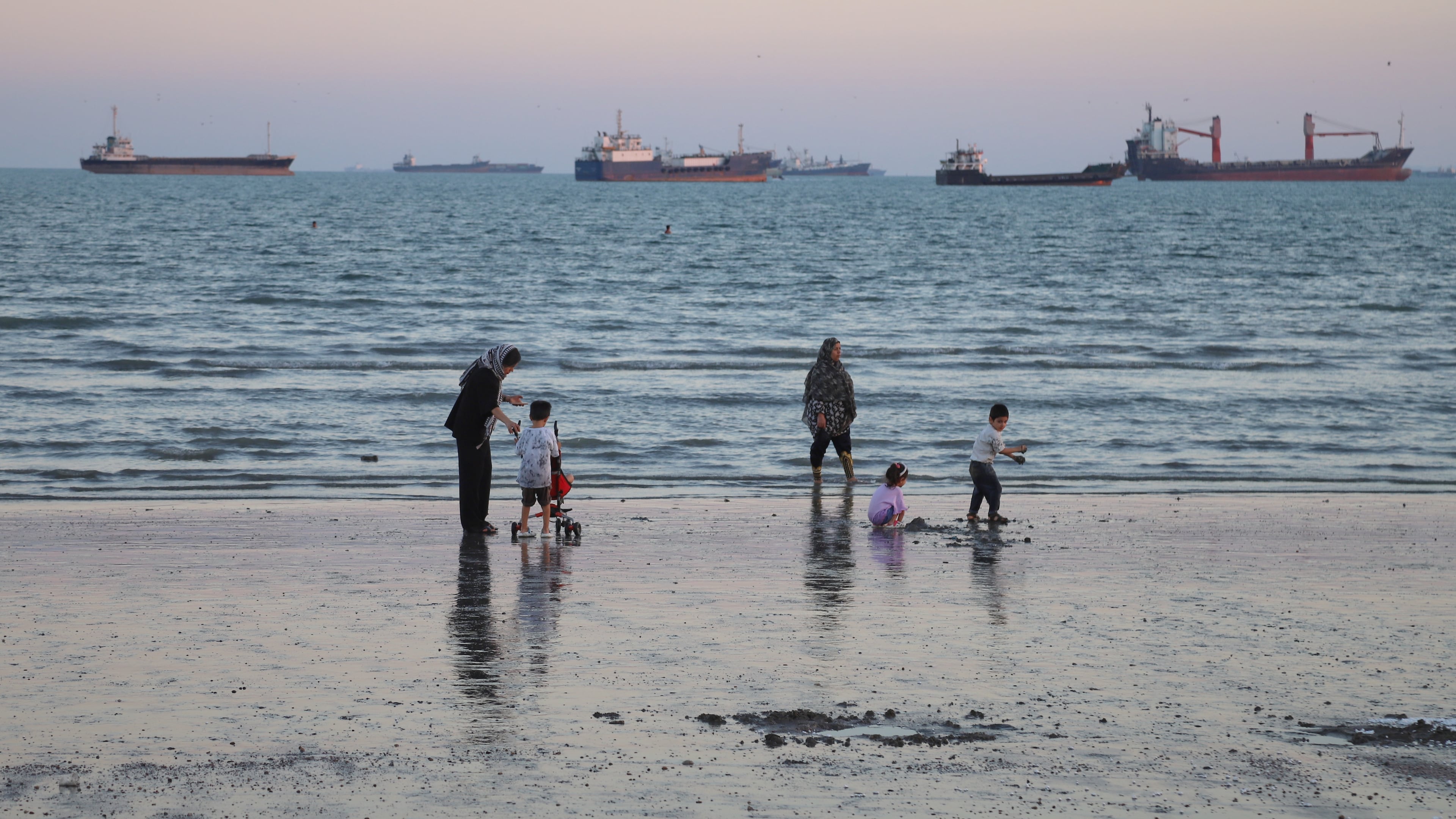
ADEN, Yemen (AP) — Saudi-backed forces in Yemen deployed more troops in anticipation of a major offensive by the Iran-backed Houthi rebels, officials said Tuesday. The Houthis, meanwhile, accused Saudi Arabia of carrying out an airstrike, killing at least seven people and wounding nine.
The U.S. and Iran are exchanging more strikes, Iraq has begun pumping oil through a pipeline to a Turkish Mediterranean port and Israel is calling U.K. sanctions a “hostile act.”
Here is the latest news from the Middle East on Tuesday. Read our full coverage here.
Saudi-backed forces deploy to defend Aden from Houthi advance
Saudi-backed forces allied with the government deployed more troops and equipment Tuesday in and around the district of Tur al-Baha, according to two Yemeni military officials who spoke on condition of anonymity because they were not authorized to brief the media.
Tur al-Baha is a target of Yemen's Houthis that is considered the first line of defense for the port city of Aden, about 85 kilometers (52 miles) away.
A rebel spokesperson didn’t respond to calls seeking comment. The Houthis have repeatedly said they won’t attack Aden.
Saudi-backed forces withdrew from areas along the Bab el-Mandeb Strait over the weekend to avert being encircled by the Houthis and to focus on securing Aden. That has allowed the rebels to tighten their grip on the key Red Sea strait.
— By Ahmed al-Haj
Protests erupt in Iran over death of workers in a bus crash
Hundreds of people protested in an Iranian town on Tuesday, Iranian media reported, following the death of 13 workers in a weekend bus crash in the country's southwest.
This is among the first protests in Iran since a major government crackdown on dissent earlier this year killed thousands of people.
The semiofficial Fars news agency said about 1,000 people gathered in the town of Abdanan, a hot spot for anti-government protests in January.
State TV said protesters demanded resignations from the leaders of the company that operated the bus. Videos shared on social media showed people chanting anti-theocracy slogans, including “death to the dictator."
US retaliates after Iran attacks installation in Bahrain
A U.S. official said the U.S. retaliated with an airstrike on a missile launch site in the Strait of Hormuz belonging to Iran’s paramilitary Revolutionary Guard. The action comes after Iran fired drones on Tuesday at a U.S. radar installation in Bahrain, the third such Iranian attack in recent days on American military assets in the Persian Gulf kingdom.
A local official, Ahmad Nafisi, said the U.S. strike caused no damage to residential or commercial areas or infrastructure.
Bahrain said its air defense systems had successfully intercepted the Iranian drones. The U.S. military said the attack inflicted no damage to U.S. equipment or injury to American personnel.
Ships continue to be attacked near Iran and Yemen
Iran’s paramilitary Revolutionary Guard reported that an oil tanker transiting the Strait of Hormuz “exploded” after striking a naval mine and was ablaze near the coast of Ghannam Island.
The United Kingdom Maritime Trade Organization said it received reports that a tanker was attacked Tuesday in the Strait of Hormuz, north of Oman, while a cargo ship off the coast of Yemen repelled an attempt to board it.
Iraq has resumed pumping oil through pipeline to Turkey, minister says
Iraq has resumed pumping oil to Turkey through a pipeline at an initial capacity of 120,000 barrels a day, Oil Minister Bassem Mohammed Khudair al-Abadi said Tuesday in comments carried by state media. The export capacity will be gradually increased to reach 500,000 barrels a day, he said.
In August, Iraq and Turkey signed a deal to increase oil exports through a pipeline to the Turkish Mediterranean port of Ceyhan.
Iraq is moving to strengthen the resilience of its oil export infrastructure following the U.S.-Iran war’s disruptions to shipping through the Strait of Hormuz.
The Iraq-Turkey pipeline has been largely idle since 2023 following legal and commercial disputes.
Houthis report multiple airstrikes and deaths
Iran-backed Houthi media reported that strikes were carried out on the Yemeni capital of Sanaa on Tuesday evening. Houthi-controlled al-Masirah TV blamed the attacks on Saudi Arabia.
The Associated Press couldn’t independently verify these claims and it wasn't immediately clear what the strikes targeted.
According to Anees al-Asbahi, a Houthi health ministry spokesperson, an earlier strike on a sponge factory in Hodeida killed at least seven people and wounded nine.
Two people were also killed in a strike in the northern province of Saada, while a strike on a shoe factory in the rebel-held capital, Sanaa, and an attack in the Wadi Al Gabara in Kitaf District wounded 13 others.
Saudi Arabia didn't immediately comment.
Israel calls UK sanctions a ‘hostile act’
The U.K. on Tuesday imposed sanctions on Israeli property and development companies involved in the West Bank settlement expansion as well as the activist group Tzvav 9, which the British government says has blocked aid to Gaza.
Foreign Secretary Ed Miliband previously said in September that the U.K. would toughen its stance toward Israel in an effort to protect the viability of a two-state solution.
In a statement, Israeli Foreign Minister Gideon Sa'ar said Israel views the move with the “utmost gravity” and called it a “hostile act targeting private, law-abiding companies.”
Israeli judge orders Palestinian activist to be detained
An Israeli military judge ordered Tuesday that Ghassan Najjar, a Palestinian activist arrested in the occupied West Bank last month, be held for four months without charge or trial, according to his attorney Riham Nasra.
Israeli soldiers arrested Najjar at his home in the village of Burin on Oct. 27.
Amnesty International and Human Rights Watch have accused Israel of detaining Najjar because of his work to help Palestinian farmers access their olive groves amid a surge in violent attacks by Israeli settlers.
Nasra said a military prosecutor confirmed Najjar's detention wasn't related to “armed activity.” The Israeli military has said Najjar was suspected of throwing stones at Israeli civilians.
___
This report will be updated throughout the day as new developments emerge.
___
Hadjicostis reported from Nicosia, Cyprus, and Magdy from Cairo.