Republicans rammed through Supreme Court nominees. Now Democrats will have the votes to stop them
WASHINGTON (AP) — President Donald Trump led a transformation of the Supreme Court that ushered in a conservative supermajority but soon he will confront an emboldened Democratic-led Senate that is preparing to play hardball on his judicial nominations.
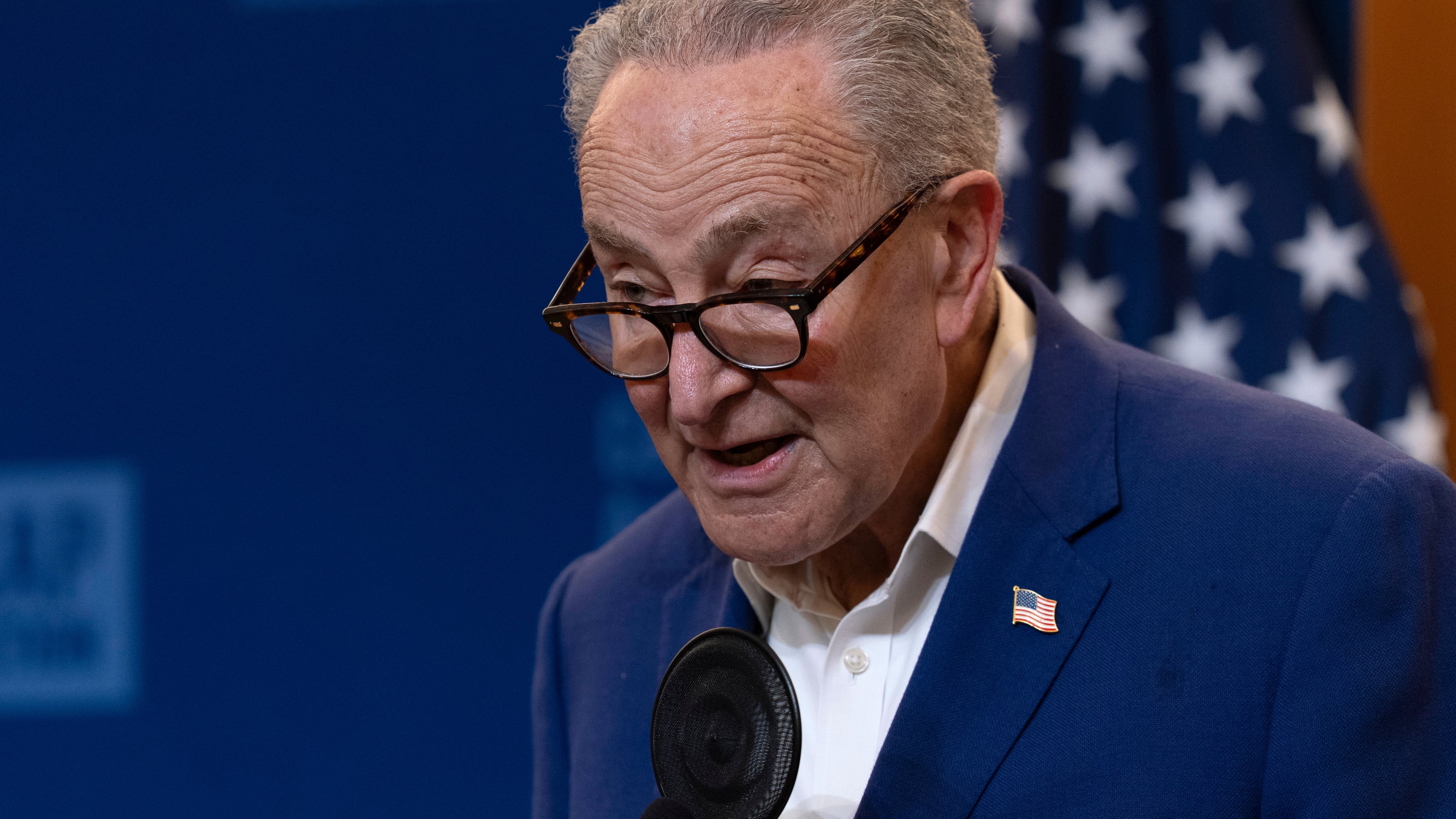
Senate Minority Leader Chuck Schumer, who is likely to return as majority leader next year, promised in an interview with The Associated Press that Democrats will prevent Trump from installing a “right-winger” on the Supreme Court and that they are “not going to allow any crappy nominees” elsewhere in the federal judiciary or in Trump's Cabinet.
Democrats will hold at least 54 seats next year and as many as 56 depending on final results in Mississippi and Alaska, giving them a significant majority to block Trump's nominees or just ignore them outright.
After years of being on the losing end of highly partisan confirmation fights against Republicans, especially on Supreme Court nominees, Democrats will be under considerable pressure to wield the same type of aggressive tactics.
This all but erases any prospect that Trump could add to his imprint on the court he established in his first term by naming three of the current justices. In the past, Trump had mused privately that he could end up nominating up to seven people for the nine-person bench by the end of his second term, according to a person with knowledge of those comments.
Schumer declined to say specifically whether he would hold any Supreme Court vacancy open until after the next presidential election, as former Senate Republican leader Mitch McConnell did in 2016, clearing the way for Trump to nominate the first of his three Supreme Court picks.
“The bottom line is, we’re not going to allow a right-winger on the court,” Schumer said.
The White House said Thursday that “extreme Democrats have a history of politicizing the Supreme Court, even entertaining plans to pack the Court with liberal justices.”
“President Trump will never let them pack the Supreme Court and ruin the independent judiciary," White House spokeswoman Lauren Bis said.
Neither of the court’s two oldest justices, Samuel Alito, 76, or Clarence Thomas, 78, has publicly indicated an imminent retirement. Lifetime appointments typically come with a remove from political upheaval, even of the scale of Tuesday’s elections where Democrats regained control of both the House and Senate.
“I think the justices must know that if they were to retire now, at this moment, right before Democrats take the Senate, there would be an enormous amount of pressure unlike any we’ve seen to make serious change to the court,” said Dale Carpenter, a law professor at Southern Methodist University’s law school.
Alito has publicly mused about retirement in recent months, telling The Associated Press that he’s not sure “how long I’ll be able to continue to do this job.” But he’s also said he’ll stay on the court through the end of the term next summer and told Bloomberg he would not step down during a lame-duck period.
Meanwhile, Thomas is closing in on a record-setting tenure and would become the longest-serving justice in the nation’s history if he served until May 2028.
Trump has shown unusual deference to Alito and Thomas, even as he’s attacked other justices who’ve ruled against him, praising both for their legal acumen and declining to say whether they should step down so the president could nominate their successors.
In a Fox News interview in April, Trump said he has a shortlist of potential nominees but said he did not know whether he would have another vacancy this year, citing Alito’s “very good physical health.”
The Democrats' sizable margins in the Senate also will hamper the Republicans' effort to regain ground in the 2028 elections, where the GOP will be defending states such as Wisconsin, North Carolina and Iowa where Democrats made significant gains on Tuesday.
“Chance of confirming a worthy successor to Justice Thomas and/or Alito during President Trump’s term: Zero,” Florida Gov. Ron DeSantis posted on X after Tuesday’s elections. “Chance of confirming a worthy successor during a hypothetical GOP admin 2029-2033: probably zero (GOP won’t be able to recapture enough seats in 28).”
Historically, some justices have timed their retirements with the president who would name their successor in mind, but it’s far from the only consideration in their decision making.
Former liberal Justice Ruth Bader Ginsburg famously resisted efforts from progressives to retire when President Barack Obama was in office and died in the last year of Trump’s first term, allowing him to replace her with conservative Justice Amy Coney Barrett.
Barrett would go on in 2022 to join the majority opinion in Dobbs v. Jackson Women’s Health Organization, which erased the constitutional right to an abortion.
Even if there were a surprise Supreme Court vacancy in the coming weeks, lame-duck confirmations while Republicans still remain in power aren’t a sure thing.
Trump effectively forced Sen. Thom Tillis of North Carolina out of a reelection bid. That seat was won Tuesday by the state's former governor, Democrat Roy Cooper. The president also opposed two Republican incumbents in their primary races, Sen. Bill Cassidy of Louisiana and Sen. John Cornyn of Texas. Democrats won those seats. Maine Sen. Susan Collins, another Republican who lost, attributed her defeat in part to Trump.