Haiti revs up for elections as enrollment closes for presidential and parliamentary candidates
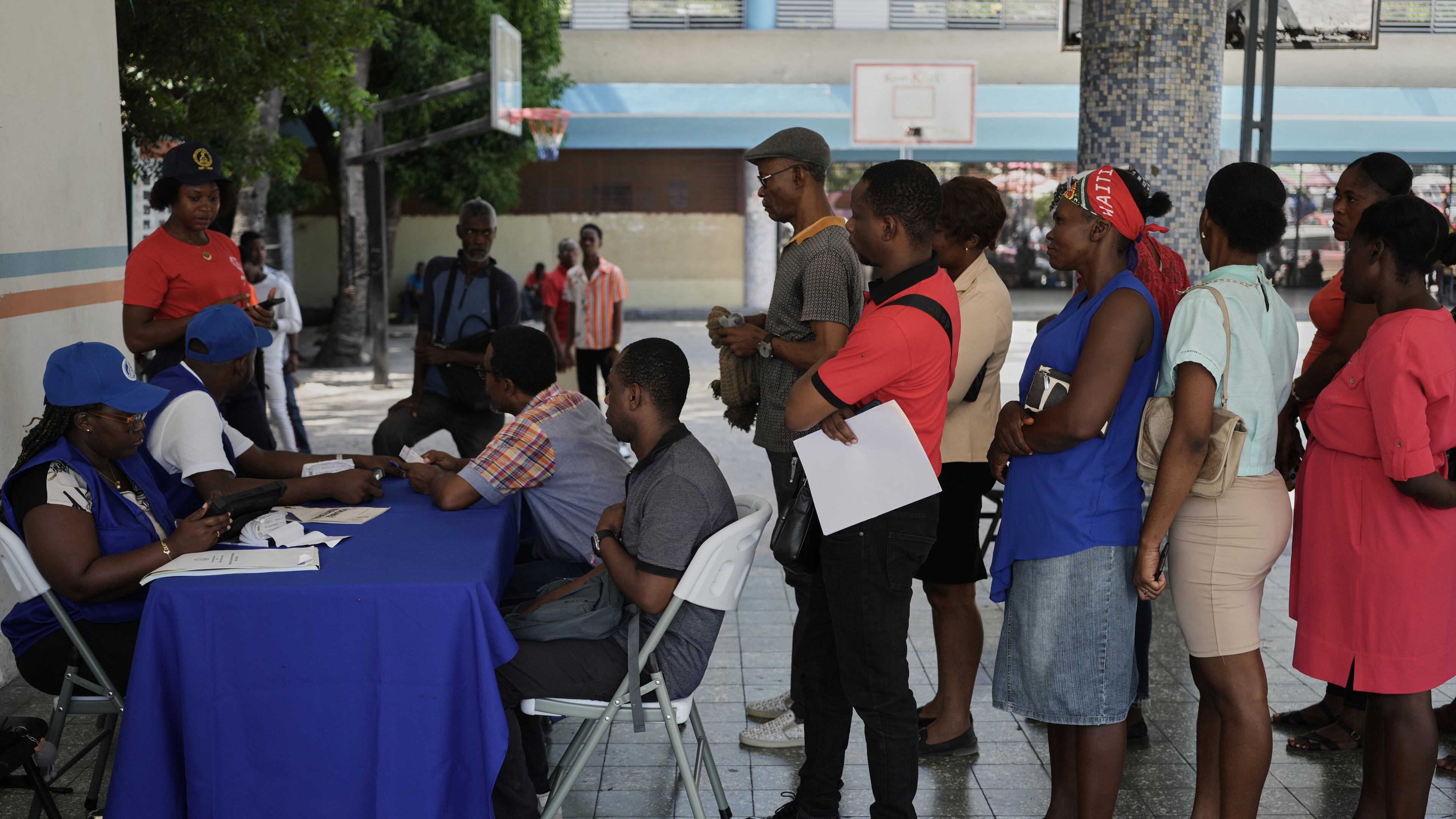
SAN JUAN, Puerto Rico (AP) — For the first time in Haiti’s history, three women have registered as presidential candidates, joining 30 men vying to become the next leader of the troubled Caribbean country.
Next year’s general election is the first in more than a decade. The candidates include the widow of slain former President Jovenel Moïse, a respected economist, a well-known prosecutor accused of multiple summary executions and a former president accused of drug trafficking and sponsoring gangs.
Haiti hasn’t had a president since Moïse was gunned down at his private residence in July 2021 as part of a failed coup. Since then, Haiti has been led by various appointed prime ministers and a transitional presidential council that was dissolved in February.
Presidential and parliamentary candidates had until Sunday to register online. Haiti’s provisional electoral council is reviewing them and in January expects to publish a final list of names of those approved to run.
Experts question whether Haiti will be ready for vote
Haiti hopes to hold the first round of elections on July 18 next year and the second round on Oct. 4. Some experts question whether the country, which remains mired in gang violence, will be prepared by then.
Wolf Pamphile, founder and CEO of Haiti Policy House, a U.S.-based think tank, said nearly a million voters have been registered in the country of nearly 12 million people.
He noted that the government has set a benchmark of between 3 million and 6 million voters to hold what would be considered a legitimate election.
“That number is getting harder and harder to reach,” he said.
When the electoral process first began, officials were registering roughly 9,000 people a day. That has dropped to about 3,000 a day, Pamphile said.
As registration continues, gangs continue to fight Haitian police and soldiers, as well as a U.N.-backed international gang suppression force; Vectus Global, the private security firm founded by former U.S. Navy SEAL and Blackwater founder Erik Prince, and about 2,500 troops from El Salvador who were deployed after four aviation technicians from the Central American country were attacked in late October and remain missing.
The number of clashes and drone strikes targeting gangs increased by 46% compared with the 21 days prior to the deployment of Salvadoran forces, said María Fernanda Arocha, an analyst with the Armed Conflict Location & Event Data Project.
She said that estimated fatalities during those operations have surpassed 100, with more than two dozen identified as civilians. Despite the ongoing fighting, more than 100 political parties have registered, political campaigns are heating up, and Haiti is pushing forward with its elections.
Here are some of the high-profile candidates who have registered
Martine Moïse: She's the widow of Haiti's former president and was injured in the attack at their private residence in July 2021. She was investigated in connection to his death and indicted in Haiti, but the charge was later annulled. She recently testified in a U.S. federal courtroom against several suspects accused of killing Jovenel Moïse.
Michel Martelly: A well-known musician known as “Sweet Micky,” he served as Haiti’s president from 2011 to 2016 under the Tèt Kale Party, which translates to the Bald-Headed Party. In mid-July, he returned to Haiti, marking a rare visit to his homeland. Martelly has been accused of facilitating drug trafficking and sponsoring multiple gangs. Canada sanctioned him in November 2022 and the U.S. in August 2024.
Claude Joseph: He’s a former foreign affairs minister who briefly served as interim prime minister after Moïse was killed. A Haitian judge indicted him and Moïse’s widow in the killing of Moïse, accusations they have denied. The indictment was later dismissed. After stepping down as interim prime minister, Joseph formed his own party: Engaged for Development.
Jean Ernest Muscadin: The Moïse administration appointed him as a public prosecutor representing the southern coastal city of Miragoane. He recently stepped down to file his candidacy for president. The United Nations has accused him of killing dozens of people suspected of being gang members or committing minor crimes. But Muscadin remains popular with many in Miragoane, with supporters calling him the “people’s prosecutor.”
Dominique Dupuy: She briefly served as Haiti’s foreign affairs minister in 2024 after Moïse nominated her to serve as Haiti’s permanent representative to UNESCO in 2020. In a recent and brief speech posted online, Dupuy said she recently traveled across Haiti and found love, strength and determination as she pledged to “start building the nation that our ancestors dreamt for us." She also promised not to take orders from anyone who's not from Haiti, and to reject “dirty money” as she campaigns. She and Savary Marie-Anne Savannah Hadid, a businesswoman and philanthropist who comes from a wealthy family, made history this year by becoming the first women to register as presidential candidates.
Etzer Emile: The respected economist and university professor recently announced his candidacy. He is running under the political platform Soley, which means “Sun.” He has said that employment, security and social justice are among his priorities.
Jocelerme Privert: The political veteran has served as senator, finance minister, interior minister and interim president of Haiti. In 2004, he was arrested and accused of organizing a massacre that targeted political opponents in the central coastal city of Saint-Marc. He served time in prison and rejoined the political scene after his release. He served as interim president from 2016 to 2017 following a delay in an election run-off between Moïse and Jude Célestin, a mechanical engineer who once again is seeking to become president.
Hans Joseph: The former director of Haiti's Anti-Corruption Unit, he was known for aggressively pursuing corruption cases against high-profile figures in a country where impunity reigns. Local media reported that several political parties sought him as a potential candidate, but he decided to join a newly formed party.
Jerry Tardieu: He's a well-known businessman and former parliamentarian who represented the upscale community of Petion-Ville and has been outspoken about gangs. He has served as CEO of companies in sectors including the shoe industry and real estate, and he was co-founder of the Royal Oasis Hotel. He runs a free library for children in Petion-Ville and has a master’s degree in public administration with a concentration in economics from Harvard University. He has pledged to create jobs and make Haiti safer: “I will refuse to preside over the fate of a country whose population lives in fear.”
___
Associated Press reporter Evens Sanon in Port-au-Prince, Haiti contributed to this report.