FAA temporarily stops router installations connected to air travel stoppage
WASHINGTON (AP) — The Federal Aviation Administration has paused installing routers linked to last week’s ground stop that caused chaos for travelers, the agency said Tuesday.
The move comes amid growing scrutiny over the nation’s air traffic control system and as the Trump administration is making a new request for $50 billion to improve air travel. Democrats in the Senate are demanding that the administration provide clear answers about what went wrong.
President Donald Trump has blamed old technology and Democrats for the nationwide grounding of all planes and upheaval at the nation’s airports. But the FAA has been struggling to modernize the air traffic control system for decades — going back well before the first Trump administration.
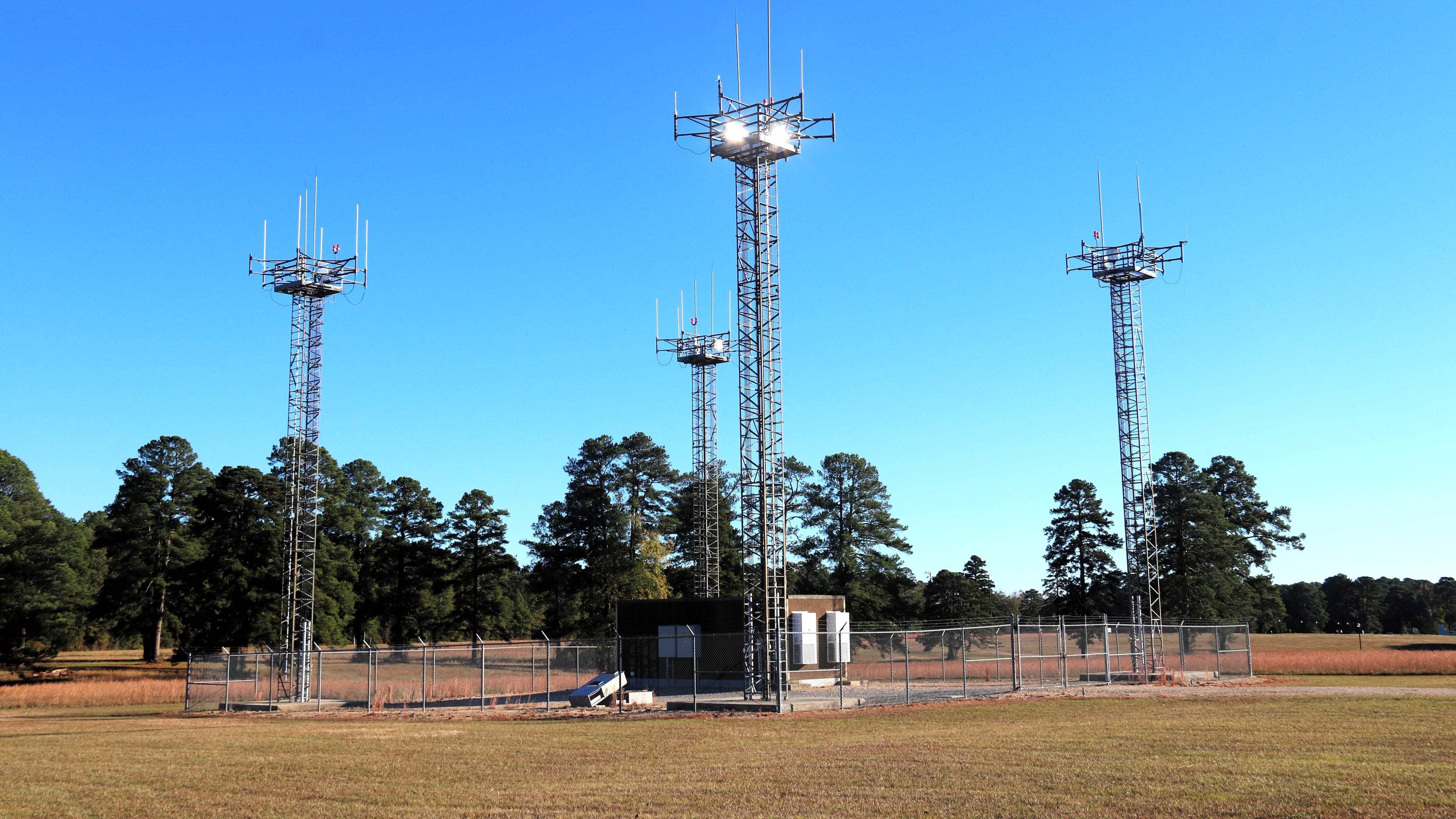
FAA spokesperson Ian Gregor said the agency paused new installations of Juniper routers and disabled the functionality of all existing ones on Friday after technicians linked the problems to a new router in El Dorado, Arkansas.
Maker of routers says devices were working properly
The system became overloaded when the federal contractor that maintains the FAA’s telecommunications network was replacing outdated copper wires with fiber optic lines across the nation.
The ground stop was needed, Transportation Secretary Sean Duffy said, after the installation of a new router by L3Harris in Arkansas resulted in a cascade of intermittent communications and radar signals at 17 of the 22 regional air traffic control centers. The centers direct planes cruising at high altitudes. A radar site in Amarillo, Texas, where a router had been installed three weeks earlier also contributed to the trouble.
The FAA said that “excessive data” was flooding the system “at a rate of 1,000 connection attempts every 4 to 5 seconds.” That deluge created instability with “aircraft communications and radar feeds," the agency said.
For now, the FAA is relying on older Cisco routers that have been in place for 25 years to continue operating the network while they investigate the cause of Friday’s trouble.
The routers at issue last week are being tested in a lab at the headquarters of L3Harris.
Hewlett Packard Enterprise, which owns Juniper, said the company believes the routers were working properly when the ground stop occurred. “Based on what we know today, the device functioned as it was configured to by the installer,” the statement said.
Duffy said Tuesday that 68 previous installations involving the same routers worked well before this latest problem.
“We’ve been able to recreate what happened in El Dorado,” he said. “But the root cause of what happened, we don’t have clarity yet.”
Problems with FAA equipment are decades-old
Upgrading the nation’s air transportation system is an effort that Congress has dedicated significant sums to in recent years. Duffy has pushed Congress for billions more dollars, saying just this week much more is needed.
Democrats on the Senate Commerce Committee said that knowing which device was part of last week's meltdown isn't enough.
“FAA must investigate further to determine the root cause and report to Congress on how it intends to prevent future issues,” the Democrats said in a letter sent to Duffy.
Money would go to control towers, airport infrastructure
The Trump administration on Tuesday sent a letter to key lawmakers outlining its request for $50.1 billion to modernize the system and make other improvements at airports.
The request calls for $10.1 billion for updating the nation’s air traffic control system. Similar amounts would go toward boosting airport infrastructure, replacing or refurbishing terminals at high-impact hubs, constructing five new traffic control centers and improving or replacing up to 140 FAA-owned air traffic control towers.
“Congressional approval of these funds will equip the FAA to deliver to the American people a brand-new air traffic control system that is safer, smarter, faster, and more efficient,” the letter said.
Several Republican senators voiced skepticism following a closed-door meeting Tuesday with the transportation secretary.
“I don’t think the full $50 billion will be funded. Some of that is not safety related,” said Sen. Ted Cruz, chair of the Senate Committee on Commerce, Science, & Transportation, which has jurisdiction over air safety issues.
Sen. Rick Scott of Florida said he believes the airline industry should pay for the upgrades.
Duffy, meanwhile, said he’s open to other options that could include Congress breaking up the request into pieces, with the initial focus on the most critical needs for air safety.
Congress approved $12.5 billion last year for replacing outdated technologies, but much of that money will also go toward runway upgrades and other construction.
Ground stop cost big airlines over $300 million
Equity research and brokerage firm Bernstein estimated the ground stop and the weekend work needed to recover from it cost the four biggest U.S. airlines $345 million combined.
The airlines had to offer cash refunds, credits or rebooking options to customers who decided to cancel their trips, Bernstein analysts said.
The lost revenue and additional costs from the ground stop still are enough to have a measurable effect on the quarterly earnings for American Airlines, Delta Air Lines, United Airlines and Southwest Airlines, the analysts wrote in a Monday research note.
“A booking slowdown before Thanksgiving, or a second outage, would cost more than the weekend’s cancellations did,” the analysts said, adding they did not see any signs of waning ticket demand.
___
Associated Press writer John Seewer in Toledo, Ohio, contributed to this report.