Emory Law takes leading role in AI-centric legal education


As a surging number of law firms go all-in on generative artificial intelligence, an Atlanta law school is emerging as one of the top institutions in the country for making sure the next batches of attorneys know how to handle the technology.
Emory University School of Law, one of five law schools in Georgia, has just launched a formal AI and the Law concentration, offering fluency in the latest technology that is rapidly transforming legal work. The ethical dilemmas posed by that technology are also a big part of the specialized study.
That subject combination is key, says Ifeoma Ajunwa, one of three Emory Law professors leading the concentration who were named among the Top 50 Legal Innovators in Academia for 2026. The national honor, recently announced by The National Law Review and Wickard, recognizes those shaping the future of legal education.
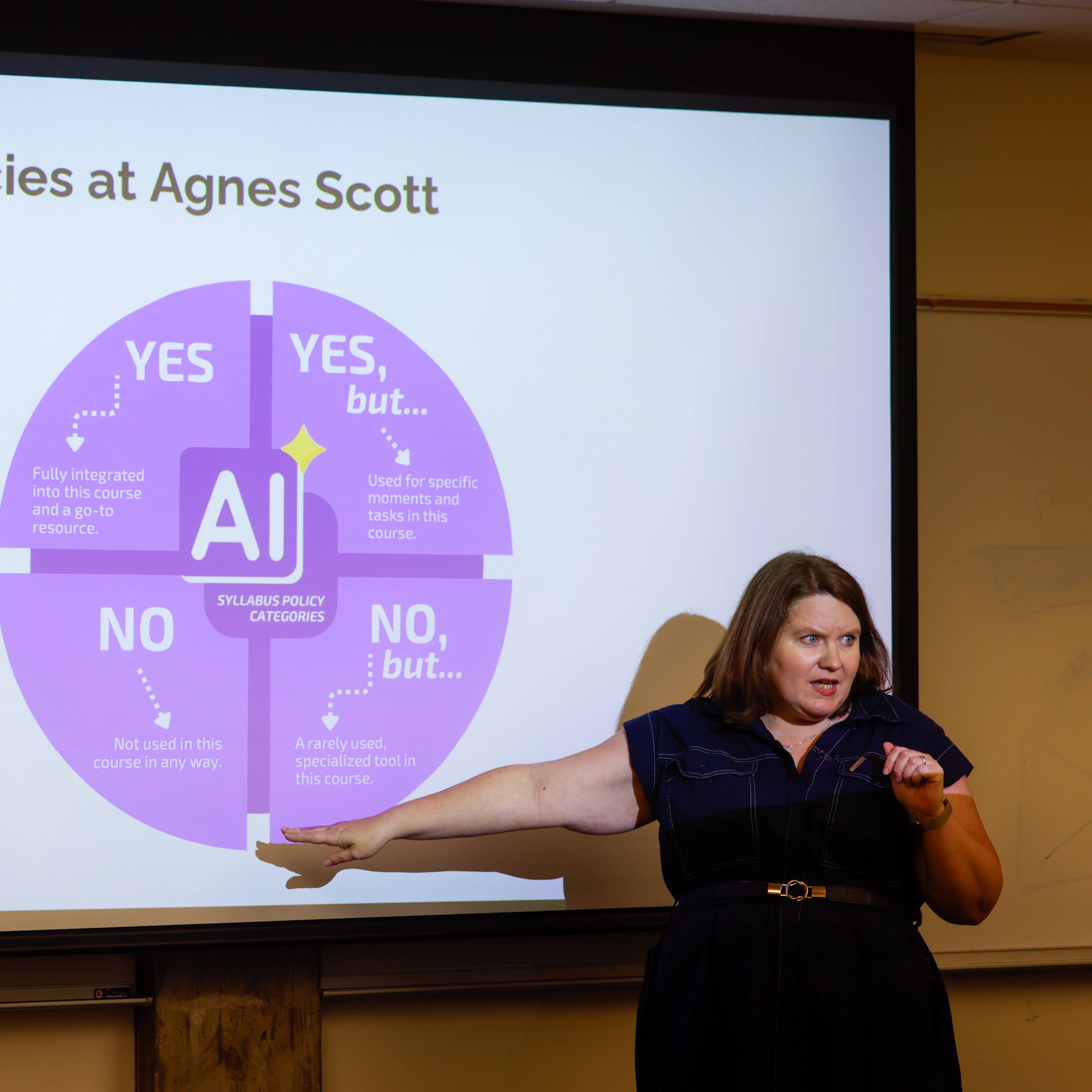

Ajunwa and her colleagues, Nicole Morris and Matthew Sag, were the only educators from Georgia to make the list. And Emory Law was among the few institutions with several professors honored.
With its new AI concentration that began this fall, Emory Law joins a small number of law schools nationwide that are formalizing the specialty. They include Georgia State University College of Law.
Other law schools in the state, including the University of Georgia School of Law, offer AI-related courses but not a formal specialization.
Ajunwa, who has taught in law schools for around 12 years, said AI has gone from being a fringe topic to a key component of legal education during that time.
“I think it would be very head-in-the-sand for law schools to ignore AI,” she told The Atlanta Journal-Constitution. “AI is upon us and we now have to grapple with how to prepare our students to engage in an AI world.”
Law firms of all types and sizes across the country are rapidly implementing generative AI, according to a new report published by Best Lawyers, a global legal recognition and research organization headquartered in Georgia.
Its 2027 U.S. Legal Market Report, based on survey results involving more than 5,700 law firms nationwide, shows 28% of firms with 20 or more lawyers have now fully implemented generative AI tools across multiple practice areas, up from 11% last year. The largest increase, from 23% to 56%, was among the biggest firms with at least 150 attorneys.

Best Lawyers said the survey results show AI is also becoming a competitive differentiator, as 43% of firms with 150 or more lawyers report that they make AI part of their value proposition to clients. That’s up from 23% last year.
Ajunwa said her students generally express both hopeful enthusiasm and apprehension about becoming lawyers as use of the technology becomes widespread.
In 2023, she founded Emory Law’s pioneering AI and the Future of Work program, funded in part by the National Science Foundation and Microsoft. It’s part of an effort to create a pipeline for students to pursue jobs focused on AI-related law.

Ajunwa said while public discourse about AI is often negative, society generally can’t afford to get stuck on “AI fatalism.”
“I think this is true especially for law schools because the law is what determines how society functions, how people behave, what’s allowed,” she said. “We have to move people away from feeling frightened or overwhelmed about an AI future.”
The good, the bad and the unknown
The use of artificial intelligence in legal work has come with significant consequences, good and bad.
As many lawyers bill by the hour, one of the most obvious benefits provided by the technology is time savings that can translate to cost savings for clients.
On the other hand, some attorneys have learned the hard way that, unchecked, generative artificial intelligence cannot be relied on to accurately cite the law.

The topics included in Emory Law’s AI-focused classes range from legal writing to copyright and the rise of “bossware” technology used by employers to secretly surveil workers.
Around a dozen second-year law students in one of Ajunwa’s classes shared their thoughts about AI with the AJC this month, revealing mixed feelings. Some said it could do more harm than good, in part by eroding trust in lawyers, while others warned those slow to embrace the associated benefits will be left behind.
“I think it really depends how you use AI,” said Sang Chung. “We are at an age where I think if you don’t get good at using AI for productivity reasons, there’s going to be someone else who’s really good at it and they can be like 10 workers in one.”
Chris Nestola said he found it ironic that his work at a district attorney’s office over the summer involved the kind of repetitive, precise tasks that AI was designed for, but the office had “a very strict no-AI policy” to protect sensitive case information.
The tension between security and efficiency is exacerbated, among other things, by the lack of laws, regulations and other guardrails for artificial intelligence, several of Ajunwa’s students noted.

The professor said part of her current course work includes mapping the patchwork of state AI laws.
For Ryan Zaslansky, who is taking the new AI concentration, the conflicting expectations around AI and young lawyers entering the workforce were top of mind. He said law students and new lawyers tend to expect firms to train them on AI, while firm leaders typically say, “You’re the 20-year-old; you need to teach us.”
Adiva Dutta, who plans to specialize in employment cases, told the AJC that AI can be “a great tool for the future of law.” She said she recently attended a plaintiffs’ lawyer conference where AI tech firms and companies were among the sponsors.
Donald Yau, another student, said there’s still a need to learn and develop skills, such as legal research, manually.
“My fear is future generations won’t have those legal research skills without AI at all and will end up being completely reliant on it,” he said.