Bangladesh's ousted leader Hasina plans to return home from exile on Dec 16
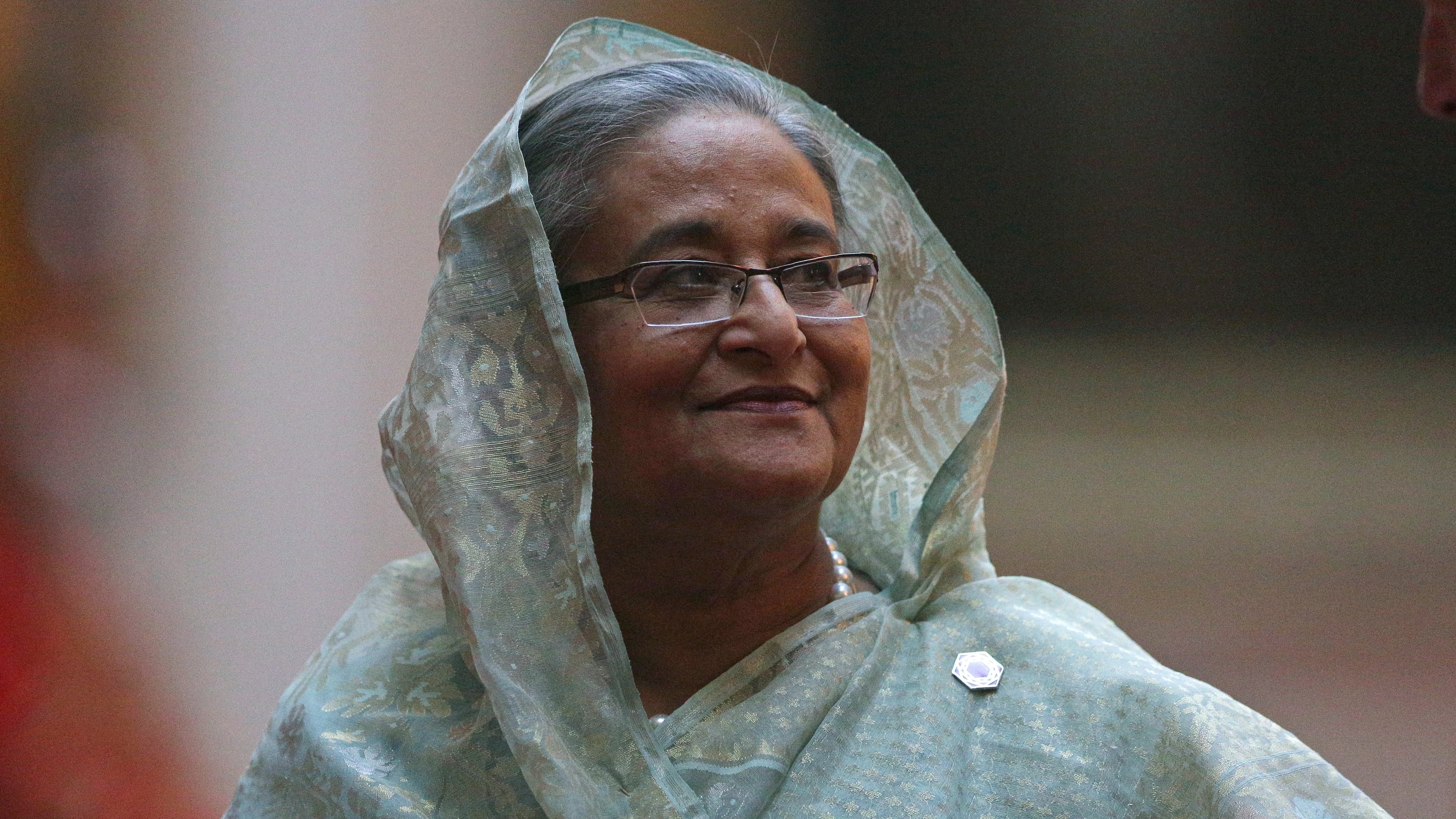
DHAKA, Bangladesh (AP) — Sheikh Hasina, who was ousted as Bangladesh's prime minister more than two years ago, said Tuesday that she plans to return home from exile in India on Dec. 16, the day the country celebrates as Victory Day when it won independence after a war with Pakistan.
Hasina went into exile in India on Aug. 5, 2024, after a student-led mass uprising forced her to end her 15-year rule. She was sentenced to death in absentia for crimes against humanity involving the uprising in which hundreds of protesters were killed. Hasina rejected the verdict and has said she is ready to fight the case once she is back.
Abu Abdullah M Saleh, the prime minister's press secretary, told The Associated Press that the government would stick to its position on Hasina's extradition as a convict.
“My government's stand is very clear. She has been convicted in a tribunal. We have sought her extradition,” he said by phone.
The junior minister for foreign affairs, Humaiun Kobir, told reporters in a briefing on Tuesday that Hasina could return only “in handcuffs or under strict surveillance.”
“The reality is that no terrorist will ever be allowed to return this way without extradition,” he was quoted as saying by the country's leading English-language Daily Star newspaper.
It is expected that Hasina would be arrested upon her return and sent to jail.
A prosecutor had earlier said that Hasina wouldn't be able to appeal her death sentence as she missed the required deadline, and that there would be no legal basis to stop her execution.
In Bangladesh, presidential clemency is allowed, but Hasina has never sought that in earlier statements and has rejected the verdict outright.
After her announcement of returning home, political tensions have gripped the South Asian nation, which has a history of unrest. Explosions of crude bombs, arson and road blockades have returned in recent weeks. Unidentified people set fire to the ancestral home of an interim leader, while in Hasina's ancestral home in another part of the country, people took to the streets.
The government blamed Hasina's supporters for attempting to create chaos before her planned return.
In the statement Tuesday announcing the planned date of her return, she urged current Prime Minister Tarique Rahman to arrange for her return on the national airline.
“Since Sheikh Hasina was flown to India on a Bangladesh aircraft on August 5th, 2024, she now calls upon the government to arrange for her air transport from Delhi back to Dhaka,” spokesperson Syed Mozammel Ali said in the statement.
“It is deeply symbolic that she has chosen 16 December, our Victory Day, for her planned return to Bangladesh. We firmly believe that she will celebrate this historic day among her people, honoring the great victory achieved under the leadership of her father, Bangabandhu Sheikh Mujibur Rahman,” Abu Obaidha Arin, an aide to Hasina, told the AP.
“We are equally confident that she will definitely return and under her leadership post-return, Bangladesh will once again advance towards peace, stability and prosperity,” Arin said.
Hasina's father led the war against Pakistan and was the first leader of the country. He was assassinated in a military coup in 1975, along with most of his family members. Hasina and her younger sister survived because they were outside the country at the time.
Earlier this month, in an interview with the AP, Hasina said that she would return to the country in December at any cost, and even the possibility of death couldn't prevent her from returning home.
Also this month, Hasina urged the government to provide her with a new passport and national identity card to facilitate her return, but the government said that she wouldn't get that. Her documents were canceled by the interim government.
Three days after Hasina's fall, Nobel Peace Prize laureate Muhammad Yunus took over as head of an interim government and later handed over power to the elected government of Rahman's Bangladesh Nationalist Party. The Yunus-led government banned Hasina's Awami League party, and it wasn't allowed to contest the election in February.
The Jamaat-e-Islami party, the country's largest Islamist party, which sided with the Pakistani military junta in 1971, returned to politics in the February election and is now the main opposition party in Bangladesh. Under Hasina, many top leaders of the party were executed on charges of war crimes.