Argentina loses bid to halt oil drilling off nearby UK-held Falkland Islands
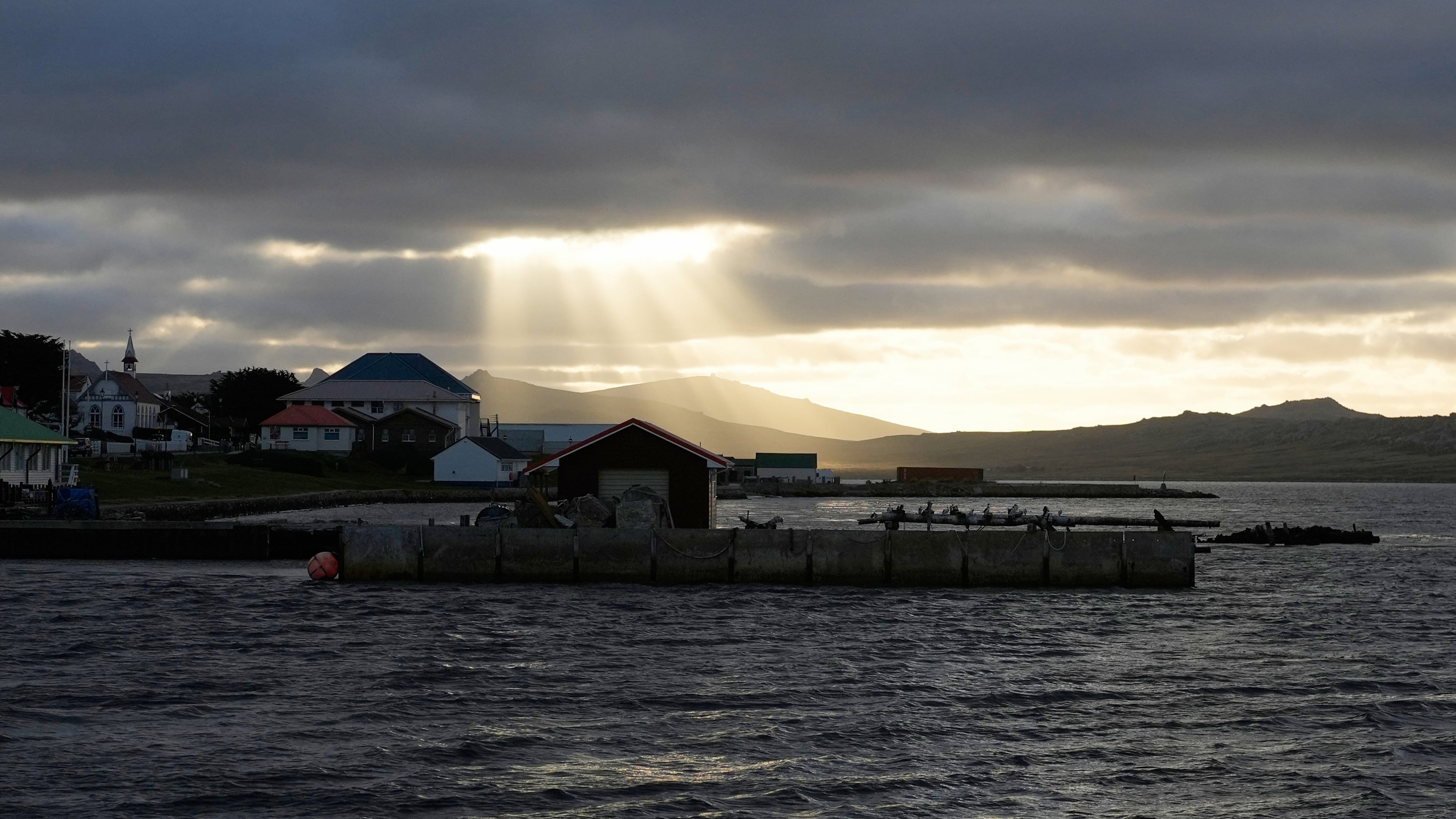
LONDON (AP) — Argentina’s bid to temporarily block oil drilling off the nearby U.K.-held Falkland Islands was rejected Saturday by an international tribunal that rules on maritime disputes.
The International Tribunal for the Law of the Sea voted 18-3 against Argentina's request to halt drilling at the Sea Lion offshore oil project in Falkland Islands waters, around 300 miles (480 kilometers) east of Argentina’s southeastern coast.
The judges, at a special hearing in Hamburg, Germany, found that Argentina’s claims couldn't be decided without ruling on the rival claims to sovereignty over the islands in the South Atlantic, a question that they said falls outside the scope of the U.N. Convention on the Law of the Sea, the treaty governing the world’s oceans.
The dispute over the planned drilling revived bitter memories of the 74-day war that the two countries fought over the islands in 1982. Argentina’s military junta invaded the archipelago, which Argentina calls the Islas Malvinas and which has been under British rule since 1833. The conflict saw 649 Argentine troops, 255 British troops and three islanders killed.
U.K. praises ruling while Argentina vows to fight on
U.K. Foreign Secretary Ed Miliband and Attorney General Ellie Reeves welcomed the decision and urged Argentina to end its wider economic pressure.
“This outcome is a vindication of the U.K.’s robust legal defense and strategy,” they said in a joint statement. “The U.K. has no doubt of our sovereignty of the Falkland Islands, our sovereignty and sovereign rights over the surrounding maritime areas, and the right of self-determination of the Falkland Islanders.”
In a 2013 referendum, more than 99% of the roughly 3,500 islanders voted to remain British, a result Argentina rejects.
Argentina respects the court’s decision, but disagrees with it, the office of President Javier Milei said. The Argentine government sought to portray the ruling as a partial win, arguing that by tying the case to sovereignty, the court had effectively recognized the existence of a dispute that the United Kingdom has long refused to negotiate on.
“This decision is not the last word,” Milei's office said.
Argentina will move quickly to form a separate arbitration panel that will hear the full case and ask it for measures to protect the country’s rights, it said.
Argentina wanted work on the $2.1 billion project frozen until the panel rules on the full dispute. It argued that every barrel of oil extracted would be lost to Argentina for good, causing irreparable harm to its claim over the area’s natural resources.
The U.K. countered that Argentina’s challenge was, at its core, a claim to sovereignty. Under the U.N. treaty, rights over the sea and seabed belong to whichever country owns the nearby coast, so the court couldn't rule on the case without wading into that question. The judges agreed, finding that even Argentina’s environmental concerns about the project hinged on it.
Milei goes on the offensive
Milei vowed Saturday to keep punishing companies working on the oil project, which he has called a “clear and present danger” to Argentina’s claims over the islands.
His government announced new sanctions proceedings on Friday against five individuals or companies involved, warning that “those who participate in the illegitimate exploitation of our resources will have to face the consequences.”
The hard line marks a turnabout for the libertarian. Milei is an admirer of Margaret Thatcher, who was U.K. prime minister during the war over the Falklands. He took office in 2023 striking a conciliatory tone on the islands and seeking warmer commercial ties with Britain.
But his tone has sharpened as his popularity slips and the economy stalls a year before his reelection bid. He has also appeared encouraged by signals from his close ally, U.S. President Donald Trump, that Washington could rethink its neutrality in the dispute.
Oil project pushes forward
Following the ruling, Rockhopper Exploration and Navitas Petroleum are expected to push ahead with the plan under licenses granted by the Falkland Islands government and backed by the U.K. The decision is likely to come as a relief for Falkland islanders, who have long dreamed of oil transforming their lives and their fishing-dependent economy.
The U.K. has said drilling at the field about 220 kilometers (140 miles) north of the islands won't commence until March, with extraction expected to begin a year later.
Saturday’s ruling was only preliminary, marking the beginning of what could be a lengthy legal battle. The court urged both countries to quickly set up the arbitration panel, which could still rule in Argentina’s favor.
Argentina’s pressure on the project goes beyond the courtroom in Germany. At home, it has filed criminal complaints against Israeli company Navitas, the project’s operator, and other firms. The government says it has also sent aggressive warning letters to 180 companies and individuals in 30 countries with ties to oil activity around the islands.
With one of the world’s largest shale reserves, Argentina has a far bigger oil industry, giving companies that work in both places good reason to steer clear of Sea Lion. Last month, Navitas said that it was replacing two contractors that had pulled out over Argentina’s threats.
___
Isabel DeBre reported from Buenos Aires, Argentina.