Wall Street steadies following jarring drops for AI stocks worldwide
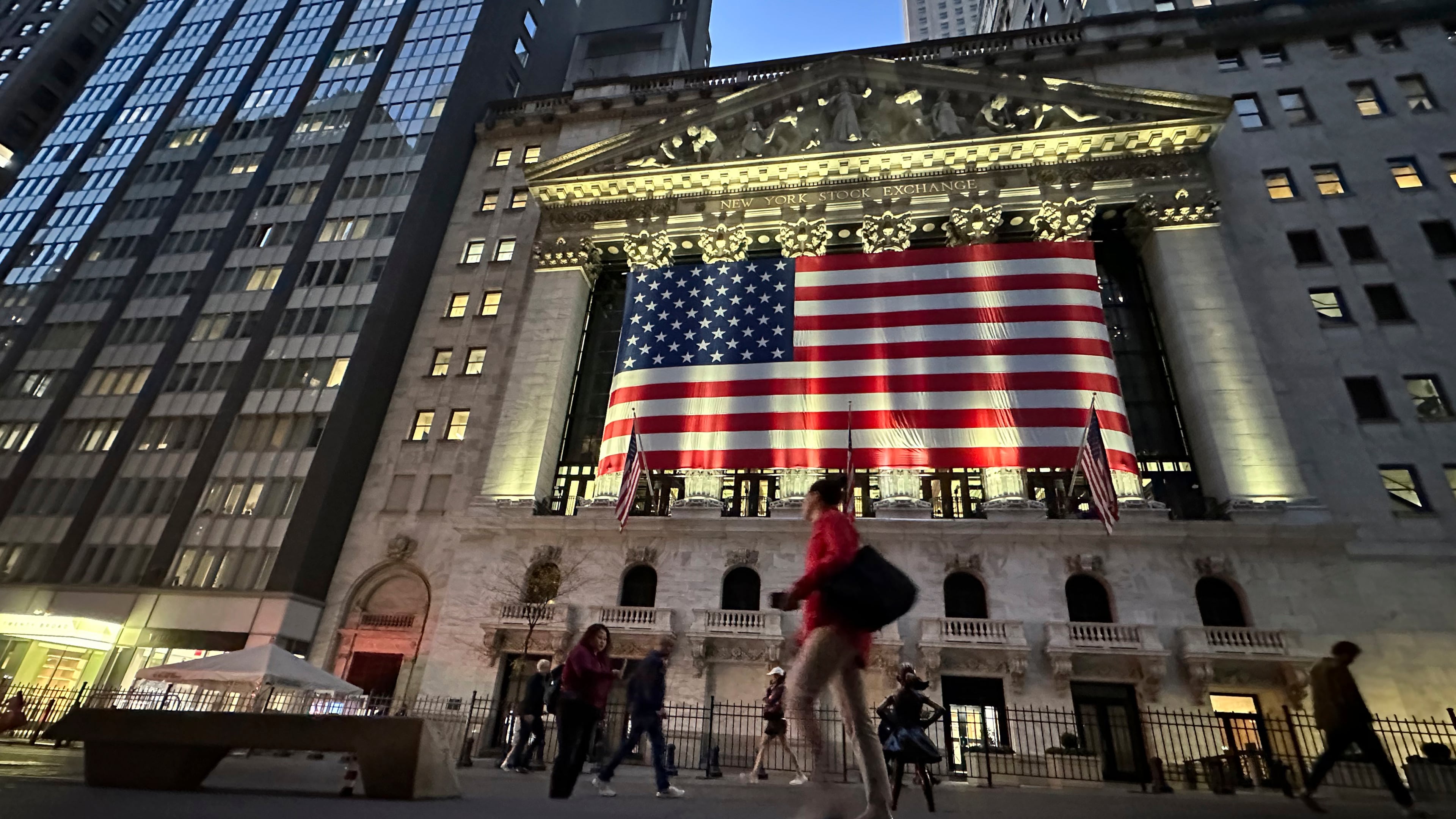
NEW YORK (AP) — Wall Street is steadying Thursday following jarring drops for stocks worldwide in the artificial-intelligence industry on worries about how much longer the AI frenzy will last.
After initially falling to a loss following its worst day since July, the S&P 500 quickly erased it and added 0.2% to edge closer to its all-time high set last week.
Continued weakness for AI stocks dragged the Nasdaq composite down 0.2%. But most of the rest of the U.S. stock market nevertheless rose, and the Dow Jones Industrial Average was up 470 points, or 0.9%, as of 1:19 p.m. Eastern time.
Markets were much shakier earlier in the day. A sell-off for AI stocks that began on Wall Street Wednesday whipped around the world and sent South Korea’s Kospi stock index down 7.6% and Japan’s Nikkei 225 down 4.9%.
They're the latest swings for AI stocks after they led the market for years. Companies are pouring money into the technology in hopes of bigger profits and improved productivity. But data centers and AI chips cost money, and many companies have been borrowing the cash to get them.
Now, after yields in bond markets worldwide hit their highest levels in years and made borrowing money more expensive, worries are rising about how resilient that boom in spending can be. Many AI-related companies have already taken on debt to build out their aspirations, and stocks are struggling under the debt loads.
CoreWeave, which offers AI computing power to customers over the cloud, slipped early in trading before moving 1.4% higher. It tumbled 15.5% a day earlier. It said in the summer that it had $4.41 billion in principal payments to make on its debt over the second half of this year and another $6.18 billion in 2027. It had more than $5.5 billion in cash, as of June 30.
High yields in the bond market also generally make investors less willing to pay high prices for stocks, particularly those seen as the most expensive.
Nvidia, the chip company that’s ridden the AI boom to become Wall Street’s most valuable company, fell 1.6% and was the heaviest weight on the S&P 500. It came into the day with a nearly 1,415% gain since the end of 2022.
The losses for AI stocks moderated as the day progressed, which helped broad U.S. indexes to steady. CoreWeave had been down as much as 9.5% in the morning before erasing the loss and gaining ground, while stocks outside of AI were much more resilient.
Marsh & McLennan helped lead the market after the insurance and professional services firm reported a stronger profit for the summer than analysts expected. The company, which updated its brand name to Marsh earlier this year, also made more revenue than expected, and its stock climbed 5.5%.
Expectations are high for profits at all kinds of companies this reporting season, which began in earnest this week. That's what's allowed U.S. stocks to set records despite high inflation and many other worries weighing on Wall Street. Now, companies will need to surpass those high expectations to drive their stock prices even higher.
Seven out of every 10 stocks within the S&P 500 rose. But because AI stocks have become so big in value, their stock movements have more effect on the index and can drown out the rest of the market.
In the bond market, Treasury yields fell, which means investors were willing to pay higher prices to buy U.S. government bonds. Treasurys have a reputation as a safer investment, one with less risk of the borrower going bankrupt, and investors often flock to them when feeling nervous.
The yield on the 10-year Treasury sank to 5.09% from 5.19% late Wednesday. It had topped 5.30% earlier this month and touched its highest level since 2002 because of worries about high inflation, signals of a strong U.S. economy and other factors.
The drop in yields came even though another report signaled inflation has worsened in the United States by more than economists expected.
Several reports on the U.S. economy also came in stronger than economists expected, which typically pushes yields upward. One report said U.S. retailers made more money last month than economists expected, while another said fewer U.S. workers applied for unemployment benefits last week than expected.
In stock markets abroad, South Korea’s loss was the headliner. Its Kospi index is dominated by two chip companies, Samsung Electronics and SK Hynix, and it fell to its worst day since July. It has dropped 39% since setting a record in June.
Indexes were stronger in Europe, which has less of a dependence on tech stocks, and London's FTSE 100 rallied 1.1% for one of the world's biggest gains.
___
AP Business Writers Chan Ho-him and Matt Ott contributed to this report.