Voting-related measures on November ballots include a voter ID push targeting mail-in ballots
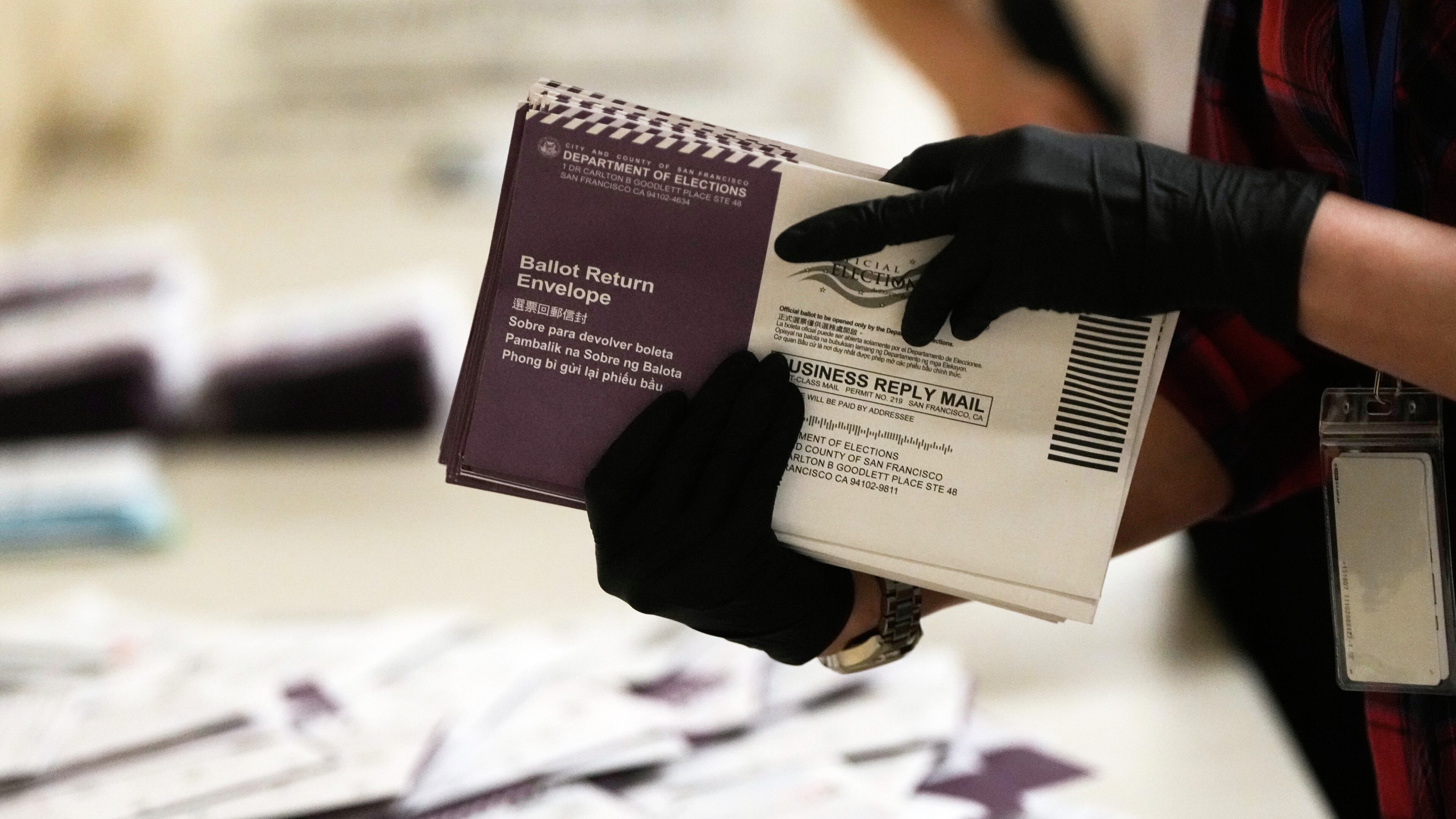
Advocates for greater voter identification requirements are pursuing a new approach in some states: a mandate to place driver's license or partial Social Security numbers on mail-in ballots.
Variations of the voter ID proposals are being decided in the midterm elections in California, Colorado and Nevada — three states where conservative activists collected petition signatures to bypass Democratic-led legislatures and place the issue directly before voters.
The voter ID measures are among about 30 questions on November ballots affecting state policies on voting and elections. They account for roughly 1 in 5 of all state ballot measures nationwide. Some mirror policies that President Donald Trump has pushed unsuccessfully at the national level and build off a Republican narrative that noncitizen voting is a problem, though data indicates it is rare.
Several measures address changes to congressional voting districts, as part of a national redistricting battle spurred by Trump. Others could change the way primaries are conducted, make it more difficult for voters to amend their state constitutions or — in Missouri — make it harder for lawmakers to change measures that voters approve.
Taken together, the measures highlight a long-running debate about who can participate in elections and how to ensure voting is both accessible and secure.
“Ballot measures have become a battle zone for the future of American democracy, including direct democracy itself,” said Chris Melody Fields Figueredo, executive director of the Ballot Initiative Strategy Center, a group that backs progressive ballot issues.
California proposition is one of several voter ID measures
When voting by mail, most states already require a voter’s signature for a ballot to count. Only Georgia, Minnesota, New Mexico and Ohio require some sort of government-issued identification number to be included with mail-in ballots.
California's Proposition 39 would require a government-issued ID to vote in person or the last four digits of that identification number to vote by mail.
In the August primary, nearly 90% of California's ballots were cast by mail, and more than 52,000 ballots — less than 1% of the total — were rejected for nonmatching or missing signatures, according to the secretary of state's office.
The proposed constitutional amendment doesn't directly repeal California's current signature requirement. But the intent is for the four-digit verification to replace it, said Carl DeMaio, a Republican state Assembly member whose organization Reform California backed the voter ID initiative.
“If California gets this done through citizens, maybe it will shame the politicians into getting this going in a moderate and reasonable and bipartisan way nationwide,” DeMaio said.
Though Trump hasn't endorsed the California proposition, opponents contend it is similar to a bill he backed in Congress to require a photo ID to vote, or a photocopy for ballots returned by mail.
“Prop 39 is just another Trump power grab that is intended to make voting harder, less secure and more expensive for Californians,” said Brittany Stonesifer, a voting rights attorney at Common Cause California.
About 7 in 10 registered voters nationally favor requiring all voters to provide valid photo identification at their voting place in order to vote, according to an October poll by The Associated Press-NORC Center for Public Affairs Research. Though support is stronger among Republicans, a majority of Democratic voters also favor a voter ID requirement.
In addition to citizen initiatives in Colorado and Nevada, voter ID amendments also were referred to the November ballot by Republican-led legislatures in Arizona, North Carolina and Ohio.
Citizen voting measures spread to six states
Ballot measures in Alaska, Arizona, Arkansas, Kansas, South Dakota and West Virginia would reinforce current election practices limiting voting to U.S. citizens. Since 2018, at least 15 states have adopted similar measures, including all eight states where they appeared on the ballot in 2024 and in Texas last year.
Many critics argue the measures are largely symbolic and unnecessary, because voting by noncitizens is rare and already forbidden in most states.
No state constitutions explicitly allow noncitizens to vote. But some municipalities in California, Maryland and Vermont, as well as the District of Columbia, do allow voting by noncitizens in some local elections such as for school board and city council.
States need to act because the nation's founders “gave the states the rights to determine who can vote,” said Becky Arps, research director for Americans for Citizen Voting.
Changes to primaries are proposed in Massachusetts and Alaska
A pair of Massachusetts ballot measures could reshape state elections. One amendment would scrap separate party primaries in favor of an open primary in which the top two vote recipients — no matter the party — advance to the general election.
Another would allow people to register to vote on the same day as the election, instead of the current 10-day-in-advance deadline.
In Alaska, voters are again being asked whether to repeal a system of open primaries and ranked choice voting. A similar measure narrowly failed two years ago.
Redistricting efforts face voter referendums
Republican lawmakers in Missouri passed new congressional districts for the midterm elections, after Trump urged GOP-led states to redistrict to try to win additional House seats. But the Missouri Supreme Court and U.S. Supreme Court both blocked the new map from being used in the November election because of a referendum petition.
Voters now will decide whether to uphold or reject the new districts. If approved, the map could be used in the 2028 election.
Maryland voters, meanwhile, will decide whether to approve a redistricting amendment backed by Democratic state lawmakers that could pave the way for a new U.S. House map ahead of the 2028 election. Proponents' campaign signs urge a “yes” vote as a means to “stop Trump.”
In Colorado, where some Democrats also want to redistrict, a ballot initiative backed by a conservative group would instead prohibit any mid-decade redistricting from favoring one political party and require approval from both an existing independent commission and the state Supreme Court.
Ballot initiatives could get new hurdles or protections
Proposed amendments in North Dakota and South Dakota would make it harder to amend their state constitutions by requiring 60% approval from voters instead of a simple majority. A similar 60% threshold is proposed in Utah for future citizen initiatives that raise taxes. All were referred to the ballot by Republican-led legislatures.
Several states already have supermajority requirements for certain ballot measures, including 60% thresholds to pass constitutional amendments in Florida and tax initiatives in Arizona. Two years ago, amendments to legalize recreational marijuana and create abortion rights both received majority support but still failed because of Florida's supermajority threshold.
Measures in several other states seek to strengthen citizen ballot initiatives. A Missouri amendment proposed by a citizens group would make it harder for lawmakers to change voter-approved citizen initiatives by requiring revisions to get an 80% vote in the state House and Senate. That comes after the Republican-led Legislature last year repealed a paid sick leave law approved by voters and referred a new constitutional amendment to the November ballot to reverse voter-approved abortion rights.
A Montana ballot measure would make the citizen initiative process a fundamental right, and a Colorado measure would require ballot questions to be written “in plain language at no more than an eighth-grade reading level.”
___
Associated Press writer John Hanna contributed to this report.