The Latest: Brazilians choose between Lula and Flávio Bolsonaro in presidential runoff
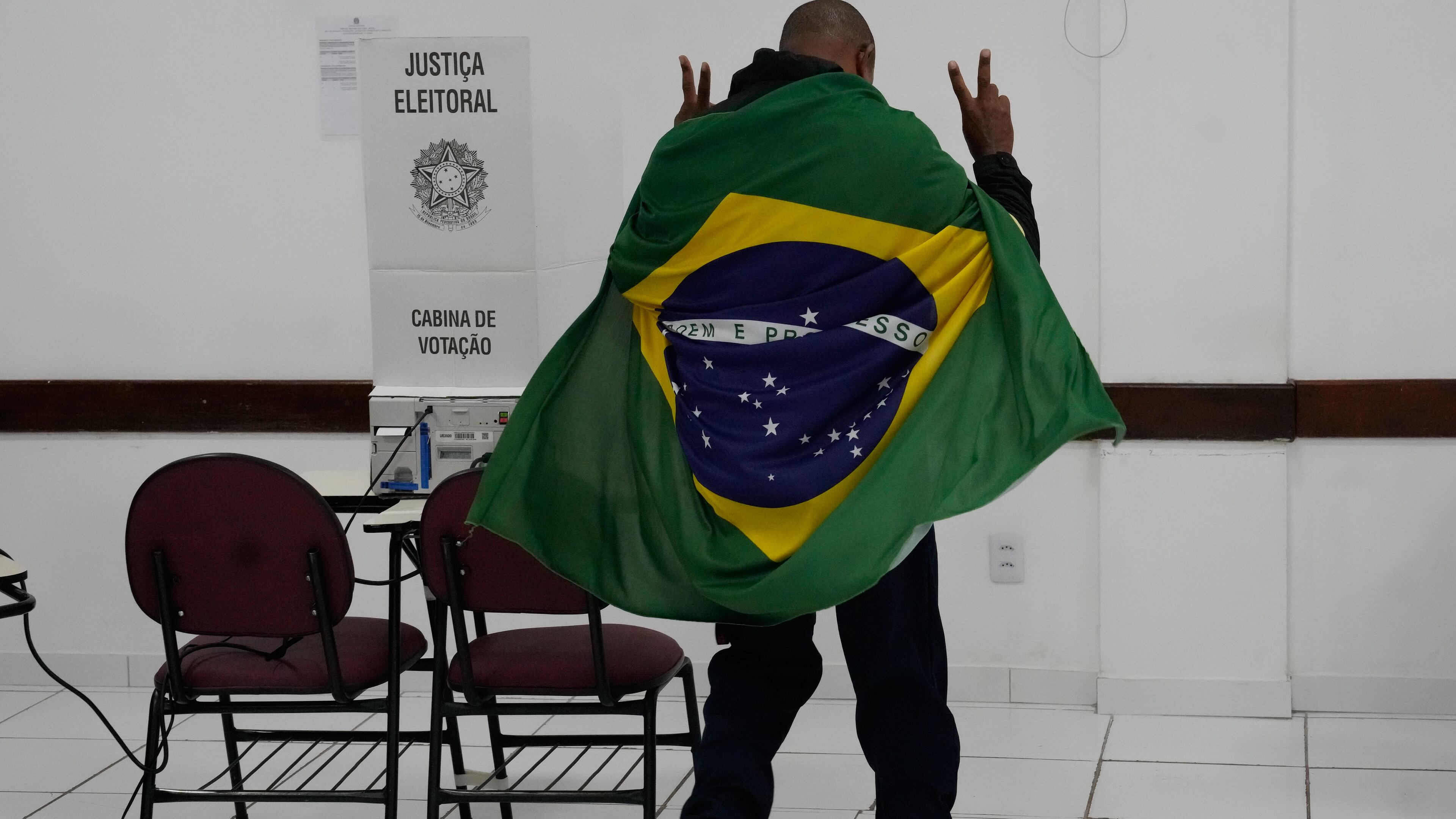
Brazilians are voting Sunday in a presidential runoff that pits leftist incumbent Luiz Inácio Lula da Silva against Sen. Flávio Bolsonaro, a far-right ally of U.S. President Donald Trump.
Bolsonaro, the son of imprisoned former President Jair Bolsonaro, bested Lula by more than 2.2 million votes in the first round of the election earlier this month. More than 33 million of the nearly 160 million registered voters did not turn out.
The difference between the two candidates is stark. Bolsonaro and Lula have opposing ideological views on issues ranging from U.S.-Brazil relations and climate change to social welfare. A win for Bolsonaro would signify a pivot to the right by Latin America’s most populous country and its largest economy in a year when Trump allies have notched victories in Chile, Peru and Colombia.
Here's the latest:
Some Bolsonaro voters evoke desire for change
Fabianne Borges Santoro, a 45-year-old physiotherapist who lives in the neighborhood where Bolsonaro voted, said she voted for change.
“The Workers’ Party has been in power for a long time and the voice of the people is saying that we need change to see improvements in security and the cost of living,” she said, wearing a top featuring Brazil’s national colors, yellow and green. “Things are really expensive and taxes are too high.”
Santoro said she once voted for Lula’s party but now associates it with corruption, particularly after the so-called Operation Car Wash that started in 2014, when the Workers’ Party was in power and entangled dozens of politicians.
Roulen Azeredo, a 76-year-old army reservist, said he has always voted right. He also echoed the desire for a shift in the country’s direction.
“The current government did nothing,” said Azeredo, who hopes Jair Bolsonaro, who is currently serving a 27-year sentence for attempting a coup, will be freed if the former president’s eldest son wins. “His imprisonment is a disgrace.”
Battle of left versus right
Sunday’s runoff is a battle of politics as much as personalities. Brazil’s next president — Lula or Bolsonaro, a Trump ally — will determine whether U.S. influence further expands in Latin America, where Trump-allied candidates have won elections in countries that include Colombia, Argentina and Peru.
Brazil is the region’s most populous country and its largest economy. A Lula win would leave Brazil and Mexico, the region’s second most populous country, with left-of-center leaders; a Bolsonaro win would likely bring Brazil closer to Washington.
Bolsonaro casts his ballot, calls for change
Presidential candidate Flávio Bolsonaro voted at a local school in Rio de Janeiro just after 8 a.m., accompanied by his wife, Fernanda Bolsonaro. Wearing a light yellow shirt, he smiled and waved to supporters waiting to see him in the rain.
“The time of real change has arrived,” Bolsonaro told journalists. “Brazil can’t go on another four years on its current trajectory.”
As Bolsonaro voted, supporters of the opposition candidate shouted “Lula, thief, your place is in prison,” while fans of the incumbent responded with clapping and the chant “Olé olé olé ola, Lula!” The two anthems are common in demonstrations.
Electronic voting means speedy results
In Brazil, voting is fully electronic — meaning votes are counted much more quickly than in some other countries.
Polls opened at 8 a.m. and will close at 5 p.m. Brasilia time (2000 GMT) in most of the country.
On the ballot: the presidential face-off between Lula and Bolsonaro and six gubernatorial races. Votes are tallied quickly because each ballot box calculates results locally and prints a paper summary. The encrypted data is transmitted via secure networks to the nation’s top electoral court in capital Brasilia, which aggregates and publishes the counts within hours.
The system has been in place since the 1990s with few questioning its efficiency. One of its critics is former President Bolsonaro.