WATCH LIVE: New England's having an 'elite' year, but there's fall foliage elsewhere, too
CONCORD, N.H. (AP) — Kyle Cotner knew nothing about fall foliage when he trolled his White House colleagues in 2007, telling them he was an expert despite having grown up in Florida.
When autumn rolled around, he kept up the bit, sending out weekly newsletters with foliage statistics and information to a handful of co-workers. Today, he has mastered complex mapping systems, calls himself “Leaf Daddy” and owns The Foliage Report, a website that tracks fall color from coast to coast.
Thus, he was speaking with actual authority last week when he said 2026 has been a spectacular year for foliage in New England.
“I’ve been doing this for almost 20 years, and this is the best I’ve seen of New England in that time,” he said. “2020 was a very good year, but this one seems elite to me.”
New England had adequate rain through the spring and summer, plus warm days and cool nights heading into fall, but that wasn’t the case elsewhere, he said.
___
This story will be updated throughout the day to add new photos. The Associated Press is carrying live views of foliage in Vermont, Michigan, Colorado and Washington today.
___
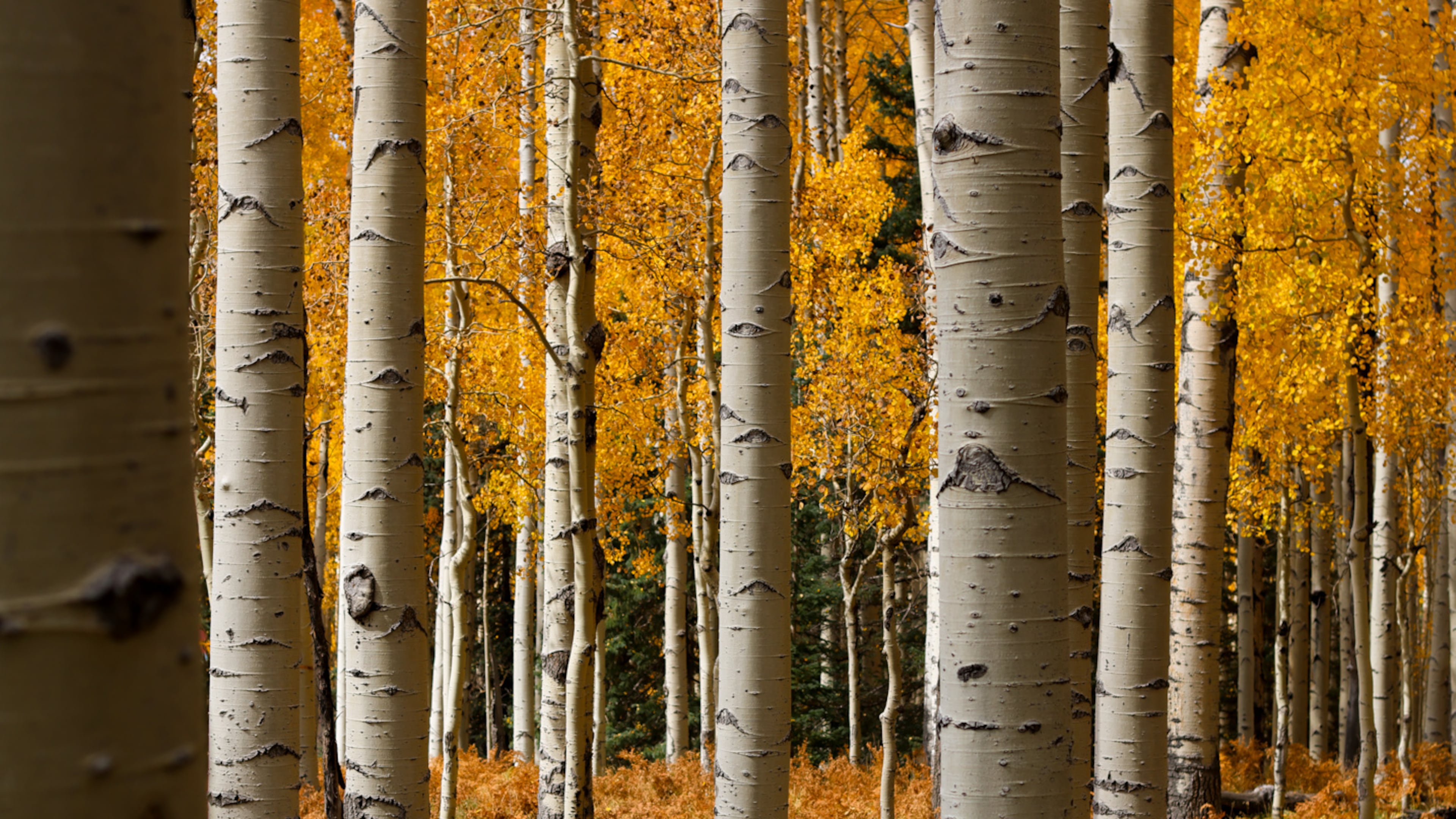
Extreme drought conditions stressed trees in Colorado, for example, leading to a quick and lackluster foliage season. Aspens in Wyoming, Montana and Idaho aren’t as golden this year, he said. But Utah is a bright spot.
“They got enough rainfall in that area,” he said. “You basically want an average amount of precipitation to really bring out the most majestic and colorful leaves.”
Fall foliage: The last supper for trees
Fall foliage is all about trees preparing for winter, according to experts at the University of New Hampshire Cooperative Extension.
Leaves exist to provide food for the tree. They absorb sunlight through a green pigment called chlorophyll, and that energy is used to convert water and carbon dioxide from the air into glucose, a type of sugar. As days shorten, the tree stops making food, allowing orange and yellow pigments that have been there all along to be unmasked. When sunny days are followed by cold nights, sugars get trapped in leaves, producing red pigments.
Eventually, the layer of cells between a twig and a leaf weakens, allowing leaves to be blown down during wind and rain. The timing varies widely by location. According to Cotner’s research, foliage season starts in Alaska in mid-August and ends in Florida in late December. Hawaii is the only U.S. state without fall foliage, he said.
Leaf peepers share their perspective
For Kirk Giglio, leaf peeping provides an escape from his day job as a nurse in a cardiac and stroke unit of a Connecticut hospital. A photographer who frequently chases storms as well, he is used to studying maps and forecasts, and was hopeful by early September that this would be a good year. A recent trip to Maine, New Hampshire and Vermont with his fiancee confirmed it.
“I was just really kind of blown away,” he said, describing sunrise hikes and fog lifting to reveal vibrant colors in New Hampshire’s Crawford Notch and elsewhere. Though some spots were packed with tourists, he still found plenty of secluded and stunning scenery.
“The more I travel, the more I realize how much we take for granted up here,” he said. “In a world that is so modern and gray with these corporate, soulless colors that we see everywhere, the trees are one of the last things that make color anymore, so it’s nice to just observe, especially in a good year like this.”