Cornell president faces scrutiny in contentious meeting with faculty during no-confidence debate
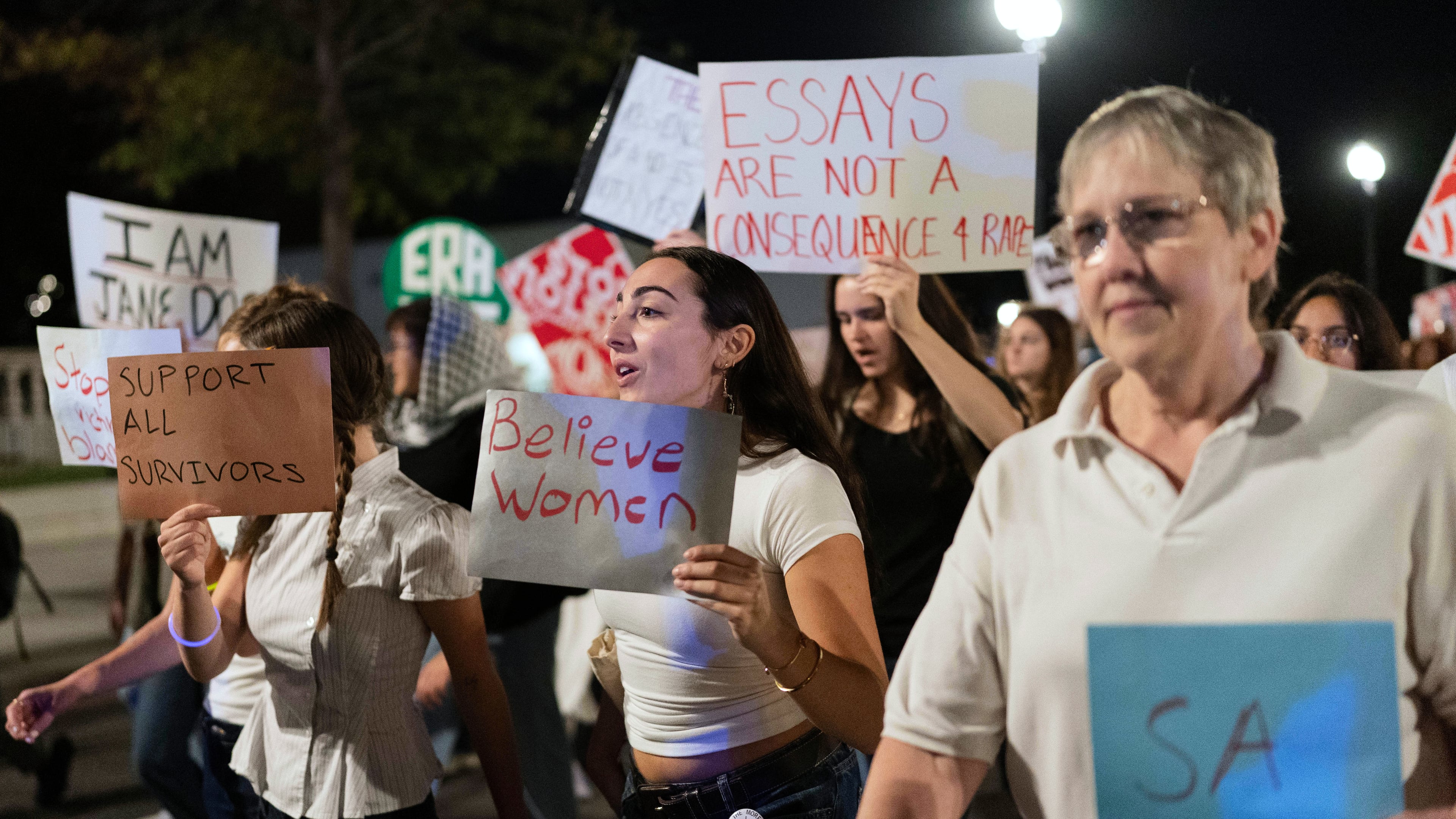
ITHACA, N.Y. (AP) — Cornell University President Michael Kotlikoff faced off with angry members of the school’s faculty Wednesday at a meeting that underscored deep frustration on campus over his administration’s handling of a woman’s report that she was gang raped at a fraternity house in 2024.
Kotlikoff addressed members of the university's Faculty Senate, and took their questions, as it began considering a no-confidence resolution in his administration.
The meeting was closed to the media, but some faculty members leaving the session described the mood as leaning heavily against Kotlikoff, who has publicly acknowledged errors in the school's handling of the rape allegation.
Richard Bensel, a professor of government, said Kotlikoff was poised, and the debate was civil, but he estimated 80% of the faculty members who spoke at the meeting were in favor of a no-confidence vote.
“The faculty were extremely angry. They gave him a hard time, I think appropriately so,” Bensel said. He said the Faculty Senate had spent years passing resolutions calling for reforms to university disciplinary procedures, only to have its recommendations ignored by administrators.
“I don’t think there’s any way that we can open up the process for democratic reform except by passing this resolution,” he said.
Debate was expected to continue Oct. 28, followed by electronic voting by the Faculty Senate, which has approximately 130 voting members. A simple majority is required for passage.
A no-confidence vote by the faculty would be largely symbolic, but can send a powerful message to the university's trustees, who ultimately will decide how the university is run and who leads it.
Accuser's lawsuit has roiled campus
Cornell's crisis began after a woman, identified in court documents as Jane Doe, filed a lawsuit alleging that seven Chi Phi fraternity members sexually assaulted or exploited her in October 2024 and that Cornell mishandled her complaints.
The criminal investigation by Cornell's police department quickly stalled after the local district attorney decided, only weeks after the woman went to police in 2024, that no crime had been committed.
At the time, Kotlikoff publicly addressed what he called “deeply disturbing” allegations, suspended the fraternity and said criminal and university investigations were underway. He subsequently convened a presidential task force to examine how Cornell handles sexual assault, but said this week that he never followed up to learn the outcomes of the criminal or Title IX investigations into the woman’s allegations.
But in an interview with The New York Times published Tuesday, Kotlikoff said he never followed up to learn what had happened to the woman or whether any of the accused students had been punished.
He acknowledged that, until the woman filed her lawsuit, he did not know she had dropped out of Cornell or that students had been expelled or suspended over the incident, or that some had remained enrolled at the school.
On Tuesday, Kotlikoff announced a ban on fraternity parties through the end of the academic year and plans to give state police a role in investigating sexual assault reports.
Faculty describe ‘contentious’ meeting
The faculty senate meeting stretched past the two hours anticipated. Kotlikoff left the meeting after addressing faculty members and answering questions, and did not stay for the debate over the no-confidence resolution.
“The institution is split in significant ways,” said Grant Farred, professor of Africana Studies and English, describing those in the humanities as feeling they had enough information to proceed while those in the sciences wanted more data.
Iris Packman, a member of the faculty senate and senior research and policy development associate at Cornell’s ILR School Climate Jobs Institute, said the meeting had a “contentious tone” and that Kotlikoff got “defensive.”
Cornell Labor History Professor Paul Ortiz, lead sponsor of the no-confidence resolution, said that at one point during his remarks, Kotlikoff suggested that replacing the president would not be good for the university. The resolution doesn't expressly call for such a thing, Ortiz said.
“What was animating the resolution is this sense of a perpetual ongoing crisis,” said Ortiz.
Anne Marie Brady, a senior extension associate at Cornell’s School of Industrial and Labor Relations, said she welcomed Kotlikoff’s recent announcement that state police would take on a role in sexual assault investigations, saying it showed the administration was listening to faculty concerns. But she questioned the timing, a day before the Senate debate.
Professor who reported harassment says it nearly cost her career
For Ariana Kim, an associate music professor at Cornell and co-sponsor of the resolution, Kotlikoff’s acknowledgment that he had not followed up on the woman’s case was deeply troubling.
“I mean, that’s appalling in and of itself, right?” Kim said. “That you don’t know about a student who faced an alleged horrific crime, that you don’t think to check in.”
Kim, a Grammy-nominated violinist, said she was motivated to take action after being struck by Jane Doe’s story, as well as her own personal experiences on campus since she started at Cornell a decade ago as a young academic in her 20s. She said when she experienced bullying and sexual harassment by senior colleagues, Cornell failed to properly document her complaints and that she was never clearly informed what disciplinary action, if any, had been taken.
“I was asked what I had done to provoke the situation,” she said.
Kim said she continued to be expected to work alongside colleagues she said had harassed her. Her efforts to avoid them later became a point of criticism during her tenure review. In one instance, a senior professor cited her unwillingness to accept his advice and her avoidance of him in explaining his vote against granting her tenure.
Kim spent more than a year appealing the initial denial of tenure, a process during which she said she lost 20 pounds (9 kilograms) and struggled to eat or sleep. The original decision was ultimately overturned, and she secured tenure.
Now seeking promotion to full professor, Kim said she recognizes that publicly criticizing university leaders could again jeopardize her career.
“I’m speaking out publicly against this administration that may very well deny my promotion,” she said.
Kotlikoff has faced other challenges during his tenure
The controversy over Cornell’s handling of sexual assault allegations is the latest challenge for Kotlikoff, who became the university’s interim president in July 2024, months before Jane Doe’s alleged assault, and took the job permanently last year.
Dining and custodial workers went on strike shortly after he took office, and some faculty and students criticized his decision last year to pay $60 million to settle Trump administration civil rights investigations.
Earlier this year, he also faced accusations that he tried to back his car into demonstrators following a campus debate over Israel and Palestinian rights. Kotlikoff denied the allegations, saying he was the victim of harassment.
—-
Willingham reported from Boston.