A look at the main issues in Israeli elections seen as a referendum on Netanyahu
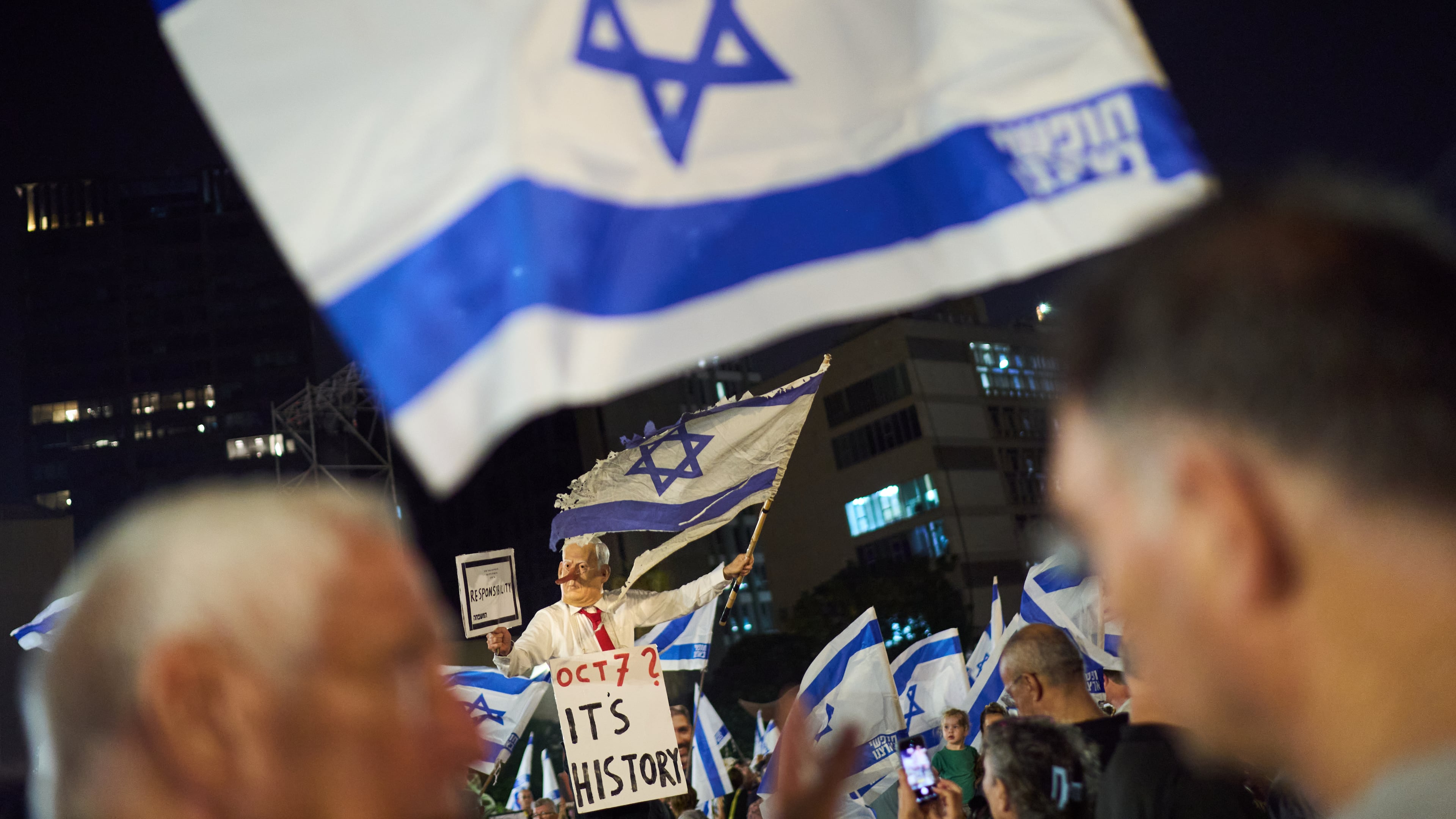
Israelis will vote Tuesday in the first national elections since Hamas' Oct. 7, 2023, attack in what is widely seen as a referendum on Prime Minister Benjamin Netanyahu 's leadership.
The deadliest day in Israel's history features prominently in the campaign, but not in the way many outsiders might expect.
There's been almost no debate over Israel's wartime conduct in Gaza — which led to an international arrest warrant against Netanyahu — its occupation of much of southern Lebanon and parts of Syria, or its two wars launched against Iran, all of which have broad support.
Instead, candidates have focused on Netanyahu's leadership and moral character; his role in the security breakdown on Oct. 7; his efforts to exempt ultra-Orthodox Jews from military service and a 2023 judicial overhaul seen by critics as an assault on Israel's democratic institutions.
Both of the main electoral blocs are dominated by parties that support Jewish settlement in the occupied West Bank and oppose the establishment of a Palestinian state, and no major candidate is advocating a return to the long-moribund peace process.
Here's a closer look.
Netanyahu's handling of Oct. 7 and its aftermath
People heading to the polls will pass the faces of fallen soldiers peering from stickers on train station walls and faded yellow ribbons honoring the hostages, the last of whom were returned in a ceasefire deal last year.
Around 68% of Jewish Israelis say their attitudes toward Oct. 7 are a central factor in deciding which party to support, according to the Israel Democracy Institute, a Jerusalem think tank. Among the Arab minority, just 32% said it factored prominently, with most citing crime as the main issue.
Netanyahu, Israel’s longest-serving prime minister, has sought to shift blame for the failures surrounding Oct. 7 to security officials while touting Israel’s military achievements against Hamas in Gaza, Hezbollah in Lebanon and their patron, Iran.
Critics accuse him of evading responsibility by blocking an official inquiry into the attack, of not reaching a deal to bring back the hostages sooner, and of failing to win a decisive victory against any of Israel's foes.
Anger over exemptions from military service
Netanyahu's governing coalitions have long relied on ultra-Orthodox parties that demand exemptions from military conscription for young men engaged in religious studies. That policy has infuriated Israel's secular majority as reservists have been repeatedly called up in the various wars.
Military service is mandatory for most Jewish men and women, and about a quarter of Jewish voters polled by the Israel Democracy Institute ranked the issue as a key factor in deciding which party to support.
The country is struggling with a shortage of soldiers. Each year, around 13,000 ultra-Orthodox men reach the conscription age of 18, but fewer than 10% enlist.
“We have this notion that military service is a kind of permit to citizenship,” said Tamar Hermann, an expert on Israeli public opinion with the Israel Democracy Institute. It makes you a “legitimate part” of Israeli Jewish society, she added.
Netanyahu’s chief rival, Gadi Eisenkot, has vowed to end the de facto exemptions. The former military chief and political centrist lost his son and two nephews to combat in Gaza.
Yohanan Plesner, president of the Israel Democracy Institute, said the military exemptions were “probably the number one issue” for the anti-Netanyahu coalition.
Netanyahu's judicial overhaul remains divisive
Netanyahu’s plan to overhaul the judiciary and weaken the Supreme Court sparked mass protests in Israel in 2023, leaving the country fiercely polarized when Hamas attacked.
Netanyahu portrayed it as an attempt to curb the authority of unelected judges, while critics viewed it as a power grab by a prime minister who has been indicted on corruption allegations.
After the Oct. 7 attack, the public focus shifted to Gaza, and many who had mobilized against the judicial changes redirected their efforts to demand a deal to release the hostages.
Only 18% of Jewish Israelis said the judicial overhaul was a main factor in deciding which party to support, according to the Israel Democracy Institute. “There’s some public fatigue,” Hermann said.
On the left, judicial changes raised greater concern, with 22.5% of voters saying the issue will influence their decision at the ballot box. Among centrist and right-wing voters, it did not rank among the top four issues.
Last year, Israel’s parliament passed a law giving the government a larger role in appointing judges. But it won’t take effect until the next legislature is sworn in, and the anti-Netanyahu bloc has vowed to repeal it.
Questions of leadership loom large
Israelis vote for parties, not specific candidates, and no single party is expected to win anywhere close to a 61-seat majority in parliament, known as the Knesset. Whoever can cobble together a majority coalition will become the next prime minister.
If no one is able to, Netanyahu's government will continue to serve as caretaker until another round of elections in the coming months.
More than a quarter of Jewish Israelis view the head of the party as a key factor in deciding how to vote, according to the Israel Democracy Institute.
Netanyahu's supporters see him as a veteran statesman who has gone toe-to-toe with U.S. presidents and other world leaders, resisting pressure to end the war in Gaza or make other concessions that could harm Israel's security. His opponents think he's a crook.
Eisenkot's supporters point to his long military service and his personal losses in the ongoing wars. The son of Moroccan Jewish immigrants would also be the first Israeli prime minister of non-European descent, though he has not made that a central part of his campaign.
The economy and cost of living
Israel isn't immune from the affordability concerns that have roiled elections worldwide in recent years.
The cost of living has soared, and is higher than in many wealthy European countries like Austria, Denmark and Sweden, according to research by Sarit Menahem-Carmi of the Aaron Institute for Economic Policy at Reichman University.
Netanyahu says his policies have unleashed growth and contributed to the rise of a world-class tech sector, while opponents say many Israelis have been left behind.
Among Jewish Israelis, 38% said the economy and cost of living are the most important or second most important issue in the election, a stance that rose to 46% among Arabs, the Israel Democracy Institute found.
But you wouldn’t know it from the campaign.
None of the main candidates has made the economy a central issue or drawn attention to the costs of the various wars. Joseph Zeira, an economics professor at Hebrew University in Jerusalem, said the high levels of military spending cannot be ignored.
“The cost of the conflict is tremendous,” Zeira said.