‘Justice for HeeHaw’? Donkey shooting may shift how courts view police searches
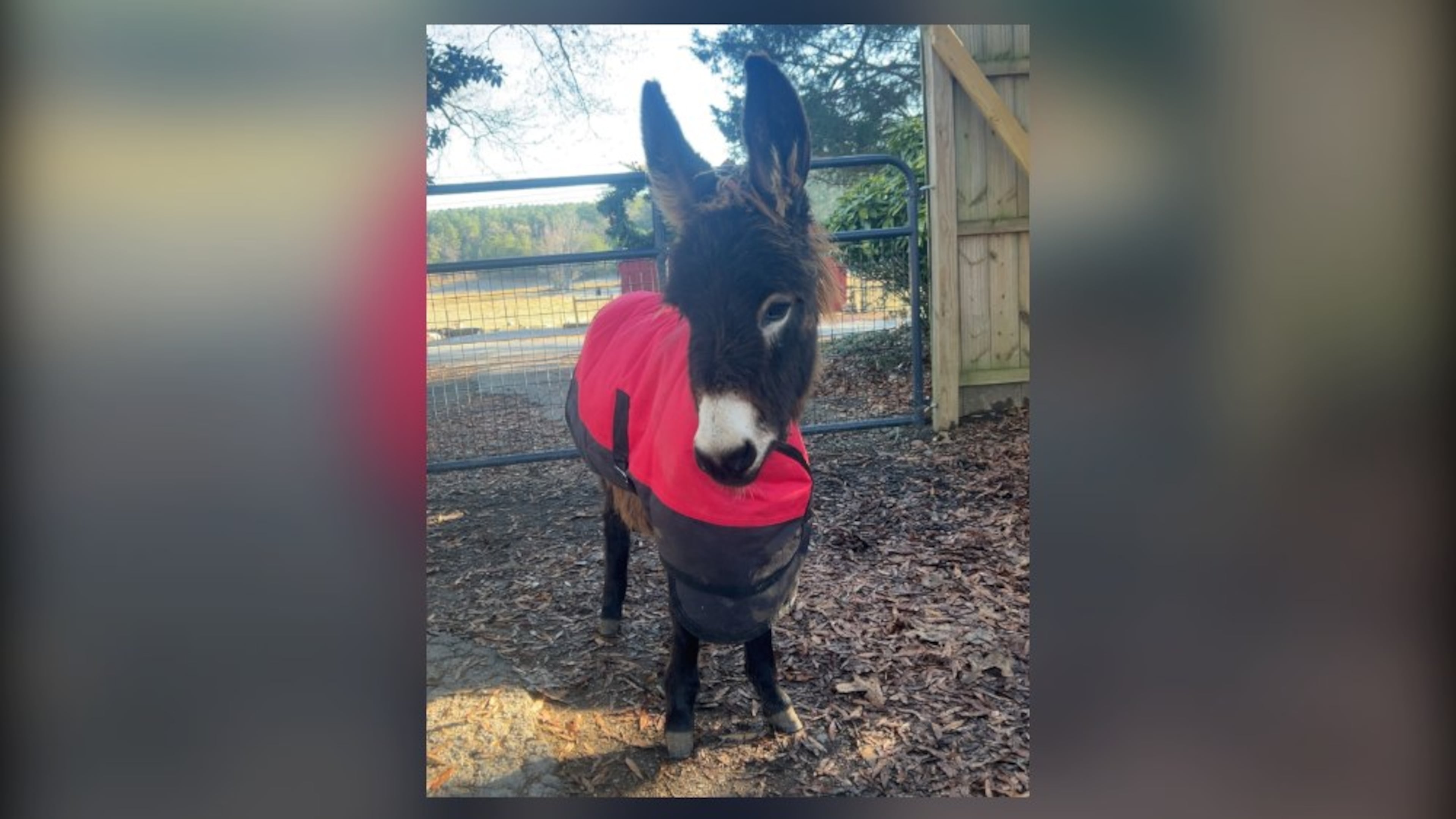
He was the donkey whose death sparked outrage across the U.S. when his killing by a police officer went viral. Now, his death may become a test for how Georgia judges view police searches.
HeeHaw, a petting zoo miniature donkey at Elsberry Riding and Farm in Rockmart, was shot by a Cedartown police officer who was conducting an unrelated search for a missing girl.
The officer is now facing a federal lawsuit alleging he violated the owner’s federal constitutional rights.
Hannah Israel, the donkey’s owner, may also sue the police department and the city, her attorney Chris McCormick said in an interview with The Atlanta Journal-Constitution.
“We want transparency. We want accountability,” McCormick said.
But lawsuits against police officers are very difficult to win, attorneys say. The legal questions at play center on the Fourth Amendment, which governs the right to be free from unreasonable search and seizure by the government, and qualified immunity, a legal precedent that shields government officials from liability when they are doing their jobs.
The case raises an issue that could call into question the way Georgia courts view what’s called the open-fields doctrine, a legal tenet first outlined in a 1924 U.S. Supreme Court decision that allows law enforcement to enter private property — even over a fence.
Courts in some states have narrowed where and how police are allowed to enter properties. HeeHaw’s owner is challenging whether the officer who shot her pet should have been on her field in the first place.
What happened to HeeHaw the donkey?
It was past midnight when Cedartown Police Officer Trenton Garner, other officers and a bloodhound canine were out searching for a missing 12-year-old girl, according to attorneys, city officials and the police report. The bloodhound was on the scent and led them to the pasture where the donkey lived, which they then entered.
HeeHaw began running toward the officers. That’s where the accounts of what happened differ: Garner’s attorney Molly Gillis says the donkey was “very aggressive” and charged at them.
“They absolutely believed that the donkey was going to harm the officers or the bloodhound,” Gillis said in an interview with the AJC. “He was postured. His head was up. He was not happy that these people were in his pasture.”
But Israel’s attorney says they believe the miniature donkey, who was bottle-fed and raised indoors like a pet, was simply galloping up to the officers in a friendly, non-threatening manner.

“There’s a difference between galloping and running aggressively,” McCormick said. “This was not a regular donkey. This was a baby — miniature, docile, basically grown up around people.”
Gillis says the officers tried to deploy a Taser away from the donkey to distract or deter him. But it didn’t work, and that’s when Garner shot him.
“Officer Garner was actually off to the side. The donkey was charging at the other officers and the bloodhound,” Gillis said. “None of the officers wanted this to happen, but they did have to protect themselves and the bloodhound.”
McCormick said he has tried repeatedly to get the body-worn camera footage of the incident but has been told it won’t be released during a pending investigation. The AJC also requested the footage and was denied. The Georgia Department of Agriculture’s Law Enforcement Division is investigating and has not responded to the AJC.
So, the attorney said, he filed the lawsuit “to try to bring sunshine to the situation” and force the department to hand over the video.
“Because otherwise, we’re just all sitting around, everybody’s mad, just speculating,” he said. “What we suspect is on that video is the donkey just galloping up to him, not running aggressively.”
The incident sparked a firestorm on social media. Nearly $160,000 was donated in a GoFundMe campaign to support Israel’s lawsuit and the farm.
Garner has received death threats against himself and his family, which have been turned over to the FBI, Gillis said. Even another officer with the same name, who works for the Winchester Police Department in Tennessee and had nothing to do with the incident, received death threats, the department posted to Facebook.
The city put out a statement from its Commission Chair Sam Branch saying “threats of violence are never acceptable.”
“I have great hope that our community recognizes that much of the extremely hateful and violent rhetoric we are seeing is not coming from local people who live, work, and have families here,” he said in the statement.
How Does The Open-Fields Doctrine Work?
Some online urging “Justice for HeeHaw” say the officer shouldn’t have even been on the property without a warrant.
The lawsuit first alleges a Fourth Amendment violation, stating Israel had a “reasonable expectation of privacy in her enclosed pastureland,” and Garner entered the pasture “with deliberate indifference to and reckless disregard for Plaintiff’s clearly established constitutional rights.”
Constitutional law experts say the law, in fact, does allow police to enter property without permission.
“Most Americans think that if the government is going to intrude on your property, the government has to get a warrant to do that,” said Josh Windham, a senior attorney with the Institute for Justice, a nonprofit law firm that argues cases of constitutional rights violations.
But the courts have carved out an exception to the Fourth Amendment, he said: the open-fields doctrine.
First established in a 1924 decision by the high court in Hester v. U.S., the justices ruled that the Fourth Amendment did not protect open fields, meaning police could search them without a warrant.
Then, in the 1984 case Oliver v. U.S., the court affirmed the doctrine and clarified to say “an open field need be neither ‘open’ nor a ‘field’” — meaning police can even search fenced-off areas with “No Trespassing” signs.
The donkey’s pasture, although fenced off, is what courts would call an “open field” under the doctrine, which says unoccupied property not immediately surrounding a house or building is not protected under the Fourth Amendment and has no reasonable expectation of privacy, said Windham, who is not affiliated with the case.
“What it actually means is just all private land in the country that is not immediately near a home,” Windham said.
Some states have constitutions that offer greater protection than the Fourth Amendment and have ruled against the open-fields doctrine, he said. The institute’s aim is to get courts to reject the doctrine in favor of greater property rights protection.
Windham and his team recently won one such case in Pennsylvania, where the state supreme court agreed government officials should obtain a warrant before searching property if the “landowner has taken sufficient steps to notify members of the public that the land is private and that they should not trespass.”
Gillis, the attorney for the officer in the state’s investigation of the incident, said she thinks the open-fields doctrine is clear on the issue of whether the police were allowed to enter the paddock because the bloodhound led them to it in the search.
“That’s why they entered this particular pasture, which, of course, they’re allowed to, under the open field doctrine, as well as the exigent circumstances of finding this missing 12-year-old girl,” Gillis said.
In Georgia, courts have not rejected the open fields doctrine, meaning Garner may have been legally allowed on the property, Windham said. The court will have to decide, he said.
But that specific doctrine does not protect the destruction of property, he added, which is the second claim in the lawsuit.
‘Shielded from liability’
Because the law gives government employees protection while performing their duties and can’t be sued for negligence, the plaintiffs have to show that the officer was violating a constitutional right that was clear prior to the incident, legal experts say.
It’s called qualified immunity, and it makes it “very difficult” to sue the government, said Noah Pines, Atlanta defense attorney and former prosecutor not affiliated with the case.
So the question comes down to whether a “reasonable officer” in Garner’s position “would have believed that they were in imminent danger,” Pines said.
“If the officer just walked up to the donkey and shot the donkey, that’d be one thing,” Pines said. “You can’t do that.”
The courts “are reluctant to second guess what officers are doing in the field,” Windham said, possibly creating an uphill legal battle for HeeHaw’s owner. If the donkey was, in fact, being aggressive, it would likely be difficult for the plaintiff to win, Pines said.
But what constitutes “aggression” in a donkey? With dogs, Gillis said, it’s easier to describe: snarling, growling, barking. The courts will have to evaluate the donkey’s behavior.
“What’s the difference between ‘charging’ and ‘running,’ right?” Pines said. “Wouldn’t you expect that if you’re in an open field where there’s animals, that if you come in there, they’re probably going to run toward you?”
McCormick said HeeHaw’s owner is “adamant that that donkey was never, never aggressive.”

The third claim in the lawsuit alleges the officer deprived Israel of her property without due process, another constitutional claim. The lawsuit is seeking compensation to be determined in court, punitive damages and attorneys fees.
Until the footage of the incident is released, no one can say for certain what happened, and questions will remain unanswered, the lawyers said. The Cedartown Police Department said in a statement the incident “remains an active investigation” and declined to comment.
Gillis said everyone involved is saddened by the outcome, and this was not the officer’s intention when they went out searching for the missing girl.
“But this was the situation that they had to deal with,” Gillis said.
Police should have better training when encountering animals and be more mindful when entering private property, even if they’re legally protected, Pines said.
Garner, as a K9 handler, has undergone extensive “canine proficiency training,” records from Georgia’s Peace Officer Standards & Training Council show. He has also completed training on use of deadly force, less lethal force and search and seizure, to name a few. None of the trainings listed explicitly indicate whether they involve interactions with aggressive animals.
“When police officers create a situation that’s more tenuous, they need to understand that they’re creating a situation that’s more tenuous and be prepared, maybe, to react differently,” Pines said. “It’s more like, common sense, right?”