Atlanta heavy metal band Mastodon sued by late guitarist’s estate
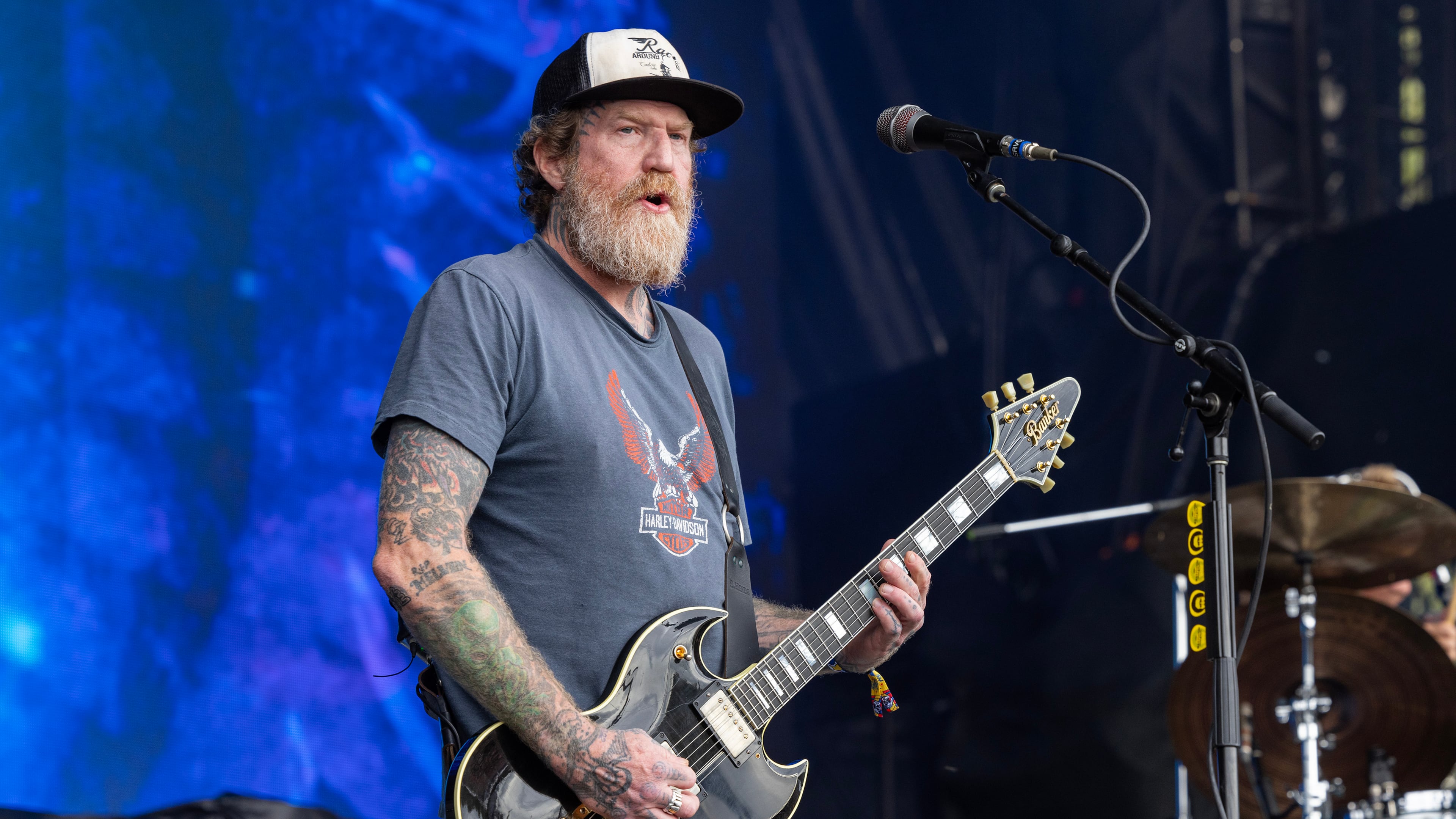

Members of Mastodon said they were wracked with grief when their cofounder and former guitarist was killed in a motorcycle crash last summer. Now, their late bandmate’s estate is suing, claiming the group used his likeness after his death to promote a new album.
The Atlanta-based metal band had been going through a very public breakup in the months leading up to William Brent Hinds’ death, with posts and comments flying on social media after the other founding members kicked Hinds out.
Hinds’ estate says in the lawsuit that Mastodon and its members never bought the guitarist out of his share of the band and its related businesses before his death, and that, despite the acrimony while Hinds was still alive, they used an image of his face on an album cover after he died, cashing in on the tragedy.
The civil complaint, filed in Fulton County Court on Sept. 3, claims the estate is owed compensation for the use of Hinds’ likeness and for the share he held in the companies.
According to the lawsuit, Mastodon wrote the estate a check for $80,000 as an aggregate buyout of Hinds’ interests . However, the band did not explain how they reached that number when calculating what Hinds was owed, the estate said.
It has held off on cashing the check until a full accounting can be done, according to the suit.
Hinds cofounded Mastodon in 2000 with bassist Troy Sanders, guitarist Bill Kelliher and drummer Brann Dailor, all of whom are named as defendants in the civil suit.
Last March, the band announced on their social media pages that Hinds was leaving Mastodon after 25 years together.
“We’re deeply proud of and beyond grateful for the music and history we’ve shared and we wish him nothing but success and happiness in his future endeavors,” the post read.
While the band insisted the separation was a mutual decision, the lawsuit and Hinds’ own remarks in the months before his death called that into question.
About six months after his departure, Hinds left a comment blasting his former bandmates under an Instagram post on Mastodon’s official account. The band had commemorated the anniversary of its sixth studio album “Once More ‘Round the Sun.”
In response to a fan who posted about missing Hinds, the musician wrote: “I want (sic) miss being in a s--- band with horrible humans.” The comment was later deleted.
According to the lawsuit, Hinds was notified he was being released from the band via email, and Mastodon proposed keeping the circumstances surrounding the separation confidential.
The estate said Hinds still held ownership interests in Mastodon, its merchandise store and other companies associated with the band at the time of his death. The civil complaint alleges the remaining members of the group had sent Hinds a document summarizing the terms of their separation and stating they would buy him out of his interest in the companies.
However, Hinds never signed that agreement and was killed before the process was completed, the lawsuit said.
Hinds was killed in a wreck at the intersection of Memorial Drive and Boulevard in Atlanta. According to an incident report, he was on a Harley-Davidson motorcycle traveling on Memorial Drive when a woman in a BMW SUV tried to turn left onto Boulevard and crashed into him. Hinds was pronounced dead on the scene.
Atlanta police determined Hinds was at fault in the crash because he was speeding. The speed limit in the area of the crash is 35 mph, and Hinds is believed to have been going between 63 and 68 mph.
Mastodon was in Alaska for the Ashes of Leviathan Tour at the time of the fatal wreck. The band released a statement on Facebook remarking on Hinds’ death.
“We are heartbroken, shocked and still trying to process the loss of this creative force with whom we’ve shared so many triumphs, milestones and the creation of music that has touched the hearts of so many,” the statement read.
Last month, the band released their ninth studio album, “Marrow Deep,” the first album they’ve produced without Hinds. The members said it was “forged in a whole lot of chaos, and raw, unfiltered emotion.”
Before the album’s release, Mastodon posted a 35-minute video on their YouTube channel talking about Hinds, their separation and his death. They describe the behavior that led to their decision to separate with Hinds, saying they often had to diffuse tense or confusing situations.
“It isn’t easy to talk about Brent,” the video caption said. “Losing him has meant sitting with a type of grief we never expected. No more hugs, no more high fives, no more disagreements, no more making up. That part has been hard, it’s real.”
Although the band did not initially state its reason for parting ways with Hinds, Mastodon’s members have since contended the former guitarist’s struggles with substance abuse led to the separation.
“We knew in our hearts that this was never going to change,” Sanders said in the YouTube video. “And I cannot tell you how many heart to hearts that the three of us had — daytime, sober, as a four-piece — pleading with someone that you’ve been with the bulk of your life to listen to us.”
The lawsuit did not directly address the substance abuse allegations, but criticized Mastodon for disclosing “details about his private life that they learned in confidence — details he chose to keep private while he was alive.”
The official “Marrow Deep” album cover depicts three figures — a female-presenting character with a floral headdress, a second female-presenting character surrounded by moths and butterflies, and a character that appears to have the face of a bat wearing a garment made of skulls and faces — on top of an abstracted skeletal figure. The band has said the three figures are an interpretation of the Fates from Greek mythology. A bearded face bearing a resemblance to Hinds is visible among the skulls in the garment worn by the bat-faced Fate.
Hinds did not contribute musically to the album, according to the suit.
“Nevertheless, Defendants selected and placed a recognizable image of Brent on the album cover of Marrow Deep and disseminated that cover to advertise, market, distribute, and sell physical albums, digital downloads and streams, merchandise, and related goods or services,” the estate said.
Representation for Mastodon and for Hinds’ estate did not respond to requests for comment Tuesday.