Warsh raises stakes for Fed's next meeting and other takeaways from Jackson Hole conference
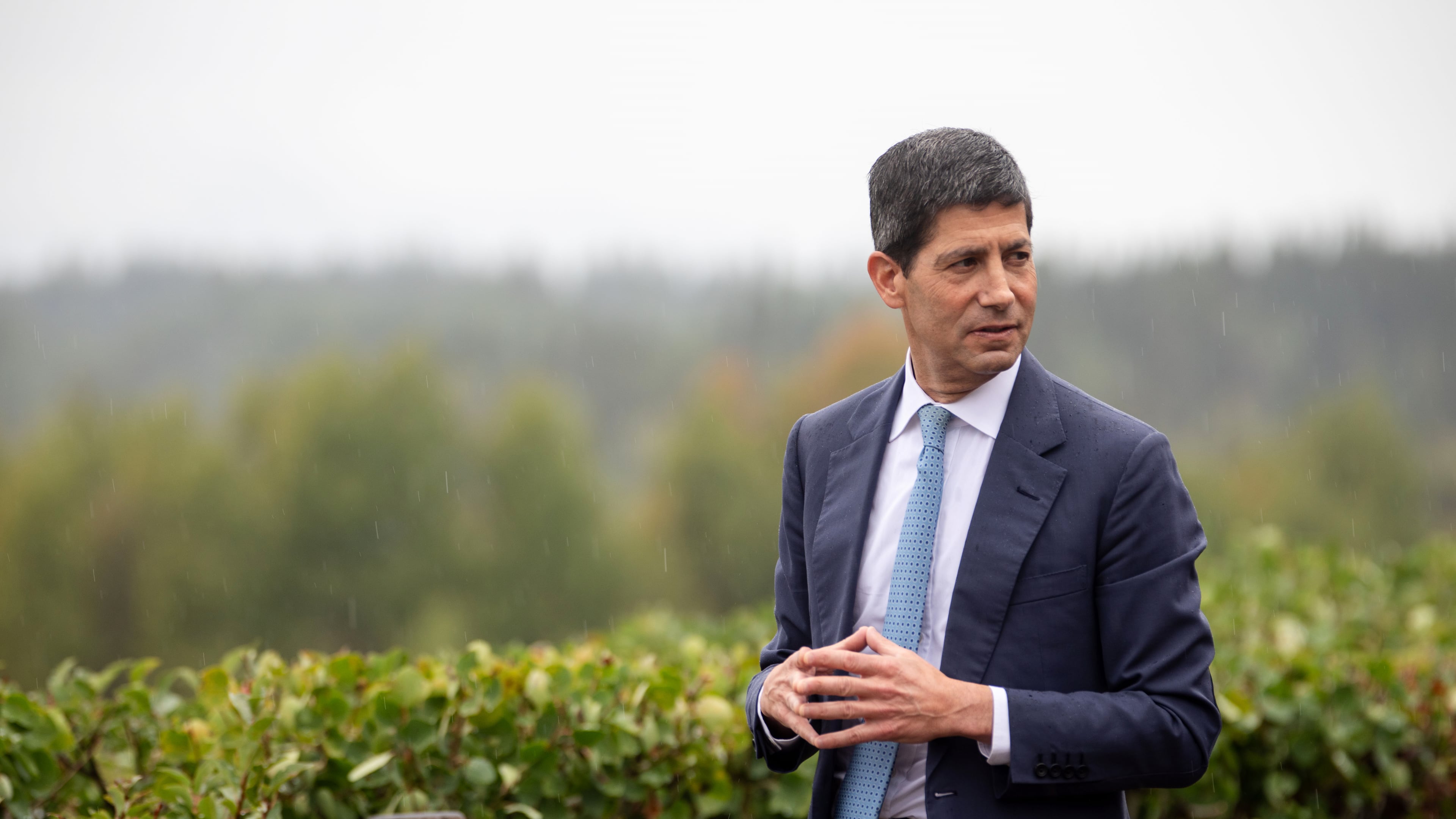
WASHINGTON (AP) — Federal Reserve Chair Kevin Warsh renewed his inflation-fighting credentials in a speech Frida y that opened the door to potential rate hikes in the coming months.
In doing so, Warsh has put more pressure on the central bank to increase interest rates when it next meets in mid-September if inflation doesn't improve. The government's next price report, to be released just days before the meeting, could play an outsize role in determining whether the central bank acts.
Warsh's high-profile speech at the Fed's annual Jackson Hole economic conference was mostly praised afterward by economists and other Fed policymakers in attendance. Still, there was also some pushback and criticism during the first day of the conference. It ends Saturday.
Here are some takeaways from the conference so far:
Hawkish comments raise pressure for September rate hike
While Warsh opened the door to raising borrowing costs, he did not commit to any particular timing. It's not surprising given his aversion to sending signals about the Fed's next moves the way his predecessors did, which Warsh felt boxed the Fed in to a preset path.
Some analysts, however, saw strong hints that a rate increase in September is a real possibility. Warsh noted that he and other Fed officials who supported keeping rates unchanged at their July 28-29 meeting “thought the wiser course was to await new information in the intermeeting period ... before deciding whether a change in interest rate policy was advisable.”
That suggests that Warsh wanted to see clear evidence of cooling inflation after the July meeting to remain on hold. Yet elsewhere in his remarks he said that such evidence hasn't emerged — even as gas prices have come down somewhat, underlying inflation hasn't “meaningfully improved."
By sending such signals, Warsh has raised expectations for a hike next month. If inflation remains high and he doesn't follow through, his credibility could take a hit.
“You are basically setting yourself up so that if you don't hike in September, people may ask what's going on,” said Adam Posen, president of the Peterson Institute for International Economics.
A September rate hike would be politically awkward
The Fed is scheduled to meet twice before the upcoming midterm elections, in September and late October. Any decision to lift interest rates at those meetings could spark a response from President Donald Trump, who has often accused the Fed of having political motivations. He claimed the Fed’s half-point rate cut in September 2024, for example, was intended to help Democrats in that year’s election.
Posen said that if the Fed ultimately skips a rate hike in September, it would raise questions about whether it did so to avoid attacks from Trump.
“You never raise rates to spite elected officials,” Posen said. But doing so would also demonstrate the Fed’s independence, which depends on the ability to “raise rates when it’s justified, over the president’s loud objections.”
Austan Goolsbee, president of the Federal Reserve Bank of Chicago, said “I don’t think about” the elections.
In an interview on the sidelines of the conference, he added that Fed officials focus on “what is the state of the economy, and what do we need to do to stabilize prices and maximize employment?”
A Fed rate hike may — or may not — lift mortgage rates
When the Fed raises its benchmark interest rate, it often can boost interest rates for mortgages, auto loans, credit cards and business borrowing.
Yet in this case it isn't as clear. Longer-term interest rates — including those on the 10-year Treasury note, which strongly influence mortgage rates — barely rose after Warsh's comments. Analysts said that suggested that investors were reassured that the Fed would bring down inflation over time. Otherwise, they would have pushed longer rates higher.
In short, longer-term rates don't always follow the Fed's lead, so even if there is a rate hike in September, it may not push up consumer borrowing costs. As it is, the average rate for a fixed 30-year mortgage is 6.66%, according to Freddie Mac, slightly higher than a year ago.
All-in on AI
Much of Warsh's speech actually focused on the potential for artificial intelligence to strongly boost the economy. He has spoken previously about the possibility that AI could increase the economy's efficiency, which would enable it to expand without creating inflationary pressures. That would, in turn, reduce pressure on the Fed to lift rates.
“We've come to a hinge point in history,” Warsh said. “The potential for substantially higher growth is on the rise.”
But in a luncheon speech Friday, Kenneth Rogoff, a Harvard economist and former chief economist at the International Monetary Fund, expressed a much more cautious take on AI's potential. He wasn't responding to Warsh's comments specifically.
“I think the idea that AI magically solves everything is a bit overblown," he said, adding that if it does sharply boost growth, that would likely lead to higher interest rates, which typically rise in a healthy economy.
Fed independence worries remain but have cooled since last year
A year ago, then-Fed Chair Jerome Powell received a standing ovation from the roughly 120 or so attendees before he even delivered his speech. It was a clear sign of support as Trump ramped up its attacks on Powell and the Fed for not cutting rates as much as he wanted.
Trump tried to fire Fed governor Lisa Cook on the first day of last year's conference, in an effort to gain a majority on the Fed's board. Cook sued to keep her job and the Supreme Court ruled in June she could do so while the case played out in court.
Cook attended this year's conference, just days after her lawyers argued the administration has no legal basis for removing her.
Rogoff, in his remarks, expressed concern about Fed independence but didn't get into details.
Warsh suggests inflation is broad and stubborn
Since taking office in late May, Warsh has largely avoided commenting on where inflation might be headed or what is keeping it elevated. On Friday, he provided his most extensive comments yet about an inflation surge that has soured most Americans on the economy and kept price increases above the Fed's 2% target.
He noted that inflation has been broad and not just a result of higher gas prices stemming from the Iran war. More than half the goods and services the government tracks have seen their prices rise 3% or more from a year ago, he said. That's “well above” the roughly one-third that saw such increases in the two decades before the pandemic.
Warsh also argued that inflation wouldn't necessarily fall back to 2% on its own, a comment that suggests he doesn't consider inflation to be a result of just one-time shocks, such as tariffs, that will fade over time.
That is a view shared by the three Fed officials who voted in favor of rate hikes at the central bank's last meeting in July.