Electric vehicles: An abrupt end or a new beginning?
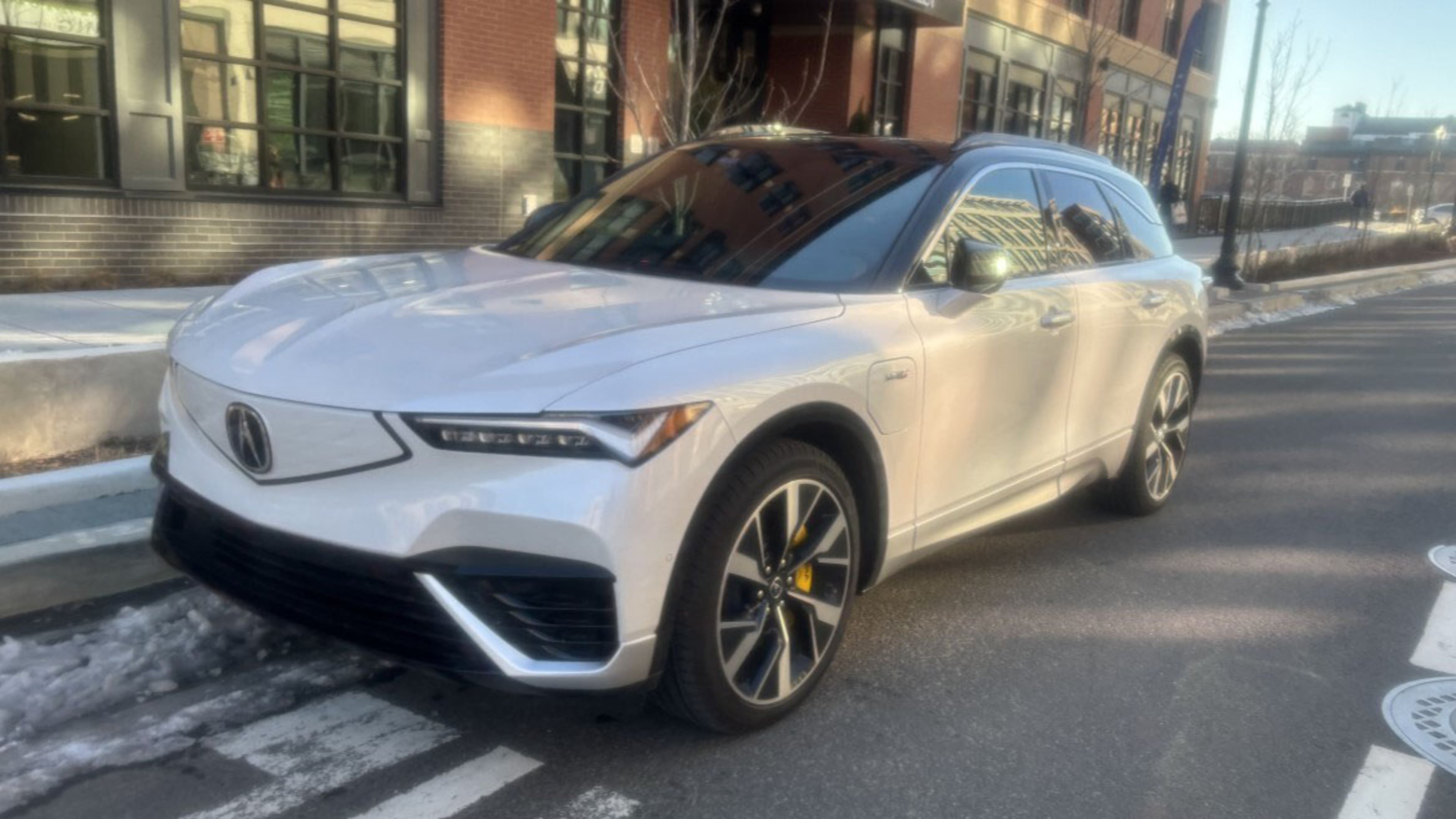
The market for electric vehicles is at another inflection point. More than a dozen electric vehicle models have been canceled after only one or two model years, yet new electric vehicles continue to debut.
The shifting geopolitical landscape and volatile energy prices have created a complicated EV outlook.
Honda, for instance, canceled both the Acura ZDX and Honda Prologue developed in partnership with GM, and delayed plans for its Honda-developed 0 Series SUV and Saloon. Toyota and Subaru’s joint development of EVs ushered in six new electric models in a year.
But how many EVs does the market demand? The short answer is: It depends.

A muddled global EV market
EV sales hit record highs in 50 countries in the second quarter of 2026, according to the International Energy Agency.
“The energy crisis sparked by the war in the Middle East brought fuel price volatility back into sharp focus,” the IEA report noted.
High gas prices weren’t the only reason shoppers turned to EVs. Greater selection, more affordable models — especially from Chinese automakers — and governmental policies favorable to EV adoption helped accelerate demand.
Compared with a year earlier, EV sales doubled in countries such as Australia and India. More than 90 countries reported year-over-year EV sales growth.
The U.S. was not one of them.
EV sales slow in the U.S.
The IEA estimated that by year’s end, 29% of all new cars sold globally will be electric. In the U.S., the world’s second-largest car market, EVs accounted for only 5.8% of new car sales in the second quarter, according to Cox Automotive.
That’s down from 10.6% in the third quarter of 2025, when American shoppers scrambled to take advantage of the $7,500 federal EV tax credit before it expired.
Despite the decline from last year, EV sales in the U.S. were up 14% quarter over quarter, as the war in Iran sent gas prices skyrocketing.
Still, Americans prefer hybrids, especially hybrid SUVs. Cox Automotive data for May shows hybrids reaching 21.8% of the market after consecutive monthly increases. Gas-powered vehicles accounted for 70.3% of sales, while pure EVs held near 6.7%.
EVs come, EVs go
These opposing forces make it hard for automakers to navigate the uncertain market. China, the world’s largest car market, has been flooding the global market with EVs, creating oversupply.
Even the regulatory landscape in the U.S. is inconsistent, with California state laws that incentivize EV adoption.
So even though Toyota launched three new EVs in the past year and weathered prohibitive U.S. import tariffs, it postponed the fully electric version of one of its most popular nameplates. The 2027 Highlander EV will be delayed until next year, even though it will be built in Kentucky with a battery pack produced in North Carolina, avoiding tariffs.
Other affordable EVs were canceled for the U.S. market before they arrived because of weak demand and tariffs, including the Kia EV4 hatchback and Volkswagen ID.7 sedan. Hyundai canceled the superefficient Ioniq 6 sedan this year after four years on the market.
Georgia, meanwhile, has become a major part of the EV manufacturing landscape. Hyundai builds the Ioniq 5 and Ioniq 9 near Savannah, while Kia assembles EV9s and EV6s in West Point. Rivian is also moving ahead with its planned factory east of Atlanta, where vehicle production is expected to begin in 2028.
BMW is another case study. It may be among the automakers hardest hit by a saturated EV market in China. It canceled the Germany-made iX crossover SUV and i4 electric sedan this year, but launched the new iX5 electric version of the X5 SUV, with both models built in South Carolina.
A new beginning?
Whatever the complexities of the global automotive industry, automakers must meet demand.
More automakers are shifting away from dedicated electric-vehicle platforms that eliminate drivetrain tunnels or space-eating fuel tanks and toward multi-energy platforms that can be fitted with multiple powertrain options.
That may sacrifice some packaging efficiency, but it gives automakers flexibility to follow demand.
The redesigned 2027 BMW X5 can be equipped with gas, diesel, plug-in hybrid, electric and hydrogen fuel cell powertrains.
Mercedes-Benz has started to phase out the EQE sedan and shifted its strategy toward models such as the 2026 Mercedes-Benz CLA. A hybrid or gas variant is expected to follow. The EQB compact SUV has been effectively replaced by the forthcoming GLC Electric, which shares a platform with gas and plug-in hybrid variants.
Stellantis, parent company of Dodge and Ram, also uses a multi-energy platform, though it has dialed back its EV plans. Introduced in 2025, the Dodge Charger Daytona coupe is now offered in only one trim, the Scat Pack. The Ram REV electric pickup truck has been canceled in favor of an extended-range hybrid version. For now.
“Relying on government regulations and subsidies is something that can appear and disappear,” Philip Koehn, senior vice president of BMW’s Luxury Class, told reporters in June. “The technology agnostic approach, I’m totally sold on that. In this rapidly changing world, that is the way forward.”
Correction
This story has been updated to correct the model of the Kia EV4 hatchback. The photo with the story has also been changed.
Robert Duffer is an editor for Kelley Blue Book and Autotrader. He’s covered the automotive industry since 2012 as a syndicated columnist and senior editor.
The Steering Column is a weekly consumer auto column from Cox Automotive. Cox Automotive and The Atlanta Journal-Constitution are owned by parent company, Atlanta-based Cox Enterprises, which also owns about a 3% stake in Rivian.