Lindsay Clancy's diary chronicled desperation and 'brain fog' before she killed her 3 kids
PLYMOUTH, Mass. (AP) — After an opening week of wrenching testimony and a jury trip to the home where Lindsay Clancy strangled her three children, her murder trial resumed Monday with diary entries from the months leading up to the killings in a coastal Massachusetts town in 2023.
Clancy described feeling anxious and overwhelmed with motherhood, including her struggles to get her newborn Callan to sleep and constant worries of his being sick. She also expressed concerns about going back to work as a labor and delivery nurse, not being able to breastfeed, and feeling disconnected from her children and her then-husband.
“I’m so desperate to get a mental break from taking care of everyone that my mind is trying to find something physically wrong with me,” she wrote in a Nov. 18, 2022, entry.
Clancy's defense says she was a loving mother who was overmastered by postpartum psychosis, a dangerous psychiatric condition that afflicts a small proportion of women after childbirth and affects their hold on reality.
Prosecutors contend that she acted intentionally and should be held criminally responsible for the deaths of Callan, Dawson and Cora Clancy, who ranged in age from 8 months to 5 years.
___
EDITOR’S NOTE: This story includes discussion of suicide. If you or someone you know needs help, the national suicide and crisis lifeline in the U.S. is available by calling or texting 988.
___
Clancy’s lawyers don’t dispute that she killed the children. But in the criminal trial and a medical malpractice lawsuit, her attorneys say the 35-year-old had bipolar disorder that wasn’t fully diagnosed until after the killings.
Her attorneys say her condition seemed to worsen on an ever-shifting lineup of psychiatric prescriptions, some of them problematic for bipolar patients.
Her diary sheds light on the mental health issues at the heart of the case
In the three months before the killings, various clinicians prescribed a range of antidepressants, sleep aids, an antipsychotic and other medications while she reported increasingly profound insomnia, anxiety, despair and confusion about what was real, according to her lawsuit.
Both the prosecution and her defense attorney read pages from her journal Monday as she chronicled those difficult months.
“I want help. I want to be well,” Clancy’s attorney Kevin Reddington read from one journal entry.
She also wrote of feeling “incredibly sad and guilty” about not breastfeeding and was “obsessed” with Callan’s sleep and nap schedule.
“I have crazy brain fog. I feel like I can’t make a plan,” she wrote in another, undated entry. “I live moment to moment waiting for the next nap time. I’m terrified of Cal getting overtired now because I feel can’t help him.”
In separate lawsuits, Lindsay and ex-husband Patrick Clancy allege that various providers failed her, and should have recognized she was a risk to herself and the children. The providers, at least those who have responded to date, deny the allegations and dispute that she clearly told them she intended to harm the kids.
Lindsay Clancy was seeking help before the killings
When she sought care at a postpartum depression program in late December 2022, providers noted that her symptoms might be due to medication, according to her lawsuit. It says those clinicians told her to taper off the antipsychotic drug and then discharged her after a day.
Clancy checked herself into a psychiatric hospital that New Year’s Eve and spent several days there. Once home, she resumed appointments with her psychiatrist, who last saw her for 17 minutes on Jan. 23, 2023, according to her lawsuit.
The next day, she believed a commanding voice was telling her to “kill the children so you can kill yourself,” according to her lawyers.
That evening, she asked her then-husband to run some errands, a request that prosecutors cast as a ploy to get him out of the house.
Father returns home to a shocking scene
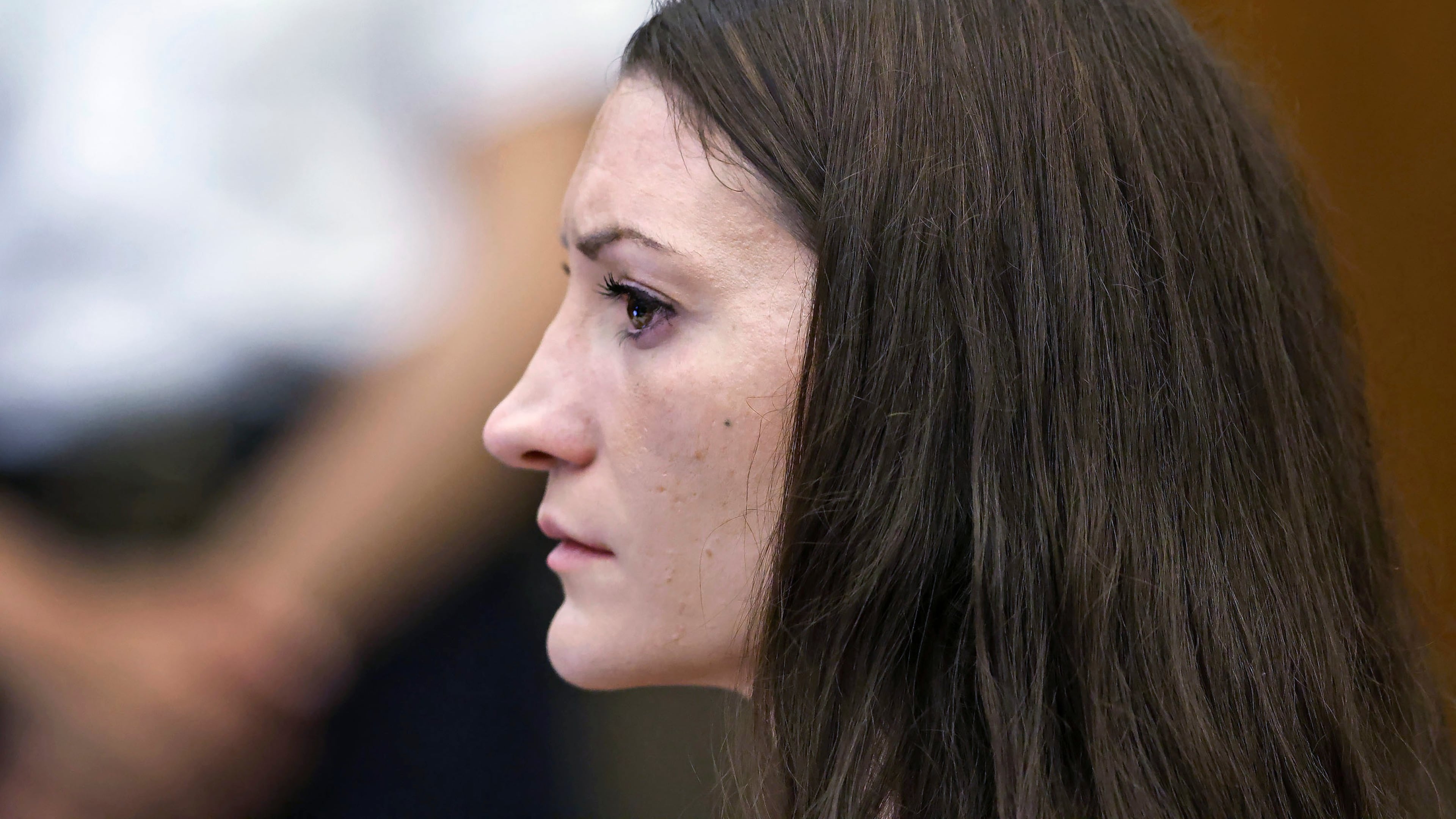
Lindsay Clancy wept at the defense table last week as Patrick Clancy and other witnesses testified.
He told jurors about returning to a horrible scene at their house: a bloodied bedroom, an open window, his wife on the ground below it, the children in the basement, throttled with exercise bands.
“She killed the kids!” he told a 911 dispatcher on a call played in court.
Lindsay Clancy remains paralyzed from the waist down because of the fall.
In the hospital two days later, when a forensic psychologist asked Clancy how she felt, she responded: “horrified.” She also asked if she had a lawyer and whether her body and legs were broken. She was intubated and could only communicate through written messages on a whiteboard, the psychologist testified.
“She then asked, can she have visitors, and where her family is,” Dr. Jhilam Biswas of Brigham and Women’s Hospital recalled.
Doctors testified Monday that 8-month-old Callan was in cardiac arrest when he arrived at a hospital in nearby Plymouth. He needed a ventilator at Boston Children’s Hospital to help him breathe, but did have a heartbeat. He died after three days.
Prosecutors will try to keep the spotlight on Clancy
Prosecutor Shanan Buckingham sought in an opening statement last week to keep jurors' focus on the defendant, not her doctors.
“This is not a public debate about women’s mental health and how the medical system treats women,” Buckingham said.
If convicted of murder, Lindsay Clancy faces life in prison without parole. If found not guilty due to a lack of criminal responsibility, she would be committed to a state mental health facility.
___
Associated Press writer Jennifer Peltz contributed from New York.